Monday, December 10, 2012

CHRISTMAS IN CHICAGO

Our family has "gone native" in Chicago
Dear Family and Friends,

Thank you for your prayers, support, and encouragement as our family returned to the United States for a season.    We look forward to this holiday season to be with family.    Jana’s dad, Gaston Tarbet is recovering well from triple bypass surgery in November.   We are thankful that God brought us to America to be with family during this time.  
A little over a year ago we sensed deep within our spirits it was time to relinquish our sense of home in Africa, and for a season start anew in the United States.    We believe missionaries are specifically called by God to make disciples and develop churches.    We also believe the missionary calling is one of initiation.    It requires us to go to new places and new people who are in a crisis which can only be properly addressed by faith in Jesus.    We thank God that our time in Africa gave us a great wealth of experience and friendships.    We believe these gifts are to be stewarded with a great sense of awe.    Thus it is our conviction that God is asking for our family to continue to be missionaries to the Diaspora of Africa’s Great Lakes in North America.
Wisemen visting Baby Jesus in Bethlehem
As we enter this Christmas season many memories come to mind.    However, one in particular is the beginning of our sense of call to return to America.  In 2009 both Jana and Dave were recovering from surgery.   Over Christmas we were with Dave’s family in Minnesota.   While there we reconnected with old friends from Uganda, Godfrey Lutalo and Tabitha Mugabi.    We knew them as university students in the early 1990’s.   They had immigrated to the United States, and we had lost contact.    Several times we had tried to look them up, but never were able to find them.   Then the wonder of Facebook permitted us to reconnect.     We had dinner.   In the process God opened our eyes.   Lutalo and Mugabi had done well.    They had married.  She had completed a master’s degree and was an executive for an insurance company.   He owned a small business.   They owned a home.   They had three delightful children.  They had helped their extended family immigrate.   Lutalo’s brother joined the USA military and had served in Afghanistan.   They were ideal immigrants.    They were deeply spiritual people.    Yet for their family adapting to American church life and socialization was a struggle.   We left our dinner with a sense of God whispering in our ear, “Your people are in the USA.   They need the skills, network, experience, and gifting I gave you in Uganda and Rwanda.”   
Rose Apolinary, Marguerite Nyagahura, and Jana at Christ's Church Rwanda
Our people, the Diaspora cluster in major cities of North America and Europe.   Some came as refugees.   Yet, as stability came to their home nation some chose to stay dispersed.    Some came as students.    Some came seeking employment.    Many are skilled professionals.    You find them in places such as banks, small businesses, insurance, real estate, information technology, and universities.     They are the largest source of foreign income for their home nations.    They invest back in their home nation to build homes, businesses, and schools.    Some explain their unique place in history as “transnational.”   With easier means of travel than a few generations ago plus the internet and mobile phones transnational Diaspora remain deeply connected with their home nation.     They present an extremely unique missions opportunity.    They are one of the primary informal thought leaders of their home nations.   
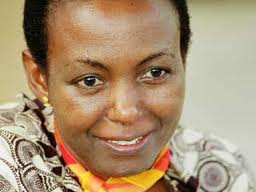
An example of Diaspora we have been fortunate to know is Marguerite Nyagahura.  Her childhood was spent in Uganda as a refugee.   She immigrated to Sweden, furthered education, and developed professional skill.    Jana met Marguerite in a small business in which she was a partial owner.    Marguerite was one of the first to attend Christ’s Church in Rwanda (CCR) as we launched on March 4, 2007.    She began operating a Day Care in the CCR property, and was a key advisor in our community.    Recently, she was appointed one of Rwanda’s newest Senators.     In this role she has the opportunity to shepherd national policy and infrastructure to bless future generations.    Thus both theory and experience show that an investment into missionary work among the Diaspora of Africa’s Great Lakes produces enduring fruit.
Jesus calls first disciples
Currently, we are in the early stages of beginning a ministry we call Great Lake’s Fellowship (GLF) in Chicago.     We find ourselves much like Paul in Acts 18 as he entered Corinth with a drop in support and without colleagues.  Yet he was clearly in a city filled with many people God was calling .    We are making as many friends as possible.    We are praying.   We are looking for strategic needs, clusters, and locations.    We are in the process of gathering a core leadership team.
Our plan after the gathering of a leadership team will be to begin a monthly fellowship in Chicago.    It is our hope this fellowship will strengthen the relationship between local churches and the Diaspora in Chicago.    We plan to rotate in different church locations in Chicago so that GLF is accessible to all scattered throughout the Chicago area.    During the fellowship we will have vernacular worship to maintain continuity with home nations, a good speaker, communion, and a common meal.   It is our hope that Great Lakes Fellowship will lead to several results which we believe are key for disciple making in Africa’s Great Lakes.   First, we hope it will promote unity that crosses national, ethnic, and denominational lines.   Second, we hope it will facilitate more Christian investment in thought systems and the institutions of church, school, and business in East Africa.   Lastly, we hope it will shepherd well the second and third generation Diaspora children.    Most are like our own children who are Third Culture Kids (TC’s.)    They live and function in several different countries.    With this cross-cultural socialization comes a certain measure of disorientation.   Yet as TCK’s mature they have remarkable ability to bridge cultures, and with this bridge building capacity tremendous influence for the cause of Christ.

Some have also pointed out that GLF has great potential not only for effective mission work, but to promote high levels of local church involvement.    For instance, GLF has the potential to nurture local church understanding and involvement in the rapidly evolving opportunities for transnational ministry.     Africans bring a sense of worship and hospitality to local churches that stir new found vitality.     As with all of these new endeavors we know our foresight is limited.   Yet we trust that God in His providence will give us many new insights and open new doors of service.
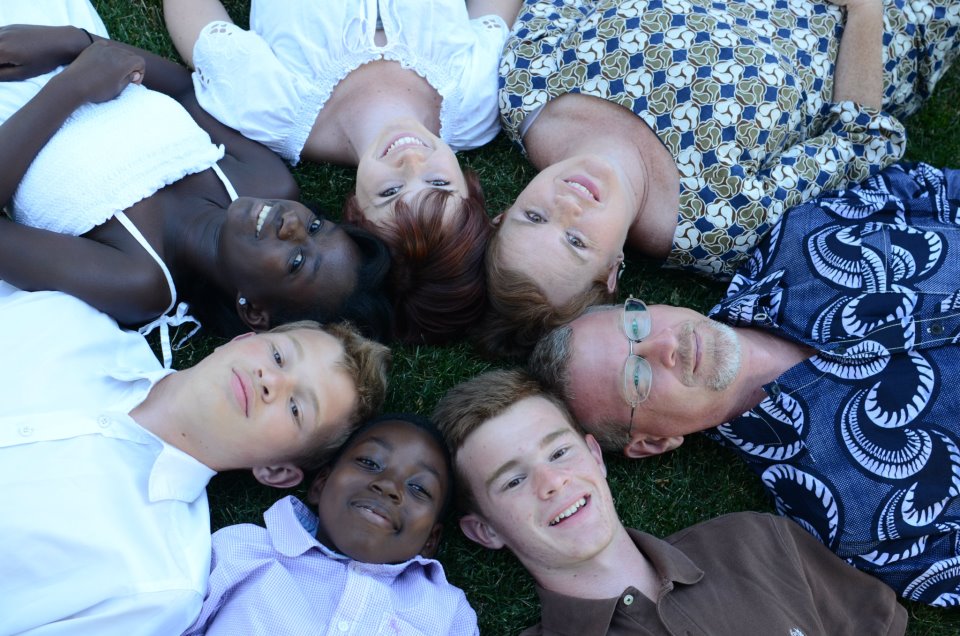
Our family in Wheaton, Chicago, USA
Over $3,000 in total was given in response to our October newsletter and prayer card.   Thank you.   We still could use some help in the expenses of transitioning to America.     Also, as we have transitioned to the United States a few of our supporters have informed us that they will not be continuing their support into 2013.   We anticipate this will involve the loss of approximately $3,000 per month.     We request that you make a financial gift to our ministry this Christmas season, by sending a check to ROC Partners (with Jenkins in the memo) to:
 3007 NW 63rd Suite 205,
Oklahoma City, OK 73116-3605

Thank you for remembering us this season.   If we can visit you or others please feel free to contact us.
Because He Lives,
Dave and Jana

Thursday, December 6, 2012

PASTORAL REFLECTIONS ON THE PASSING OF MINISTER ALOYSIA INYUMBA


I woke this morning to startling news from a friend in Rwanda.   Honorable Minister of Gender and Family Promotion, Aloysia Inyumba has passed from this life to another.    She leaves behind a husband and two children.    Our region’s newspapers quickly began coverage of a remarkable woman.     Social media told the more personal details.   It is astounding to quickly observe on Twitter and Facebook how the titles we gave her moved from “Honorable Minister” to “Mother,”  “Auntie,” “Mentor,” and “Friend.”     She was a woman who quickly could bring us into places of great warmth and hospitality.     In the end she believed in many of us more than we believed in ourselves.     I wonder if there are any in Rwanda who have not in some way been touched by Minister Inyumba.    Many of our best efforts and accomplishments were nurtured by her faith in God moving through the people of Rwanda.

As with the transitions that come to those who in the eyes of humanity seem “too young” our hearts grief.    How does one explain the loss of a mother to children?   And who amongst us does not consider her to be one of our aunties?

We return to the oldest stories of mankind’s sojourn with God.   Israel’s Shepherd King, David wrote by the inspiration of the Holy Spirit in Psalm 23 (New King James Version):

“The Lord is my shepherd;
I shall not want.
 He makes me to lie down in green pastures;

He leads me beside the still waters.
 He restores my soul;
He leads me in the paths of righteousness
For His name’s sake.
Yea, though I walk through the valley of the shadow of death,
I will fear no evil;
For You are with me;
Your rod and Your staff, they comfort me.
You prepare a table before me in the presence of my enemies;
You anoint my head with oil;
My cup runs over.
Surely goodness and mercy shall follow me
All the days of my life;
And I will dwell in the house of the Lord
Forever.”

As David reflected on the loss of his own son, he said, I will go to him, but he will not return to me (2 Samuel 12:23, New International Version.)”

By the inspiration of the Holy Spirit Job 19:25, 26 tells us, 

“I know that my redeemer lives,
    and that in the end he will stand on the earth.
And after my skin has been destroyed,
    yet in my flesh I will see God.”

Jesus Christ was God in the flesh among men.   He showed us the heart of the Father.   When His friend Lazarus had passed from this life two simple words tell us all, “Jesus wept (John 11:35.)”   In the midst of our overwhelming loss God himself is in our midst providing hope and comfort.   Then Jesus raises Lazarus from the dead.    

Within a week of Lazarus resurrection, Jesus himself is brutally killed and then rises from the dead.

Our grief and loss is real.   Yet, our hope in a final Resurrection where all will return to God’s intent is the final reality for which we hunger.

As we grief in hope it is appropriate to remember the enduring characteristics of Minister Inyumba.    

We quickly remember her humility.   As she rose to places of influence she still listened.   She had time to ask questions.   In between hurried meetings she was available.    

In those humble meetings her questions moved to wise guidance.   She could master complexities with grace.  Then find a way forward.   

We know her tireless work ethics.   This was driven by her deep compassion for women and children.    Her compassion spurred on her incredible courage.   
The place Minister Inyumba occupies in our hearts can never be replaced.   Yet by the grace of our Lord the loss and grief we now feel will heal.     After all, Minister Inyumba believed in the hope of our common future.   This hope cannot be contained by a created body of flesh and blood.

The dialogue I read and heard today was one of memories.  I noticed three enduring legacies of Minister Inyumba.

The first was her faithfulness.    Her name follows the history of her people.   She is found in a multiple of historic roles.   In each role that was given her she was faithful.   We were blessed.    I can say with great confidence yesterday, she was met by the Lord with the words, “Well done, good and faithful servant (Matthew 25:21, 23; Luke 19:17.)”

The second enduring legacy was her advocacy for women.   She healed our wounds.   She served widows.   She mentored ceaselessly.    She elevated the status of women by her profound moral authority.    I observed that her very presence caused us to stop, reflect, and change.   Her voice spoke with consistent faithfulness.    Her belief in women’s dignity reflected her faith in God who made all humanity in God’s image.   She saw that God had created women with unique gifts that must be nurtured.   Her advocacy brought us peace and healing.

The last legacy was her compassion for Rwanda’s children.   Her compassion was the authentic compassion of the Lord.   It moved from deep within her being.  It was full of the passion of humanity.   Then it sprang forth in behavior that simply got things done.    

One her most enduring quotes is "We're committed to seeing all Rwanda's children grow up in loving, caring families and not in institutions"

A friend today called her a champion of Rwanda’s children.

Many of us have personal stories to tell of Minister Inyumba.

My family shared a similar conviction with Minister Inyumba that every child has a right to a family.    I once had a 10 minute conversation with Minister Inyumba that I could never forget.   She made time for me in busy day in which she was meeting many important people.   We spoke of the de-institutionalization of orphans and vulnerable children in Rwanda.  She let me see a bit of her humanity.   Why was she facing so much opposition?   Why were there so many untruthful and unjust accusations?    

I shared the nature of institutions.   They are self-protective.   It is their nature.   Governments protect their tax payers.   Churches protect their members.   Schools protect their students.   Businesses protect their customers.    This is good.   In fact such institutions will endure with generations of good fruit.   

However, sometimes an institution arises that in its self-protection loses sight of the common good.   Orphanages easily become these types of institutions.   In order to appeal to donors they must have children.  Keeping children in institutions is necessary for their survival.

I apologized.   My race, nation, and Balokole clan mates have been some of the worst offenders in institutionalizing vulnerable children.

I shared a conviction that took the Lord working on me for 18 years.   The most Biblical way to approach the care of vulnerable children is adoption.   In fact, adoption is a metaphor of the Gospel.  Churches that don’t teach and live adoption are negotiating the Good News of Jesus.

I shared a hope that Rwanda’s churches and families would arise to meet the challenge.   It was my hope that whenever a child fell into a vulnerable situation a network of families would be prepared by churches to immediately take that child into their home as a foster child.   Hopefully, the child would be reunited with his extended family.   However, if that did not happen then that child should be adopted and have the full legal and relationship rights of a biological child.

Minister Inyumba looked directly into my eyes, accepted my apologies, and then said, “Pastor that is exactly what I hope also.”

Gabriel Mugisha Jacobs with the nurses who cared for him in Rwamagana
God never allows leaders to simply make proposals and write policy.   We must practice what we preach.   A few months later, my foster son Gabriel Mugisha Jacobs was having 3 clusters of seizures per day.   We had spent 2 weeks at King Faisal Hospital.  It was time to go to Nairobi.   MIGEPROF and emigration quickly got us the required travel documents.    Our family was broke.   Then God’s providence happened.  Friends in Kenya, Uganda, America, and Rwanda rallied.   Minister Inyumba was one of the friends who placed a little money in our pockets for Mugisha.   Her contribution was one of those first fruits from which God begin doing the astounding.     Mugisha has now not had a seizure in 11 months and is loved by a forever family.   I’m confident Minister Inyumba’s acts of faith are one of the reasons Mugisha is well.

A year ago a friend of mine, Major Eustache Nsinga passed from this life.    I had the profound responsibility to perform his funeral.   In it I summarized his life as being irreplaceable.   I believe all of us are created in God’s image and with God’s eternal purpose given unique gifts.   Thus each of us is irreplaceable.   

My sermon was followed by a speech by Rwanda’s Minister of Defense James Kabarebe who had the courage to point out a hole in my sermon.   We are all in an army for God.   When a soldier falls he must be replaced.  Without replacements our endeavors on this earth are doomed.   He was right.
God’s Word fills us with the wisdom of paradox.  Each of us is irreplaceable.   Yet, each of us must eventually be replaced.

As Minister Inyumba is now resting as a rewarded faithful servant it is our task to continue her legacy.

Who will be faithful in whatever roles one is given?

Who will advance the dignity of women?

Who will take vulnerable children into their families to adopt and raise with the full legal and relationship rights as biological children?

Minister Inyumba’s passing should cause us to like the men and women of old raise our hands and say, “Lord, here am I.  Send me.”

Monday, December 3, 2012

CONGOLESE KITENGE SHIRT SUNDAYS


Eastern Congo troubles my sleep.   I check the latest news each morning.   I pray about it continually.

                I’ve taken a vow.   I will wear a kitenge (East Africa) shirt each Sunday and pray for Congo until the consensus of my Congolese friends tells me they believe enduring peace has come to Congo.   On the day I break my vow I will wear my tuxedo to church on Sunday.    I will not ask you to join me with the tux.   However, I ask for my community to join me on Congolese Kitenge Shirt Sundays.

                Let me tell a few African stories.

                My wife, Jana was baptized in 1979 in a shallow muddy river in western Kenya near the equator.   We really don’t know exactly who was at the event.    However, throughout our adult years in East Africa we’ve met Kenyan church leader after church leader who has told us, “We baptized Jana.”    Jana’s parents, Gaston and Jan Tarbet are what many consider to be “historical missionaries” in the lore of Churches of Christ and Christian Church missions in East Africa.    Beyond what God mysteriously did in that shallow muddy Kenyan river in Jana’s life, God did something magical in the lives of the young men gathered around Jana’s family that day.    They saw themselves as bound in a covenant community.

                My daughter, Sophia was baptized at the Kampala Church of Christ in 2004.   In the photo you will notice me in my Uganda preaching uniform – short sleeve colored dress shirt, tie, short hair, and tight beard.    I learned that if I wanted to be taken serious I needed to dress well and be well groomed.    In the background you will notice two of my friends; Vital Byabushi in a kitenge shirt (a Congolese refugee), and Fred Senkumba.

                During the years of 2000 to 2004 while I pastored the Kampala Church of Christ there were many Congolese refugees.    Most were educated professionals who fled Eastern Congo due to insecurity and instability.    I found them to be dear friends and colleagues.    I greatly enjoyed their music and laughter.    They slowly nurtured my beginning understanding of Congo.    We even once hosted a meeting where we gathered Congolese church leaders and missionaries who were scattered all over Africa.

                As my family left Uganda to move to Rwanda the Congolese refugees at the Kampala Church of Christ blessed me with the gift of a purple kitenge shirt.

                As we moved to Rwanda and we launched Christ’s Church in Rwanda I decided it was time for a makeover.   I was too old to be bound by a tie.    I was too African.  I embraced my mentors’ and friends’ dress.   I began preaching in kitenge shirts.   They became my Rwandan preaching uniform.

                You will notice that in photos in which three of my other children (Caleb, Ethan, and Ruth) are baptized in Rwanda I am wearing a kitenge shirt.   This is the blessing the Congolese gave my family.   We are bound in a community covenant of compassion.   We are African in heart.  Yet we are constrained by temporary documents and skin colors.  We wait for our final destination in heaven.   The kitenge shirt my Congolese refugee friends blessed me with in our Uganda departure became my Rwanda identity

                I cannot find any photos of myself in Rwanda in April.   Maybe it is because I have rarely been able to take a photo with a smile in April when Rwanda remembers the atrocious Genocide of 1994.    However, if one is found you will notice that I always wore a purple kitenge shirt to church on Sundays in April.   Purple in Rwanda is the color of mourning.   I believe in blessing me with purple kitenge shirt as our family moved to Rwanda my Congolese friends nurtured old African values of community and compassion.

                Now I choose in a vow before the Lord that I will wear a kitenge shirt each Sunday as mark of my compassion for my Congolese community.

                I ask that you join me in Congolese Kitenge Sundays.

                I do not know the future of Eastern Congo.   I know there are many opinions about what is needed to bring peace.    I do believe the best answers for peace will be found in our faith tradition.   Please join my prayer for Congo:

                “King of Kings.   Lord of Lords.   God of All Creation.   Alpha.   Omega.    

                You are the author of justice, grace, truth, and peace.    We ask for your kingdom to reign in Its fullness in Congo.    May you bring forth enduring peace.   May justice roll like a river.

                See the cries of your suffering people in Congo.   Have mercy in Congo upon the most vulnerable.

                Institute enduring peace.   Forgive our sins.   Teach us to forgive one another.

                In the name of your powerful son, Jesus.

                Amen.”