Showing posts with label Forgiveness. Show all posts

Friday, September 14, 2012

SEPTEMBER 2012 PRAYER BULLETIN

Dear Family and Friends,

A few weeks ago we sat in church and used the Lord’s Prayer in worship.   The old resonated to the deepest part of my being.    I’ve found myself meditating on it each morning as I run,

Our Father which art in heaven, Hallowed be thy name.
 Thy kingdom come, Thy will be done in earth, as it is in heaven.
Give us this day our daily bread.
And forgive us our debts, as we forgive our debtors.
And lead us not into temptation, but deliver us from evil:
For thine is the kingdom, and the power, and the glory, forever. Amen
 (Matthew 5:10-13, King James Version)

As our family starts missionary life anew in Chicago please join us in praying:


1.    Adoration to our Holy Father (What else can we do?   We are adopted children by a God completely beyond all we can conceptualize)

2.   Seeking His heavenly kingdom to grow upon this earth.   (Thankful to have been a vessel in Africa and now seeking His will in the USA)

3.   Trusting for our daily sustenance.   (Not sure how we’ll pay the bills this season, but aware of His daily abundance.)

4.   Forgiving and being forgiven.   (Old church planters know too well their personal failings.    Yet we also have survived tremendous battles.   This is a season to heal through forgiveness.)

5.   Separation from sin.   (Confusion, discouragement, and idolatry be gone.)

6.   Awestruck forever at God.

Thank you for your prayers, support, and encouragement that sustain our family and ministry.

Mungu akubariki (God bless you),

Dave

P.S.  We will be at Abilene Christian University’s Summit this coming week and hope to connect with some of you there.

Wednesday, May 23, 2012

Rumors of Rwanda as heaven

I once lived in Kampala, the city of seven daily rumors. During a season without a free press Radio Katwe ruled the air. Then a free press developed. Bit by bit the media put rumors to the test. Some passed the test of truth. Some did not. Some played to prejudice and survived even when evidence proved the rumor false. A few times I was a victim of a vicious rumor. They can be destructive. Yet, I found a certain comfort in the rumors. I may not know what was true. However, at least I knew the options.


When I moved to Kigali I came prepared with a list of Rwanda rumors. What was true? In fact, my first weeks in Rwanda felt odd when I did not hear the day’s rumor. However, bit by bit I got to know people. In Kigali we don’t speak in the vernacular of Radio Katwe, but we do tend to know details of our neighbor’s lives. Weddings, births, sickness, death, school accomplishments, jobs, business deals, etc. are our topics of conversation. Sometimes it is shocking what the neighbors know.

Two years ago I almost found Radio Katwe in Kigali. We were preparing to send our kids to school. We spent the day shopping for school supplies. When we reached home we unpacked the supplies. In the process, we noticed we were missing a few items we had purchased. I thought maybe my absentminded professor ways had forgot the items somewhere. Possibly, an opportunistic thief got the best of me. Two days later I received a phone call from a friend in the Rwanda government. The lost items had been found. Yet, I had not reported the loss. My friend in government did not know what I was thinking, but the Radio Katwe rumors of Rwanda ran through my mind.

Was I under constant surveillance? Were all my actions recorded somewhere? Was there someone above watching out for me? When I stumbled would another come to my rescue? Or if I made a colossal error of judgment would my failings become public fodder even with my best attempts at cover up? After all, the admirers of Rwanda are aware of Rwanda’s ability to discreetly gather knowledge.

Radio Katwe told me these rumors were true.

Then my friend in government told me how the lost items had been discovered. I had been with him through his wedding. We had visited family together. In the process we had been seen by many in crowds. One of his neighbors worked in the shop where in a little confusion I had left some items. The neighbor did not know my name or contacts. However, he knew the contacts of my friend. He made a phone call to my friend. Then my friend called me. A few days later the lost items were returned.

Maybe, Radio Katwe does not know Kigali as well as she thinks she does. Maybe, Radio Katwe has underestimated Kigali’s ability to live in community? Maybe, Kigali is just a small town? Maybe, the reason some of us discover small details becoming public knowledge is that in Kigali neighbors know neighbors?

However, what if another rumor is true? What if Rwanda is heaven on earth?

Sometimes I hear the voices who listen to the rumors of Radio Katwe say, “I have nothing to hide.”

Really? I wish I was as good of a person as you. I’ve done many things I regret.

Sometimes I hear the voices who listen to Radio Katwe say, “I can take care of myself.”

Really, I sometimes can barely function.

Sometimes I hear the voices who listen to Radio Katwe say, “I’ll take my chances.”

Really, I want to know there is a plan led by a master.

 Radio Katwe Rwanda rumors remind me of heaven. I have never been there, but I’ve heard rumors. The rumors of heaven tell me that every thought and deed of mine is seen. They tell me that all my actions will be taken into account. They tell me that the standard of performance is so high I will never pass. The rumors of heaven terrify me. I would rather keep some matters hidden.
The rumors of heaven tell me that a day will come when all my failings will be exposed. Yikes. I am a respected pastor, husband, and father. That will be an awful day of embarrassment. All my dignity will be lost. Yet, the rumors of heaven tell me that One will stand in my place. The rumors say He is perfect. However, He will accept responsibility for all my failings. In the process I will meet all the performance expectations simply by showing up.

Wow. Yet the rumors of heaven have an earthy substance. Before that day comes the One who watches me will guide my path. He will put me in places where I can succeed. At times life will be painful, but He will bring good from it. When I am sick, exhausted, and worn out; He will restore me.

Radio Katwe rumors of Rwanda, or rumors of heaven?

I doubt the rumors of Radio Katwe, but I believe the rumors of heaven. Yet whatever is true, Rwanda may the closest place on earth to heaven. In Rwanda neighbors know neighbors. We speak of their successes and struggles. We celebrate each other’s victories. We rally to each one’s struggles. I choose to believe the rumors of heaven and the rumors of Rwanda as heaven on earth.

Tuesday, August 9, 2011

HARAMBEE ECONOMICS


The Harambee is over. We are still receiving pledges and donations. As we write our Rwanda community has given over $4,900 and friends in the United States have given over $2,300. Of the $22,000 we anticipate we need to get Sophia through her first year at Wheaton we now have in hand $7,200. To honor God, our heritage, and our community we must tell the story of this Harambee. Enjoy.

Our most read blog post is a sermon Dave preached on 27 March 2011 from Leviticus 25 on the Jubilee entitled “Audacious Forgiveness Must Be Institutional” (To read it check out our blog at http://jenkinsinrwanda.blogspot.com/2011/03/audacious-forgiveness-must-be.html.)

In this sermon Dave argues that at least once per lifetime our community has been so traumatized that the only way that our community can become what God intends is for the community to use the strength of her network and institutions to practice audacious forgiveness. Jubilee calls us to the paradox of justice and mercy. Rwanda’s history of carrying the debt of a genocide regime calls for forgiveness from the world’s creditors while it also calls for contemporary Rwanda to be a leader in generosity. This is a great theory, but the details of living get tricky.

How do we practice Jubilee Economics? Practice Harambee Economics. What is a Harambee? Allow us to tell our story.

During previous furloughs our family has looked at many different universities as possible places for Sophia to attend college. Of the many possibilities Wheaton College rose to the top. (To read about Sophia’s thought process check out http://thoughtsofthewanderingchild.blogspot.com/2011/07/my-wheaton-decision.html?spref=fb.)

Dave’s morning runs this last year focused on prayer for Sophia to be admitted to Wheaton. He begged God for this opportunity. Sophia’s admission was delayed, but when it came we were ecstatic, told all our friends, and celebrated.

Then the process began of seeking scholarships and applying for financial aid. By mid June we had gone as far as we could go and were still lacking $22,000 per year. In 2008 as our missionary support was good and Jana was employed by Gladney Center for Adoption our family could have afforded Wheaton. Then the global financial crisis cost Jana her job, Dave and Jana both became sick, and our support took some dips. We spent our life savings on a year of medical leave with the belief that God had called us to Rwanda and we must do all within our ability to pay our bills and serve in Rwanda until God called us to another place or season. We returned to Rwanda in 2010 and it has been a journey full of spiritual harvest.

In prayer Dave told God the message of patriarchs and prophets, “God I have helped over 300 Rwandan students attend university in the USA. Can you help my daughter go to Wheaton? Remember, your servant.”

The next morning, Dave felt compelled to host a Harambee.

For those new to our region, allow us to tell about our heritage. God’s word teaches that when we go through seasons of uncertainty and struggle God remembers us (Exodus 2:4). Our response should be that we remembers all that God has done for us and give Him honor (Deuteronomy 7:18). In June 2005 we came to Kigali with the God led dream of starting a non-denominational English language church with a good children’s program. We had a few friends in the USA who made this possible by their support, and a few Rwandan friends who made this possible by opening doors. God has done amazing things through a simple network of praying friends. We should never doubt what God will do when friends gather, pray, and celebrate.

God’s word also teaches our enduring presence in a location is the result of honoring our heritage. “Honor your father and your mother, so that you may live long in the land the LORD your God is giving you (Exodus 20:12),” has resonated repeatedly in our minds. Our heritage of faith comes from the American Restoration Movement. We must always seek unity and revival to honor this heritage.


Our family’s ministry heritage comes from Gaston and Jan Tarbet (Jana’s parents) who served in Nigeria, Kenya, and Uganda. Their longest tenure was in Kenya (1968-1976; 1979-1980; 1988-1989). Kenya’s tradition of Harambee called us.


As Kenya gained independence from the United Kingdom in 1963, her first President Mzee Jomo Kenyatta began the Harambee tradition. The country must pull together and organize. The past must be forgiven. A fresh start was possible, but only when the individual resources were pooled in a community of good will. Kenyatta said, "There is no society of angels, black, brown or white. We are human beings and as such we are bound to make mistakes. If I have done a mistake to you, it is for you to forgive me. If you have done a mistake to me, it is for me to forgive you. (For more reading on Kenyatta’s Harambee from 1963 check out http://www.time.com/time/magazine/article/0,9171,875094,00.html.)

From Kenyatta’s vision Harambee developed so when a community faced a struggle a celebration was called to gather resources to overcome. The Jubilee of the Old Testament lived in Kenya’s Harambee.

Our family journeyed west from Kenya to Uganda, and now to Rwanda. Many in our Rwanda community share our region’s history and Harambee tradition. $22,000 divided by 300 contributions is $73.33. Four years of this is $293.33. Could friends be gathered who could make enough contributions that in our season of uncertainty our daughter could study at the university we had prayed for?

On Saturday, 6 August the Harambee in Kigali was celebrated. We invited every friend in the world. One Kigali friend sent us a sms on Saturday morning to inform us that due to some unforeseen family financial difficulties he could not attend. We responded that our Harambee required no donation. Our earthly wealth is our family and friends. All we requested was their prayers and celebration as we sought to discover resources for Sophia to attend Wheaton.

Our guests ranged from university students to fellow missionaries to CCR members to Rwandan leaders in government, business, and academics. From the beginning the Harambee was a community endeavor. For days we passed out invitations and our friends gathered ideas and resources to make the Harambee a success. We knew we would need more chairs than our family possessed. Our old friend, Paul Jabo volunteered to organize renting chairs and then paid for the chair rental fees. We were cooking assuming that we would have 150 to 200 people in attendance. Our old friend, Shakira who has cooked for KICS and the Day Care at CCR (First Impressions) volunteered to cook.

We decorated our home, put up CCR tents, gathered refreshments, started a bonfire, and had the CCR band plus violinists scheduled to play.

Then the crowd began coming. It was more people and diversity than we could have expected. Some of our African friends had not grown up like us in Kenya. Others from the USA, Canada, or UK were unfamiliar with the Harambee tradition. Thus Dave explained that a season had come to celebrate and organize together. We are thrilled at Sophia’s academic success. We are thrilled at her opportunity at Wheaton. As this was a matter of prayer we must pursue it to the end assuming that God will open up each door at the appropriate time.

We explained that a basket was on the side in which people could place their contributions and pledges. As the night finished we began counting. Some came with not a coin, but graced us with their joy. Others gave only a few coins. However, many gave more. Most contributions were in the range of $40 to $200. The Rwandan community gave as much as the expatriates. In fact, the night’s largest contributor was a Rwandan family that gave $500. Our total now stands at $7,194.33 that family and friends have now given to Sophia’s education at Wheaton. Of this $2,200 has been contributed by family and friends in the United States while family and friends in Rwanda have contributed $4994.33. We are very blessed by our generous community in Kigali.

Dave and Sophia are scheduled to fly out of Kigali for the U.S. on Thursday, 11 August. The Lord has used our community to gather enough money to make Sophia’s initial payments this year at Wheaton. We still have about $14,905 to go to get Sophia through her first year at Wheaton.

We remember. In June 2005 we came to Kigali with the hope of starting a church. We later found out that registering one would be difficult. In May 2006 CCR was registered. In October 2005 we realized we could not survive as a family in Kigali without an international school. We gathered with friends and in September 2006 Kigali International Community School (KICS) began. As these opportunities began we realized the need for property and were shown an ideal facility that cost $1,356,000. By February 2007 we negotiated a deal to make payments and the building is now completely purchased. With each major decision we’ve bathed our dreams in prayer and then moved forward believing this was the Lord’s leading of our community. We feel exactly the same about Sophia’s choice to attend Wheaton. God is the hero of this story. He has been faithful.

Thank you for joining us on this journey.

If you would like to make a graduation gift to help Sophia attend Wheaton please write a check to Sophia Jenkins and mail your check to:

Bluestone Federal Credit Union,
1252 Yankee Doodle Road,
Eagan, MN 55121.
Bluestone Phone Number: 651-452-3131

Imana ikurinde (May the Lord Stay with All of You),

Dave and Jana


Thursday, March 31, 2011

AUDACIOUS FORGIVENESS MUST BE INSTITUTIONAL


African history is known for two unforgettable virtues. Audacity and Forgiveness. Only on the rarest of moments are they combined. However, those moments are unforgettable. This past Sunday, I asked two questions of our CCR audience.

First, “How many can recognize the name, Hannibal, General of Carthage?

Second, “How many can recognize the name, Joseph, son of Jacob, Prime Minister of Egypt?”

Both CCR services found that three times as many people recognized the name of Joseph as compared to Hannibal. Both were audacious men. They were extremely bold and daring. They were not restricted to prior ideas and conventions. They faced the unknown with great initiative and resourcefulness.

Hannibal faced the might of Ancient Rome’s military and took his army and their elephants over the mountains of the Alps. Military historians have marveled at his audacity. He used the strength of his institution, the Carthage Army to make one of history’s most spectacular raids.

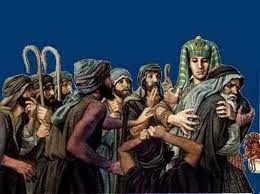
Yet, another in Africa did something even more audacious. Joseph, son of Jacob was sold as a slave by his brothers. For 13 years he lived as either a prisoner or slave. Then in a surprise turn of events he became Egypt’s Prime Minister. He had 22 years to plan and plot his revenge. However, instead of exacting revenge he used the strength of his institution, the Egyptian government to forgive. His forgiveness reconciled, restored, and rescued. His audacious forgiveness is remembered as one of the humanity’s stories that must be repeated time after time, generation after generation.

Approximately 400 years after Joseph’s audacious forgiveness God led Israel out of slavery in Egypt. In this wilderness journey God gave them a new law. This law was to transform them from a large dysfunctional extended family into a nation who taught all other nations to honor God. They were commanded to practice the beauty of a Sabbath rhythm. This rhythm reached its final triumph every 50 years in the Jubilee. On this sacred year, God commanded Israel they must forgive institutionally (Leviticus 25:8-555). It is an audacious command.

Meg Guillebaud taught us well about the Sabbath Year and the environment. For six years Israel planted and harvested. Then on the seventh year (Sabbath Year) the land was to rest (Exodus 23:10-11. Leviticus 25:1-7).


After seven of these cycles (49 years), on the fiftieth (50th) year a Jubilee Year was proclaimed. The community had met to grief over sin and resolve to change their behavior. They fasted and rested on this Day of Atonement (Leviticus 16:1-34). Then the loud music and party began. The trumpet was blown. Freedom was proclaimed.

Israel’s economic system had similarities to the surrounding nations. When someone was in debt they first sold their clan’s land. Then when their property was all gone they sold themselves. On the Jubilee the debt prisoners were freed. The land was returned to the clan. Extended families gathered and celebrated.

For two years the land and people rested. They lived on the bounty of stored food and the produce of the land.

Three thousand five hundred years later though we can never repeat this ritual I believe we all hunger for such a time where we rest, celebrate with our closest family and friends, and get a chance to start life a fresh.

We cannot replicate this command, but we can practice enduring Jubilee principles. I see five enduring principles.

First, our business dealings must be noted for truth, equity, and justice (25:14). Some will look at Jubilee and see it as a way to get an unfair advantage. That completely goes against the commands to tell the truth in all our documentation (Exodus 20:16). Also, the Sabbath command means we must be equitable to all despite gender, ethnic, or economic differences (Exodus 20:10). At our best we are motivated by principles such as hope, joy, and love. However, at our worst we are motivated by the fear of God. We must never lose this fear (Leviticus 25:17).

Second, the Jubilee reminds us we must care for our extended family. When they are in trouble those of us who have means must come to their rescue (25:25). For some of us today, our extended families are still our social network. Others of us have lived through seasons of history where our extended family is no longer our security net. For our faith community, the church is our extended family. I believe the implication of this command is that the church must care for the most vulnerable of society.

Third, Jubilee reminds us that nothing on this earth is really “mine.” We are all refugees (25:23). We began to use the “mine” pronoun as soon as we can speak. Whatever our mother tongue we proclaim, “wange.” God instructs Israel to remember. They were refugees for 400 years. They know what it is like to have no possessions; especially one’s freedom. They must never lose their ability to empathize. The Jubilee reminds us that our possessions are only an entrusted stewardship from God.

Fourth, work is honorable and no one should be treated as a slave (25:40). The wealthy were never to abuse those who were poor. In our context I find this very relevant. Many of us as children were refugees. We saw our parents deprived of legal status and economic opportunities that would have allowed them to succeed. Practically, they were treated as slaves. Now, many of us have landed in a place where though we have a good income we still need those to labor for us; and the wages in which we pay them are still less than ideal. We may desire to change the economic reality, but the means to do so is not in our circle of influence. What is in our influence is that we can treat our working class laborers with honor. We can give them time to rest. We can treat them with dignity. We can practice Jubilee.

Last, Jubilee reminds us that at least once per lifetime the only way to make things right is to forgive institutionally. We must use the strength of our institutions to do what is truly audacious. Particularly, when our institutions are young and maturing we find that sometimes we have to say, “This is a mess that cannot be made right by anything other than forgiveness.”

Let me confess one of my many sins. I have been sinned against in great ways by my historical denomination. When I wrestled with this with an open Bible I found some comforting texts. For instance, the Old Testament required restitution (Exodus 22-23). In the New Testament, when Zacchaeus was transformed by Jesus’ forgiveness his repentance included making restitution by four fold. Paul seems to allude to this principle of restitution in restoring the fallen (2 Corinthians 7:10-12). Even the 12 Steps Program requires for one to recover from addiction he must make amends to all who ones behavior has harmed. As I wrestled with the consequence of others sins in my life I became an accountant. I tabulated what they would need to do to restore what they had taken.

Then something startling happened. It was much like Joseph’s experience. I realized without all of the painful actions of others I never would have developed the character, skills, or network that allows me to bless others. How could I resent the capacity God had given me to bless through others poor choices? It was time for me to practice Jubilee. I had to use my institutional strength to forgive.

As we move past the command and come to history we discover just how audacious the Jubilee command is. There is no historical record of Israel taking a Jubilee year. There is one historical record of Israel taking a Sabbath Year (1 Maccabees 6:49). Most conclude the Jubilee command required more audacious courage, faith, and humility than Israel could muster. Jesus likely referred to the Jubilee when He proclaimed His mission to liberate humanity from sin and its consequences (Isaiah 61:1-2; Luke 4:17-19).

I’ve found this Jubilee command especially applicable to Rwanda. My understanding from reading is that in pre-colonial Rwanda during periods of famine those who were poor would take a position similar to Old Testament Israel. They would become the possession of another family to survive. Maybe, an English translation of the practice could be “indentured servant.” Some might consider this slavery. However, the situation does not seem to be permanent for generations. Frequently the one indebted would arise and be incorporated into the extended family where they landed. It also still seems clear that though Rwanda sought like many to find economic solutions to poverty and chaos Rwanda did not like her neighbors trade her poor to others as slaves. (Slavery in the Great Lakes Region of East Africa, Henri Medard and, Shane Doyle.)

About 20 years ago a movement started called the Jubilee movement. It was started by those who saw this command and believed the modern application was that the poor indebted nations could only arise from poverty by Jubilee. The institution must be used to forgive debt. It was promoted by both believers and non-believers. It was discussed in meetings from the N.G.O. to donor to embassy communities.


Rwanda was a particularly troubling case. During the war, the government who plotted genocide borrowed money that was later used to perpetrate genocide. Rwanda’s Minister of Finance following liberation, Dr. Donald Kaberuka with great dignity voiced that since the debt was a debt of a sovereign government it must be paid. However, many of us felt that justice could not stomach paying the debt of genocide. As time and discussions passed much of Rwanda’s institutional debt was forgiven. The Jubilee command was practiced. Justice was restored. (For further reading see: http://www.cgdev.org/content/article/detail/1424565/


Now the question arises of “moral hazard.” If the risk is taken away from borrowing some may misuse their loans. They assume that their debt will be forgiven. Thus they manipulate forgiveness. They turn a beautiful gift into an ugly weapon. It seems the Jubilee speaks directly to this. Our business dealings must be noted for truth, equity, and justice (25:14). We cannot devalue forgiveness by assuming it is a tool to manipulate.

It is the same for grace. Paul writes that some will attempt to take advantage of grace (Romans 6). Forgiveness is risky. Yet, forgiveness is transformational. Without an understanding of both our individual and communal sin we have no capacity to practice audacious forgiveness. Without audacious forgiveness our community cannot be healed. Without this healing of grace our institutions cannot grow to be just. Without these two paradoxical values of justice and grace we are condemned to cycles of frustration and destruction. Thus audacious forgiveness must be institutional.

May history remember us for practicing this old African virtue of audacious forgiveness in our generation.

Tuesday, December 21, 2010

MY FIRST AFRICAN CHRISTMAS

Christmas with Joseph, Mary, and Jesus taking refuge in Egypt
Another Christmas full court press is on.   Some may ask what drives me. I like people. I like Jesus. It seems pretty simple. Anytime I can host a party and tell a Jesus’ story I’m eager.

However, I many times feel like I am a living Joseph narrative. What went wrong many years ago taught me lessons that are a deep part of my being. I am a wounded healer. My first African Christmas was a disaster. The scars from that day will never leave me. Like the scars on my back that motivate me to run, the scars on my Christmas spirit motivate me to celebrate. I cannot stand the thought of someone in my community being alone and discouraged when the world celebrates the profound truth that God became flesh and dwelt among men. As a result no matter what our trauma we can find joy and peace.

I think I’ve finally hit that Joseph moment where I can say, “You tried to harm me, but God made it turn out for the best, so that he could save all these people, as he is now doing. (Genesis 50:20-21. Contemporary English Version.)”

Let me tell the story of my first African Christmas.


Childhood photos of the Christmases of my youth look like nostalgic Americana - Snow, snow, and more snow. Toboggans, sleds, and inner-tubes rapidly sailed down the hills. Family and friends gathered beyond measure. Meals of turkey, ham, stuffing, and potatoes with grandma’s pies filled our stomachs.

I came to Uganda in 1993 with a heritage of Christmas celebration. However, my church heritage was distinctly non-liturgical. In fact, the extremists in my church heritage used the Christmas season not to proclaim Good News of God Incarnate entering the world, but as an opportunity to bash “the denominations” that through syncretism turned the pagan ritual of Christmas into a religious tradition. (I never quite bought the theological implications of these extremists, but I feared the social implications of holding them to account.  Though in Rwanda God finally gave me the courage to stand up to denominational bullies.) Thus Christmas for me was largely a secular gathering of family and friends.

As a result of the social implications of theological extremism I had almost no spiritual friendships outside of my church heritage. Jana and I have always been people gatherers. However, our early career was a season of loneliness when we were in situations in which we could not gather from our church heritage.

I also came to Uganda heavily influenced by spiritual naivety that was nurtured by my seminary training. I assumed if I came to help people would reciprocate in kind with no ill motives. I assumed that I could be candid with supporters and they would understand. I assumed that each struggle of mine would be met by a quick answer that would make good newsletter material. I assumed that prayer was the only substance of sustenance. My first African Christmas broke my naivety. In a way it set in play events that stripped my innocence, left me distrustful, and only in Rwanda have allowed me to return the purity of heart I first had as I entered Africa.

Dave, Jana, and Sophia just before departure to Uganda
Our family in February 1993 sent almost all our earthly goods to Uganda. In March 1993 we moved to Uganda. In May 1993 we found a home, hired a staff, and tried to settle into life in Kampala. In May 1993 we also became embroiled in a life defining church conflict. In June 1993 our container arrived. Our possessions would not be released to us until January 1994. Christmas 1993 broke my spirit.

However, it also set in play a series of maturing events that taught me to make many diverse friends, not take visitors’ impressions too serious, avoid the entanglements of government and church corruption, and to celebrate in community at each possible moment.

Jana and I did our pre-departure Uganda budgeting by listening to Kenyan missionaries from the Churches of Christ. During the late 1980’s and early 1990’s Kenya was a dirt cheap country to live and work. On a minimal salary one could live well, serve fruitfully, and put money in the bank. We had never heard the term COLA (Cost of Living Adjustment). We spent over a year discovering funds assuming our future Uganda experience would be the same as other’s past Kenya experience.

When we entered Uganda we faced a tremendous economic shock. Homes were renting for two to three times what we had budgeted. Uganda’s cost of living was approximately double Kenya’s. When we asked other Americans where they shopped, their reply was, “Kenya.” Uganda was just recovering from over 20 years of chaos and very few goods were locally produced. Uganda’s currency was unstable. At one point the exchange rate dropped in half. In one year’s time we lost half our buying power when we had initially come to Uganda already underfunded. We tried explaining this to our supporters, but made no progress. In fact at one point they remarked, “All you asked for us to do is pray. Why are you now asking for more than that?”

To save money and still practice our spiritual gift of people gathering we rented a large home outside of Kampala on Lake Victoria that was horribly run down. Our rent was low and we labored for 2 years to restore the home. We used it as much as we could to serve through hospitality.

Lydia Bagira with her sons Emmy and Joel
We found our first household staff, Lydia Bagira. Lydia’s mother was a Rwandan refugee to Uganda from the chaos of 1959. Her father was a Mukiga from Western Uganda. Lydia always introduced herself as a Mukiga, but she seemed to always socialize with other Rwandans.  When we moved into our home we thought we would only be without our possessions for a few weeks. We slept on a mattress on the floor. We used Lydia’s cooking utensils and dishes to eat.

We chased getting our container cleared and made every possible mistake. We understood that personal effects of a missionary could be brought into Uganda duty free. However, we did not understand the social implications of Uganda’s corrupt tax gathering system. We ran into a man who noticed two skinny young white men (Greg Carr and myself), and saw an opportunity. This tax collector made us hop through hoop after hoop. We explained until we could explain no more. At one point when we were exasperated he remarked, “If you don’t like my answer go see the Minister of Finance.” Ironically, we had one Uganda friend, Peter Ngobi who knew Uganda’s Minister of Finance, Mayanga Nkangi. Thus we in good faith with Peter’s introduction went to see Minister Nkangi. We had one meeting that seemed to go well, and then all sorts of passive aggressive behavior began. (We years later realized how poorly we had handled both the meeting and the repercussions.) It seemed that we offended all. I now think that the tax gather was trying to work a bribe from us. On the other side Minister Nkangi concluded we were trying to bribe him and was deeply offended. Thus our poor cultural skills made us look like a prude to the corrupt, and corrupt to those with moral integrity. Thus from June 1993 until December 1993 we waited and waited for our container to be cleared with almost no movement.

Not only did we suffer at the hands of the Uganda Revenue Authority. We suffered at the hands of a church organization called Uganda Church of Christ. This church organization had a similar history to many organizations in Uganda in the late ‘80’s and early ‘90’s. It had been started as a legal mechanism for missionaries from Churches of Christ to enter Uganda and to keep the churches they planted legal in the early 1970’s. When Idi Amin came to power the missionaries left. In the vacuum a corrupt system and leadership developed. When missionaries began to re-enter Uganda during the boom of the early 90’s the corrupt system went into overdrive to discredit missionaries who would eventually hold the system accountable.

In May 1993 we went to check our mail and found the first of dozens of accusatory letters generated by the Uganda Church of Christ leaders. A meeting had been called to discuss us, we had not been invited, and letters were now being circulated to our supporters. For the next 6 months, Greg and I traveled extensively in Uganda to try to explain ourselves to approximately 30 local churches. While doing this traveling we heard a continual theme. “We want to change our leadership structure. We want missionaries. We see a problem with the current leaders of the Uganda Church of Christ. Can you just pay for us to come to a central place and have a meeting? If you do, we will straighten out the Uganda Church of Christ and work with you.”

We decided to pay for the transport, housing, and meals for a group of Uganda Church of Christ leaders in early December 1993. Their instructions were for us to just introduce ourselves at the meeting, leave for two days, and then return to discover the results of the meeting.

When we returned we were shocked to be told that the Uganda Church of Christ had disfellowshipped us. They considered us “the greatest threat to the Churches of Christ world-wide.” In order to avoid this discipline we could turn over our homes, vehicles, and finances to them. If not, we were instructed to have nothing more to do with them or face legal consequences. We could not believe it. We had served for 6 months, taught and traveled widely, and financed a meeting when we were broke only to be disfellowshipped. My identity was so tied to Churches of Christ that I did not know how to respond. It felt like a complete stripping of identity. After the disfellowshipping, they began writing letters to our supporters and any others who would listen. In the end they even were able to get half truths about us told in Church of Christ watchdog papers.

We had made a key mistake in that year. Older Church of Christ missionaries in Kenya had tried for years to work with this group of churches with similar results. Their counsel was to have nothing to do with them. However, we believed in “unity.” We thought with enough love and good teaching these churches could be turned around. Instead, we learned through hard knocks some only use the language of unity as a means to manipulate. These churches were religious organizations masquerading as churches. We should have had the discernment and courage to call them that. Both our youthful naivety and pride were at fault. So we suffered.

Years later I would find that some of those who disfellowshipped me in Uganda also had been also exceedingly unkind to Rwandan refugees in Uganda. A Joseph like moment was realizing that God through this experience taught me what it was like to be harshly and inaccurately judged outside of one’s home. I pray for my Uganda persecutors. I hope someday they will find redemption. Their hearts must be much more troubled than the hearts of those who suffered under their abuse.

After we were disfellowshipped, Greg and Debra Carr returned to the USA for a few weeks to spend Christmas with their family. We were left “alone.” We had few friends. However, somehow four visitors from the developed world came in contact with us through a friend of a friend. (I won’t share their national or denominational identity to protect them, but it is different from my own.) They had done well in life. They were on a church sponsored trip in Africa. They came to Uganda after a stop in pre-Genocide Rwanda. They were spending a few weeks in both Rwanda and Uganda.

We invited them to share an evening dinner with us. They were wise and delightful people. However, two bits of counsel from them did not set well. At the time I was too naïve to argue. It just did not feel right.

The first bit of counsel was their belief in “faith missions.” They did not believe missionaries should live on a budget, deal with COLA’s, know what to expect from supporters, etc…. Their belief was in the power of prayer. If we just prayed, God would move in hearts, people would give, and our needs would be met. We tried for years to follow this counsel, and it always seems to end in cycles of financial disaster. Prayer changes many things. However, COLA is real. No international organization has stable personnel if they do not deal with COLA.

Second they debriefed from their Pre-Genocide Rwanda experience. According to their Rwandan counselors Rwanda before 1959 was a feudal system ruled by arrogant and exploitive Tutsis. In 1990 the sons of these past rulers had invaded Rwanda with the intent of restoring the monarchy. Rwanda was now taking action to prevent Rwanda from falling back into a feudal state.

They discussed their political observations while we ate a meal cooked on the utensils of a Tutsi woman, Lydia Bagira. Intuitively I knew their political observations were inaccurate. However, I did not have the cultural, historical, or political tools to argue. Also, I was lonely and wanted friendships from a similar culture to my own. I’ve never quite forgiven myself for not pushing back harder on their observations from Pre-Genocide Rwanda’s politics. Five months later the world would see what these flawed prejudicial presuppositions produced. Today, I’ve probably become much more ornery in arguing against assumptions about culture that fuel stereo-types and prejudice.

So in early December 1993 Jana and I had been disfellowshipped, dined with expatriates empathetic to future genocidaires, were in Uganda with no missionary co-workers, and had yet to receive our household goods.

Finally, after months of arguing with the Uganda Revenue Authority we relinquished. We would pay the taxes even though we did not believe we owed any. We paid tax on personal effects. We even paid tax on Bibles. We filled out the forms. We were told to come to the warehouse on Christmas Eve, 1993 to collect our household goods.

We came to the customs bonded warehouse early in the morning. No matter how difficult 1993 had been we anticipated on Christmas Eve we would receive our goods. We would go home and unpack and unload. Camping would end. We would sit on our furniture, sleep in our bed, eat from food preserved in our refrigerator and cooked on our stove. Our toddler, Sophia would play with her old toys. We would be whole again.

We spent the day waiting. We missed lunch. We asked questions. Where was the man with the key to open the warehouse? He was gone, but he would be back we were told. We waited some more. We asked a few more questions. Then finally the end of the day came. The guards began ushering all out of the outskirts of the warehouse. No man with a key had come. We were lonely, tired, hungry, and more discouraged than we had ever been. We left realizing that for a day people had been polite, but there was no intention of us taking our possessions home on Christmas Eve.

I had grown to have a strange habit. Because we had received so much criticism I avoided checking the mail unless I was at the top of my game. Most trips to the Post Office in 1993 found critical letters and threats. Opening the mail was traumatic.

However, a new communication tool was developing in 1993 called e-mail. We had started using it. We shared an account with Greg Carr that went to our 1 phone line in our office. The account went through a server ran by Makerere University.

We were desperate for good news. Could something encouraging come from home? We decided that surely on Christmas Eve one of our supporters in the US would choose to find a way to encourage us.

We came to our office, turned on the computer, and hit “Send / Receive.” A long message was coming in slowly. We were eager. What could it be?

Then as we opened the message our hearts were completely broken. During the season of economic down turn we had tried to communicate our need for more financial support. We learned about COLA and tried to explain it. Our supporters now interpreted the communication.

We received one of the cruelest letters we have ever received in years of ministry. Our supporters had taken some Christian courses in Financial Management. They had consulted mission’s leaders in Churches of Christ. They had concluded that we were mismanaging. A phrase I’ll never forget from their letter was “We can support two missionaries for what we are giving you. If you can’t live on it, send it back.”

On Christmas Day, 1993 we quickly packed and left Uganda. We drove down quiet roads to the Kenyan border. We crossed a border that is usually full of commotion in desolation. We then drove into Kitale to see older Church of Christ missionaries. We were broken. The older missionaries nurtured our spirits. A few weeks later we returned to Uganda and tried again.

In late June 1994 our support collapsed. Christmas Eve 1993 was the turning point.

In June 2005 we moved to Rwanda. Our container was released to us in November 2005. In December 2005 and January 2006 I sorted through my old files and correspondence from Uganda days. A mentor had counseled me to keep the written records. He and I hoped someday the truth of our early Uganda years would be told. Truth is healing. I decided to read through the old correspondence. I was older, and maybe a little wiser. I must have made some key mistakes that resulted in such cruelty from both the Uganda Church of Christ and from our former supporters. I read critically and found few mistakes that merited the cruelty. It was shameful for anyone to treat a young missionary with a toddler the way we had been treated.

Yet, something more moved in my heart. Without the suffering seasons in Uganda we would not have come to Rwanda prepared. It was time to move on. I shredded the documents, took them to the bottom of my new home’s yard, and burned them. I would no longer seek to be vindicated.

A few months later Christ's Church of Rwanda (CCR) was granted registration when others' dreams of church planting stood in line. I suspect a few old friends who saw me suffer in Uganda and also suffered at the hands of my Uganda accuser helped the document go through. I was thankful for the opportunity.

On my first Rwanda furlough as we returned to the USA I received a phone call from an old friend at our old supporting church that had been so cruel. We had lunch at McDonalds and I spoke at their church. My anger was gone and I felt mercy. Though I could not deny how their treatment of my family in Uganda was very poor they had given us a chance. They gave us a start. Without their start we would not have got where we are today. Also, I realized that they too had suffered. I did not need to see them suffer any more. I prayed God’s mercy upon them. They apologized.

Now each Christmas I walk with a wound. I know what it can be like to be alone on Christmas. I have learned we should never define friendship based upon denominational, ethnic, racial, or national heritage. I have learned what it is like to be falsely accused and judged based upon ethnicity. True community is based in Christ.

Thus I invite all in my community to celebrate beyond measure. Our lives are an absolute mess. In Jesus we find joy and hope.

I am thankful for my first African Christmas. Whatever measure of blessing and joy I can share with others through this season would never have happened if not for our disastrous Christmas of 1993.

Wednesday, June 30, 2010

THE STORY OF TIMOTHY'S MOST RECENT BIRTH

On September 29, 2002 the world was graced by the birth of my youngest son, Timothy David Sanyu Jenkins. His birth was one of human tragedy as for a few brief weeks he had no family. Then by God’s sovereign grace Timothy made his way from Sanyu Babies home to become a full child with all rights and responsibilities of the Jenkins family. Within days after entering our family Timothy displayed his intense strength of both will and likability. While other babies cooed, Timothy growled. He would roar as a young lion. The world would always know when Timothy Jenkins was near. A few months after Timothy came to our home we noticed his struggle to move his right arm and leg. He was diagnosed with a minor case of cerebral palsy. We pondered the future. Timothy responded with his strong will. We may be an active family, but Timothy made us strong. He crawled, walked, and then ran. Rwanda may be the best place in the world for a family graced by Timothy for each day we live out the words of President Kagame, “Others may walk, we must run.” In Timothy’s family running is the only option.

Our family comes from a religious tradition that practices believer’s baptism. (For the sake of this blog I’ll skip lengthy bible commentaries and theological discussions and just tell our journey.) In our tradition baptism is practiced by immersion for those old enough to conceptualize faith in Jesus of Nazareth. Socially, baptism signifies inclusion into God’s family. With inclusion comes the practical membership at a local church and a shared weekly meal called Holy Communion or The Lord’s Supper. This sacred meal is a time when our church family remembers Jesus’ death and resurrection. In this process we are reminded of both the community we share with Jesus himself and Jesus followers around the world.

A perpetually awkward moment of our tradition is that we ask for each baptism candidate to come to his own faith before considering baptism. However, how old or much understanding is required to participate in our sacred ritual of immersion? Is it just the simple children’s Sunday School answer of “Jesus” or does a baptism subject need to be able to explain complex theological topics such as grace, the Holy Spirit, the Kingdom of God, and “The Church?” If there is not some proper understanding of belief our community risks heresy in each new generation of faith discovery.

Another portion our awkwardness is our revival tradition. We believe in repentance and discovery. We must continually weigh our thoughts, actions, and character against the holiness of God. In this process we continue to discover more grace. This causes us to celebrate and change. We hope this revival process will over time with the regeneration brought on by the Holy Spirit make us Jesus’ representative on earth. We believe revival takes place both in our personal lives and in the lives of our community.

With each of our new discoveries of grace and renewal a temptation is to look at our old ways and consider them “not Christian.” At times our revival tradition makes us not honor God’s work in either our past live or our community’s. It can lead to legalistic elitism. Some who experience this will look upon their early baptism and consider it not worthy of our Christian ideals. Some will be re-baptized several times in life as they discover more.

A worry of parents in our tradition is twofold. One, we may baptize our children when they are too young. With such a situation they may come to resent our overbearing influence or to conclude their young faith was really no faith. The second struggle is that we may spurn their early requests to be baptized. Thus we crush their tender young seeking hearts.

Two weeks ago, Jana I were given 2 requests by our fast footed son. These were “I want to be baptized and I want a football helmet.”

With both questions we proceeded with caution. After all, we had just been staying with a friend who allowed Timothy to borrow his Texas A and M helmet. The thought of our fast son becoming an Aggie sent a chill down our neck. What if an even worse fate happened - Timothy became a baptized, but unbelieving Aggie?

We began by asking Timothy, “Why do you want to be baptized?” Timothy responded with simple answers. Everyone in his family had been baptized. Those he admired at church had been baptized. He watched others share our church meal of communion and felt excluded. The most startling words he used were “I am all alone.”

Timothy’s strong will is matched by two deep parts of his personality. One is the sense of personal responsibility. The other is a strong sense of community. Timothy at times grieves over the loss of his arm. One of our most difficult moments was his request for “a new arm for Christmas.” Yet, his grief always ends in resolve. He will run fast, throw hard, and shoot true whether the game is basketball or just childhood tussles. Timothy also deeply grieves over his failures. He is a child with a deep conscience who models contriteness and repentance. For brief moments his contrite spirit can reach the point of self-hatred. It is at those moments that he most needs affirming parental love, grace, and forgiveness to re-discover the will to simply do better.

His sense of community is compelling. He has a tremendous capacity to give and receive affection. He needs great amount of human touch. He is rarely alone. When placed with his peers within a short time most will be following his choice of play. He instinctively possesses the traits of great leaders – empathy, understanding, vision, and resolve.

We discussed with Timothy the nature of our faith. We believe that Jesus rose from the dead. We are all sinners (full of flaws and mistakes.) By believing in the truth of Jesus resurrection; He lives in us, forgives us, and molds us into His likeness. Timothy nodded that he understood these truths.

We have a tradition of asking our children to write their reasons to be baptized so that we have permanent record of their thought process. As Timothy did this he asked for our help. He did not know how to spell many of the words he desired to write. Some of the words included “alone, bored, annoying, and tired.” He struggled to explain, but hungered for more. It seemed his struggle was much like our adult world that the Apostle Paul wrote about as we struggle to communicate our deepest needs to God with our insufficient human language (Romans 8:26).

Jana and I took some time to wrestle and discover. An old book came to my mind – J.I. Packer’s, Knowing God. I spent a portion of Thursday, June 26 in a library in Roscoe, Texas and could not find the book. I went to Roscoe’s book store and found I could order it in 2 weeks, but we would be gone. On Friday, we went to Abilene, Texas to host a reception. We stopped at a Christian bookstore and asked only to find that Packer’s book was out of print. Thankfully, we had a little time to check out Abilene Christian University’s library and finally found our old memory. Packer takes a chapter and writes about the nature of being “Sons of God.” He makes several startling statements. One is that not all of humanity are “children of God.” Only those who have been born again have that privilege. The other is that our “adoption” into God’s family is "the highest privilege of the Gospel."

We read Romans 8:23 – “Not only so, but we ourselves, who have the first fruits of the Spirit, groan inwardly as we wait eagerly for our adoption as sons, the redemption of our bodies.”

We concluded it was the Spirit of God within Timothy that cried out for the completion of his adoption. He had been in our home and raised as our child since he was 2 weeks old. We went through a 3 year process to adopt him in Uganda. We went through several weeks of form filling and interviews in Nairobi for him to immigrate to America. Upon reaching US soil he became a bi-national and after some more hoop jumping carried both an American and Ugandan passport. He was a Ugandan, American, Jenkins; but his sonship was still lacking. Only by being born again of water and spirit could he claim his full privilege as a son of God.

We were traveling and away from our oldest children – Sophia, Caleb, and Ethan. We were away from our home churches of Christ’s Church in Rwanda (Kigali) and Quail Springs Church of Christ (Oklahoma City). However, for a few brief days we were with Jana’s parents, Gaston and Jan Tarbet. Family is not constrained by geography. We decided now was the season.

Gaston called an old friend, Royce Clay and we arranged for Timothy to be baptized at the Colorado City, Texas Church of Christ on Saturday, June 26.

Now is where the video makes it all too real and displays that faith may be its truest in the midst of the humorous.

I spoke briefly to our little community and Timothy about adoption. Then Timothy and I began stepping into the baptistery. I’ve had 20 years of good pastoral fortune related to baptisms. I can’t remember myself ever having a baptism experience that became “a preacher story.” Today was my day. I stepped into the water afraid of cold water and nasty algae, but found the water warm and clean. I took 2 more steps and suddenly realized my fears should have gone to the other extreme. I screamed as the water was beyond hot. I rushed out of the baptistery and grabbed Timothy along the way. It was one of those moments where I wished I had been wiser. (For FB junkies check out the video.) Then I repeated a phrase to those who I thought may argue, “The water is far too hot.”

The thermostat of the baptistery was broken. The water kept heating. We called another church member responsible for the baptistery upkeep. Then we drained and filled the baptistery twice and added 6 bags of ice before the water was cool enough for human contact. About an hour later Timothy and I again descended the waters of baptism. My only thanks to the Lord was for the grace that I was the one who got a little burned instead of Timothy. I am so glad the memory of a water burn is mine and not Timon’s.

I asked Timothy two questions – “Do you believe Jesus rose from the dead? Do you want to make Jesus the boss of your life?” He answered, “Yes.” I gently placed him under water in the name of the Father, Son, and Spirit. Then I brought him up to new life and watched him smile.

Our family shared a meal that evening in celebration. The following Sunday we all shared the meal of Holy Communion.

Evidence of a changed life?

A few days later Jana and I found a football helmet. By the grace of God it was not an Aggies’s helmet. Instead our only options were Oklahoma Sooners or Oklahoma State Cowboys. Timothy chose to be a Sooner. Later, the next day I overheard Timothy discuss with his older sister Ruth, his favorite football player, Adrian Peterson. Timothy is like him in many ways – black skin, fast as can be, and both have Oklahoma roots. Timothy enjoyed comparing himself to Adrian. Then he added one more comment. The most important accomplishments and identifications this side of heaven are neither speed nor ethnic background. They are being part of God’s family. Timothy did not know Adrian’s baptism status, but he chose to define himself not by similar speed, but by the family of God.

Timothy still has his strong will. We’ve done our daily tango a few times. Yesterday, Timothy astounded me. He is learning to swim during our summer travels. He has hit the point of having no desire for floats and an unwavering sense of courage. He is a struggling swimmer, but even as he grasps for air he is not afraid. We need to keep our eyes on him in a pool, but we know courage is the mark of good swimmers. Courage also is a mark of God’s children. Timothy is forever changed.

Wednesday, April 7, 2010

Memories of April 7, 1994

Some days in history are never forgotten. On December 8, 1941, the President of the United States, Franklin Delano Roosevelt said these words, “Yesterday, December 7th, 1941 -- a date which will live in infamy -- the United States of America was suddenly and deliberately attacked by naval and air forces of the Empire of Japan.”

Those Americans a few years older than me can tell the exact place and feelings they experienced on November 22, 1963 when President John F. Kennedy was shot and killed.

One of my earliest memories is March 30, 1981 when President Ronald Regan was shot.

 April 7, 1994 is one of history’s greatest tragedies. On April 6, 1994 Rwandan President Habyarimana was returning from Arusha, Tanzania following negotiations to end the war in Rwanda. His plane was shot down over Kigali, and the Rwandan Genocide began the following day, April 7, 1994.  It is a date that must live in the memory of humanity. Generations following us must remember that a million lives were lost. We must continue to say, “Never again.”

My family is an oddity. We have lived most of our adult lives in the Great Lakes Region of Africa as traveling story tellers. Sometimes we are asked, “Where is your home?”
Us at Brooklyn Center Church of Christ preparing to enter Uganda

We are unable to respond with a specific place. Instead, we tell stories. Home is a place with a warm bed and a gracious friend. We journey through many places, make friends, and tell stories.
In 1993, Ugandan playwright Alex Mukulu wrote his history of Post-Colonial Uganda, 30 Years of Bananas. In the opening scene there is a search for an unbiased narrator. The only one who can be found is a Rwandan refugee, Kaleekeezi.

Maybe, today it would be good for memories of the events of 1993 and 1994 to be told by foreigner such as myself? Maybe, I can speak with the voice of Kaleeekeezi to foreigners like myself?

In doing so, I bring bias. I also will share some secret places, wounds, and actions – a few things I’ve not told publicly. I recognize the events that created my personal wounds are miniscule compared to those who survived the Genocide. I ask forgiveness if my stories wound again. I tell them to share our common humanity. I will share a few names and places. At other points I’ll conceal. My concealments are to protect those who may prefer anonymity. I hope the best for all my friends and even for those who chose to be my enemies. My hope is that love will heal all our wounds that cause bitterness and hatred to reign.

The Rwandan Genocide was a tragedy of the world fueled by our oldest of sins – jealousy, hatred, and untrue mythologies. Today should be a day where we examine our hearts deepest darkest places. In this examining we must wrestle with our responsibility and resolve to change our thoughts, emotions, and actions. By offering our repentance we seek forgiveness and reconciliation. Hopefully, it will be found. Generations who follow us will hopefully live in a world of peace and unity. When ugly voices of prejudice and hate arise our prodigy will respond, “No, never again.”

Photo from National Geographic, November, 1971
My first interactions with the people of Rwanda were a foreshadowing of what my life would become. My grandmother, Minnie Sophia Jenkins and I shared many things. One was a common birthday. Another was a love for reading and writing. A third was a sense of hope in adversity. My grandmother read National Geographic, and kept the magazines in her home. In an article published in November, 1971, "Uganda: Africa's Uneasy Heartland” was a photo that struck a lasting image in my young mind. The photo was of Rwandan refugees in Uganda dancing. They were described as “aristocrats living as refugees.” I was captivated by their beauty and dignity. Somehow I hungered to hear their songs and celebrate with their dance.

In 1990 and 1991 I studied Theology at Abilene Christian University (ACU) in Abilene, Texas. While there I met my future in several individuals. The best known and most influential is my wife, Jana Tarbet Jenkins. However, one of great influence who few remember was a fellow student from Western Uganda, Charles Guma. In 1993, Guma returned to Uganda, and I simply followed my family and friends there.

Upon our arrival in March, 1993 we began the task of settling. We rented a home.  We needed a staff to manage. We knew few people we could trust. While looking for a home we met a woman named
Lydia Bagira.

 She was watching the home of an expatriate who had left Uganda in tragic circumstances. She was “only the maid,” but I was struck that her employers must have found her trustworthy if they left their home to her management. She inquired if we would need help. As it became apparent that we did need help I remembered both the counsel of my father, Lloyd Jenkins, and my master, Jesus of Nazareth, “Entrust more to those who have shown they can well manage the small.” We found Lydia and offered her a job. A few other expatriates thought we were nuts to entrust someone we did not know without references. However, something inside told me to trust my intuition as the leading of the Holy Spirit, and I’ve come to have my deepest life regrets when I did not trust that intuition.
Lydia Bagira and her sons, Joel and Emmy

Lydia worked with our family for several years. As we shared our stories we became friends. Lydia was the child of Rwandan refugees. She was very intelligent. She was loyal, kind, and compassionate. She also like almost all of my most trusted friends had a very strong spirit and will. Discussions were always honest and on occasion a bit heated, but duplicity was non-existent. Lydia shared stories of suffering and misfortune. On her time off, her friends would come by our home. Most were like her, Rwandan women making the most of poor fortune. They had more ability than the medial jobs they had acquired as refugees. They shared common relationships and hope. Most had brothers, cousins, husbands, and boyfriends who had joined the Rwandan Patriotic Front (RPF) army. They told stories and waited for a day in which they could return to the land the land of their parents and grandparents. A little gossip was exchanged with news from the war front, prayers were said for safety, and they waited in hope. Lydia had recently given birth to a son, Joel that was the same age as my daughter Sophia.

Once, Lydia Bagira decided she needed to go to the border to try to find some news. She left her infant son, Joel in the care of a young Ugandan girl with baby milk bottles. In hindsight, I don’t know if Joel had ever drunk from a bottle. As the day went on we heard Joel’s cries and they never stopped. He would not be satisfied with a bottle. Jana was still nursing Sophia. Joel’s cries continued. We’ve never done well to listen to the cries of children and not respond. Eventually, we broke taboo. Jana collected Joel and nursed him back to calm and sleep from her own body. In some African cultures this was a braking of taboo. In others it was a mark of community. We were naive and just made the best decision we could to help a friend’s child. Again, our empathies for Rwanda people in dispersion increased.

Shortly after our arrival to Uganda I visited my friend, Charles Guma’s home in Western Uganda. We traveled to Mbarara, and then went southeast to Guma’s family home. The scenery became drier and full of hills and scrub brush much like the scenery of Abilene, Texas. As we neared Guma’s home we slowed our vehicle and he began visiting with his village neighbors. One in particular struck me. She was old, but tall and graceful – full of dignity and beauty. After Guma spoke to her, he turned to me and told me that the old woman was a Rwandan refugee that had lived many years in his home village. As I watched her walk away I noticed very unique phenomena. All the men’s eyes followed this graceful old beauty. No matter what misfortune and suffering had befallen her she had never surrendered her dignity. It was thoroughly captivating.

Then we entered Guma’s home. His parents were thrilled to see him. The hospitality was gracious. Dance was celebrated and food shared. However as the celebration ended and life was discussed this home was one of tragedy. Many of Guma’s siblings, friends, and peers had died or were dying of AIDS. In the midst of this tragedy another death had befallen Guma’s family. His nephew had joined the RPF and lost his life in Rwanda. I never heard bitterness about the loss. It was accepted. My understanding was and still is limited. However, he seemed to be a young man seeking adventure that was loyal to his Rwandan friends and simply followed them in their journey to return home.

The following morning, Guma and I climbed the hill above his home. I looked to the east and saw a river. Beyond the river was an encampment with an artillery piece. I inquired and Guma told me that it was a training camp for the RPF. Hope was spoken and I realized how personal the Rwandan struggle was to Guma’s village.

As we returned to Kampala, my brother-in-law and co-worker, Greg Carr made a friendship. Uganda was awakening after years of state controlled media and terror. Peace in Kampala had come in 1986, but the explosion of the consequences of peace and freedom began in the early 90’s. The private media explosion was beginning. Greg established a friendship with one of the upcoming disc jockeys, DJ Barry. He was tall, loud, and flamboyant. You had to try very hard not to like DJ Barry. (Though agreeing with him might be a different matter.) As we discovered that DJ Barry was a Rwandan refugee I did what my training at ACU missions training taught me. I asked questions about language, culture, and ethnicity. DJ Barry did something very out of the ordinary for most Africans I had met at that time. He rebuked me. He refused to see his world as one of ethnic division. He was a Rwandan and not a member of an ethnic group. Eventually, he would share the details of his journey, but they were told through the cultural lenses of unity of the Rwandan people.

Greg found an office space in a Kampala office complex called Black Lines House. We rented a space and began discovering ministry possibilities. We opened a small library. We kept a guest book. Our first registered guest was a Rwandan refugee seeking to learn. (I’ve forgotten his name, but I have the records somewhere in my boxes of memories.) Around the corner from our office was a small restaurant. For some unique reason there were a few Rwandan gentlemen who frequently stopped and had lunch. I always enjoyed our short conversations.

During this first year of ministry discovery in Uganda, Greg and I became embroiled in an ugly church conflict. I was 26 and very naive. We were accused of the most ridiculous and inflammatory actions. It may have been the defining conflict of my life and career. I thought in coming to Uganda I would be welcomed as a messenger of peace. Instead, an old church and political leader from a previous regime had an ax to grind, and Greg and I would be the stone. He wrote letter after letter to my old professors, supporters, Ugandan government officials, church leaders, and anyone else who would listen. The strangest thing is that some considered his flagrant untruthfulness as “smoke behind a fire.” We were always on the defensive and in continual turmoil for a year.

One day I picked up a copy of New Vision, Uganda’s Daily Newspaper, and found an article concerning a press conference by a political party who ruled Uganda from 1962 to 1971 and from 1981 to 1985. The news conference focused upon Rwandans living in Uganda. I noticed some strong similarities between the accusations directed at me and the accusations directed at Rwandans in Uganda. A little while later I did something as embarrassing as if I bought a National Enquirer copy at a grocery checkout line in America. I walked a couple blocks down the street and bought political propaganda from an old political party who no longer was ruling Uganda. I skimmed to its sections on Rwandans living in Uganda. I noticed a unique writing phenomenon. If I removed the word “Banyarwanda” (people of Rwanda) and replaced “Bazungu” (people with white skin) it appeared to be the same document. If I removed the names of the leaders of Rwandans in Uganda and replaced them with the names of Greg Carr and myself it seemed to be almost the same document. Hatred and mythology are always dangerous. We all struggle with prejudice and convenient stereotypes. However, it appeared that I had discovered the original source of my accuser’s mythology. He either was the editor or he was highly influenced by the editor of this misguided political propaganda.

My empathy with the Rwanda community in Uganda was solidified as I found we had the same accuser. (Seven years later Rwandan friends would confirm my suspicions as they told stories of being chased out of Uganda’s civil service by my accuser in the early 1980’s.)

As 1993 became 1994, hope filled my Rwandan friends. Negotiations were taking place. It was hoped that a final and lasting settlement would soon be reached. Many thought their return to Rwanda was imminent.

Then in the evening of April 6, 1994 our radios told a surprising story. As Rwandan President Habyarimana returned from negotiations with the RPF in Arusha, Tanzania his plane was shot down over Kigali. All was tense. The next day rumors began to be heard of mass killings. It seemed completely unbelievable. I thought “surely not.” The stories continued. They sounded like some cross between the Jewish Holocaust of World War Two and the most gruesome horror movies of Hollywood. Civilians were being slaughtered. Killers saw no differentiation between civilian and combatant, child and adult, nor male and female. The tools of murder were the most gruesome of humanity – clubs and machetes. The killing fields were the churches of Rwanda. Roadblocks cut off all hope of escape. Could those made in God’s image so mercilessly destroy other image bearers of God?

Panic seemed to strike our Rwandan friends. What was happening?

Shamefully, I never wrote my US senators or local papers. I was paralyzed. My missions training    taught me to be unengaged with matters that had political consequences.  My reading of the Old Testament spoke that the role of the faith community is to be a prophetic voice. I chose my reading of mission’s theory over the words of God in the Old Testament. My repentance for my silence in 1994 is to have an active prophetic voice where ever I land. I still have my failings, but as best I can I speak for those without a voice and seek out friendships with the media so I am never silent when I should speak.


Weeks later a Rwandan women came to a Bible study for expatriates that Jana attended. She was in Rwanda during the Genocide and somehow escaped to Uganda. She told unbelievable stories. When Jana shared them with me I had to close my both my ears and my heart as they were too painful to bear.

At least once per week I would walk down to our local lakeside market to buy fish. Uganda is downstream from Rwanda. Her Kagera River runs into Uganda’s Lake Victoria. The corpses of the genocide victims were dumped into the Kagera River basin. The corpses began washing up on the shores of Lake Victoria. Our fish market was closed. Water and fish from our fair Uganda lake became inconsumable for humans.

In hindsight as we ask the question why the world did not act I’ve pondered.

“If Red Lobster had been shut down in the US; if it was impossible to get a fish sandwich at McDonalds; if there were no more catfish restaurants in the Southern United States. Would we then have acted?” Does our concern and action always have to be driven by selfish consumerism? When do the interests of the developed world simply mean we respond believing that all men are made in the image of God?”

A few months later, my Ugandan accuser had seeming victory. My family lost our financial support. We returned to the US to discover partnerships and funding anew. I followed the news from my African home while living in my American home.

On July 4, 1994 the RPF captured Kigali. It seemed that a million lives had been lost in the chaos of 100 days. News seemed to tell that most of Rwanda was now secure and the genocide was history.

Our family went to a fireworks display to celebrate America’s Independence in Lakeville, Minnesota. I sat still and watched the fireworks over my head. I visited with old friends and thanked God for my American freedom.

Inside, something was changed forever. Rwanda was an inescapable call. Uganda would be our home for several following years, but we were entangled in this region. I could never get out of my heart and mind my Rwandan friends and their stories.

Today I remember, grief, and repent. Will you join me? Where were you on April 7, 1994? What will you do about it today?