Showing posts with label Joseph. Show all posts

Thursday, March 31, 2011

AUDACIOUS FORGIVENESS MUST BE INSTITUTIONAL


African history is known for two unforgettable virtues. Audacity and Forgiveness. Only on the rarest of moments are they combined. However, those moments are unforgettable. This past Sunday, I asked two questions of our CCR audience.

First, “How many can recognize the name, Hannibal, General of Carthage?

Second, “How many can recognize the name, Joseph, son of Jacob, Prime Minister of Egypt?”

Both CCR services found that three times as many people recognized the name of Joseph as compared to Hannibal. Both were audacious men. They were extremely bold and daring. They were not restricted to prior ideas and conventions. They faced the unknown with great initiative and resourcefulness.

Hannibal faced the might of Ancient Rome’s military and took his army and their elephants over the mountains of the Alps. Military historians have marveled at his audacity. He used the strength of his institution, the Carthage Army to make one of history’s most spectacular raids.

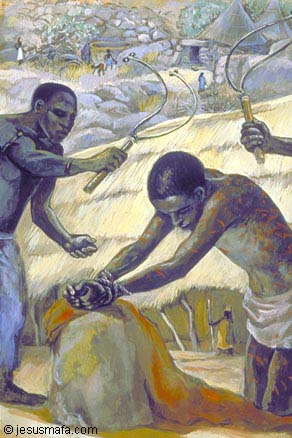
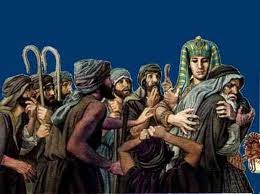
Yet, another in Africa did something even more audacious. Joseph, son of Jacob was sold as a slave by his brothers. For 13 years he lived as either a prisoner or slave. Then in a surprise turn of events he became Egypt’s Prime Minister. He had 22 years to plan and plot his revenge. However, instead of exacting revenge he used the strength of his institution, the Egyptian government to forgive. His forgiveness reconciled, restored, and rescued. His audacious forgiveness is remembered as one of the humanity’s stories that must be repeated time after time, generation after generation.

Approximately 400 years after Joseph’s audacious forgiveness God led Israel out of slavery in Egypt. In this wilderness journey God gave them a new law. This law was to transform them from a large dysfunctional extended family into a nation who taught all other nations to honor God. They were commanded to practice the beauty of a Sabbath rhythm. This rhythm reached its final triumph every 50 years in the Jubilee. On this sacred year, God commanded Israel they must forgive institutionally (Leviticus 25:8-555). It is an audacious command.

Meg Guillebaud taught us well about the Sabbath Year and the environment. For six years Israel planted and harvested. Then on the seventh year (Sabbath Year) the land was to rest (Exodus 23:10-11. Leviticus 25:1-7).


After seven of these cycles (49 years), on the fiftieth (50th) year a Jubilee Year was proclaimed. The community had met to grief over sin and resolve to change their behavior. They fasted and rested on this Day of Atonement (Leviticus 16:1-34). Then the loud music and party began. The trumpet was blown. Freedom was proclaimed.

Israel’s economic system had similarities to the surrounding nations. When someone was in debt they first sold their clan’s land. Then when their property was all gone they sold themselves. On the Jubilee the debt prisoners were freed. The land was returned to the clan. Extended families gathered and celebrated.

For two years the land and people rested. They lived on the bounty of stored food and the produce of the land.

Three thousand five hundred years later though we can never repeat this ritual I believe we all hunger for such a time where we rest, celebrate with our closest family and friends, and get a chance to start life a fresh.

We cannot replicate this command, but we can practice enduring Jubilee principles. I see five enduring principles.

First, our business dealings must be noted for truth, equity, and justice (25:14). Some will look at Jubilee and see it as a way to get an unfair advantage. That completely goes against the commands to tell the truth in all our documentation (Exodus 20:16). Also, the Sabbath command means we must be equitable to all despite gender, ethnic, or economic differences (Exodus 20:10). At our best we are motivated by principles such as hope, joy, and love. However, at our worst we are motivated by the fear of God. We must never lose this fear (Leviticus 25:17).

Second, the Jubilee reminds us we must care for our extended family. When they are in trouble those of us who have means must come to their rescue (25:25). For some of us today, our extended families are still our social network. Others of us have lived through seasons of history where our extended family is no longer our security net. For our faith community, the church is our extended family. I believe the implication of this command is that the church must care for the most vulnerable of society.

Third, Jubilee reminds us that nothing on this earth is really “mine.” We are all refugees (25:23). We began to use the “mine” pronoun as soon as we can speak. Whatever our mother tongue we proclaim, “wange.” God instructs Israel to remember. They were refugees for 400 years. They know what it is like to have no possessions; especially one’s freedom. They must never lose their ability to empathize. The Jubilee reminds us that our possessions are only an entrusted stewardship from God.

Fourth, work is honorable and no one should be treated as a slave (25:40). The wealthy were never to abuse those who were poor. In our context I find this very relevant. Many of us as children were refugees. We saw our parents deprived of legal status and economic opportunities that would have allowed them to succeed. Practically, they were treated as slaves. Now, many of us have landed in a place where though we have a good income we still need those to labor for us; and the wages in which we pay them are still less than ideal. We may desire to change the economic reality, but the means to do so is not in our circle of influence. What is in our influence is that we can treat our working class laborers with honor. We can give them time to rest. We can treat them with dignity. We can practice Jubilee.

Last, Jubilee reminds us that at least once per lifetime the only way to make things right is to forgive institutionally. We must use the strength of our institutions to do what is truly audacious. Particularly, when our institutions are young and maturing we find that sometimes we have to say, “This is a mess that cannot be made right by anything other than forgiveness.”

Let me confess one of my many sins. I have been sinned against in great ways by my historical denomination. When I wrestled with this with an open Bible I found some comforting texts. For instance, the Old Testament required restitution (Exodus 22-23). In the New Testament, when Zacchaeus was transformed by Jesus’ forgiveness his repentance included making restitution by four fold. Paul seems to allude to this principle of restitution in restoring the fallen (2 Corinthians 7:10-12). Even the 12 Steps Program requires for one to recover from addiction he must make amends to all who ones behavior has harmed. As I wrestled with the consequence of others sins in my life I became an accountant. I tabulated what they would need to do to restore what they had taken.

Then something startling happened. It was much like Joseph’s experience. I realized without all of the painful actions of others I never would have developed the character, skills, or network that allows me to bless others. How could I resent the capacity God had given me to bless through others poor choices? It was time for me to practice Jubilee. I had to use my institutional strength to forgive.

As we move past the command and come to history we discover just how audacious the Jubilee command is. There is no historical record of Israel taking a Jubilee year. There is one historical record of Israel taking a Sabbath Year (1 Maccabees 6:49). Most conclude the Jubilee command required more audacious courage, faith, and humility than Israel could muster. Jesus likely referred to the Jubilee when He proclaimed His mission to liberate humanity from sin and its consequences (Isaiah 61:1-2; Luke 4:17-19).

I’ve found this Jubilee command especially applicable to Rwanda. My understanding from reading is that in pre-colonial Rwanda during periods of famine those who were poor would take a position similar to Old Testament Israel. They would become the possession of another family to survive. Maybe, an English translation of the practice could be “indentured servant.” Some might consider this slavery. However, the situation does not seem to be permanent for generations. Frequently the one indebted would arise and be incorporated into the extended family where they landed. It also still seems clear that though Rwanda sought like many to find economic solutions to poverty and chaos Rwanda did not like her neighbors trade her poor to others as slaves. (Slavery in the Great Lakes Region of East Africa, Henri Medard and, Shane Doyle.)

About 20 years ago a movement started called the Jubilee movement. It was started by those who saw this command and believed the modern application was that the poor indebted nations could only arise from poverty by Jubilee. The institution must be used to forgive debt. It was promoted by both believers and non-believers. It was discussed in meetings from the N.G.O. to donor to embassy communities.


Rwanda was a particularly troubling case. During the war, the government who plotted genocide borrowed money that was later used to perpetrate genocide. Rwanda’s Minister of Finance following liberation, Dr. Donald Kaberuka with great dignity voiced that since the debt was a debt of a sovereign government it must be paid. However, many of us felt that justice could not stomach paying the debt of genocide. As time and discussions passed much of Rwanda’s institutional debt was forgiven. The Jubilee command was practiced. Justice was restored. (For further reading see: http://www.cgdev.org/content/article/detail/1424565/


Now the question arises of “moral hazard.” If the risk is taken away from borrowing some may misuse their loans. They assume that their debt will be forgiven. Thus they manipulate forgiveness. They turn a beautiful gift into an ugly weapon. It seems the Jubilee speaks directly to this. Our business dealings must be noted for truth, equity, and justice (25:14). We cannot devalue forgiveness by assuming it is a tool to manipulate.

It is the same for grace. Paul writes that some will attempt to take advantage of grace (Romans 6). Forgiveness is risky. Yet, forgiveness is transformational. Without an understanding of both our individual and communal sin we have no capacity to practice audacious forgiveness. Without audacious forgiveness our community cannot be healed. Without this healing of grace our institutions cannot grow to be just. Without these two paradoxical values of justice and grace we are condemned to cycles of frustration and destruction. Thus audacious forgiveness must be institutional.

May history remember us for practicing this old African virtue of audacious forgiveness in our generation.

Tuesday, December 21, 2010

MY FIRST AFRICAN CHRISTMAS

Christmas with Joseph, Mary, and Jesus taking refuge in Egypt
Another Christmas full court press is on.   Some may ask what drives me. I like people. I like Jesus. It seems pretty simple. Anytime I can host a party and tell a Jesus’ story I’m eager.

However, I many times feel like I am a living Joseph narrative. What went wrong many years ago taught me lessons that are a deep part of my being. I am a wounded healer. My first African Christmas was a disaster. The scars from that day will never leave me. Like the scars on my back that motivate me to run, the scars on my Christmas spirit motivate me to celebrate. I cannot stand the thought of someone in my community being alone and discouraged when the world celebrates the profound truth that God became flesh and dwelt among men. As a result no matter what our trauma we can find joy and peace.

I think I’ve finally hit that Joseph moment where I can say, “You tried to harm me, but God made it turn out for the best, so that he could save all these people, as he is now doing. (Genesis 50:20-21. Contemporary English Version.)”

Let me tell the story of my first African Christmas.


Childhood photos of the Christmases of my youth look like nostalgic Americana - Snow, snow, and more snow. Toboggans, sleds, and inner-tubes rapidly sailed down the hills. Family and friends gathered beyond measure. Meals of turkey, ham, stuffing, and potatoes with grandma’s pies filled our stomachs.

I came to Uganda in 1993 with a heritage of Christmas celebration. However, my church heritage was distinctly non-liturgical. In fact, the extremists in my church heritage used the Christmas season not to proclaim Good News of God Incarnate entering the world, but as an opportunity to bash “the denominations” that through syncretism turned the pagan ritual of Christmas into a religious tradition. (I never quite bought the theological implications of these extremists, but I feared the social implications of holding them to account.  Though in Rwanda God finally gave me the courage to stand up to denominational bullies.) Thus Christmas for me was largely a secular gathering of family and friends.

As a result of the social implications of theological extremism I had almost no spiritual friendships outside of my church heritage. Jana and I have always been people gatherers. However, our early career was a season of loneliness when we were in situations in which we could not gather from our church heritage.

I also came to Uganda heavily influenced by spiritual naivety that was nurtured by my seminary training. I assumed if I came to help people would reciprocate in kind with no ill motives. I assumed that I could be candid with supporters and they would understand. I assumed that each struggle of mine would be met by a quick answer that would make good newsletter material. I assumed that prayer was the only substance of sustenance. My first African Christmas broke my naivety. In a way it set in play events that stripped my innocence, left me distrustful, and only in Rwanda have allowed me to return the purity of heart I first had as I entered Africa.

Dave, Jana, and Sophia just before departure to Uganda
Our family in February 1993 sent almost all our earthly goods to Uganda. In March 1993 we moved to Uganda. In May 1993 we found a home, hired a staff, and tried to settle into life in Kampala. In May 1993 we also became embroiled in a life defining church conflict. In June 1993 our container arrived. Our possessions would not be released to us until January 1994. Christmas 1993 broke my spirit.

However, it also set in play a series of maturing events that taught me to make many diverse friends, not take visitors’ impressions too serious, avoid the entanglements of government and church corruption, and to celebrate in community at each possible moment.

Jana and I did our pre-departure Uganda budgeting by listening to Kenyan missionaries from the Churches of Christ. During the late 1980’s and early 1990’s Kenya was a dirt cheap country to live and work. On a minimal salary one could live well, serve fruitfully, and put money in the bank. We had never heard the term COLA (Cost of Living Adjustment). We spent over a year discovering funds assuming our future Uganda experience would be the same as other’s past Kenya experience.

When we entered Uganda we faced a tremendous economic shock. Homes were renting for two to three times what we had budgeted. Uganda’s cost of living was approximately double Kenya’s. When we asked other Americans where they shopped, their reply was, “Kenya.” Uganda was just recovering from over 20 years of chaos and very few goods were locally produced. Uganda’s currency was unstable. At one point the exchange rate dropped in half. In one year’s time we lost half our buying power when we had initially come to Uganda already underfunded. We tried explaining this to our supporters, but made no progress. In fact at one point they remarked, “All you asked for us to do is pray. Why are you now asking for more than that?”

To save money and still practice our spiritual gift of people gathering we rented a large home outside of Kampala on Lake Victoria that was horribly run down. Our rent was low and we labored for 2 years to restore the home. We used it as much as we could to serve through hospitality.

Lydia Bagira with her sons Emmy and Joel
We found our first household staff, Lydia Bagira. Lydia’s mother was a Rwandan refugee to Uganda from the chaos of 1959. Her father was a Mukiga from Western Uganda. Lydia always introduced herself as a Mukiga, but she seemed to always socialize with other Rwandans.  When we moved into our home we thought we would only be without our possessions for a few weeks. We slept on a mattress on the floor. We used Lydia’s cooking utensils and dishes to eat.

We chased getting our container cleared and made every possible mistake. We understood that personal effects of a missionary could be brought into Uganda duty free. However, we did not understand the social implications of Uganda’s corrupt tax gathering system. We ran into a man who noticed two skinny young white men (Greg Carr and myself), and saw an opportunity. This tax collector made us hop through hoop after hoop. We explained until we could explain no more. At one point when we were exasperated he remarked, “If you don’t like my answer go see the Minister of Finance.” Ironically, we had one Uganda friend, Peter Ngobi who knew Uganda’s Minister of Finance, Mayanga Nkangi. Thus we in good faith with Peter’s introduction went to see Minister Nkangi. We had one meeting that seemed to go well, and then all sorts of passive aggressive behavior began. (We years later realized how poorly we had handled both the meeting and the repercussions.) It seemed that we offended all. I now think that the tax gather was trying to work a bribe from us. On the other side Minister Nkangi concluded we were trying to bribe him and was deeply offended. Thus our poor cultural skills made us look like a prude to the corrupt, and corrupt to those with moral integrity. Thus from June 1993 until December 1993 we waited and waited for our container to be cleared with almost no movement.

Not only did we suffer at the hands of the Uganda Revenue Authority. We suffered at the hands of a church organization called Uganda Church of Christ. This church organization had a similar history to many organizations in Uganda in the late ‘80’s and early ‘90’s. It had been started as a legal mechanism for missionaries from Churches of Christ to enter Uganda and to keep the churches they planted legal in the early 1970’s. When Idi Amin came to power the missionaries left. In the vacuum a corrupt system and leadership developed. When missionaries began to re-enter Uganda during the boom of the early 90’s the corrupt system went into overdrive to discredit missionaries who would eventually hold the system accountable.

In May 1993 we went to check our mail and found the first of dozens of accusatory letters generated by the Uganda Church of Christ leaders. A meeting had been called to discuss us, we had not been invited, and letters were now being circulated to our supporters. For the next 6 months, Greg and I traveled extensively in Uganda to try to explain ourselves to approximately 30 local churches. While doing this traveling we heard a continual theme. “We want to change our leadership structure. We want missionaries. We see a problem with the current leaders of the Uganda Church of Christ. Can you just pay for us to come to a central place and have a meeting? If you do, we will straighten out the Uganda Church of Christ and work with you.”

We decided to pay for the transport, housing, and meals for a group of Uganda Church of Christ leaders in early December 1993. Their instructions were for us to just introduce ourselves at the meeting, leave for two days, and then return to discover the results of the meeting.

When we returned we were shocked to be told that the Uganda Church of Christ had disfellowshipped us. They considered us “the greatest threat to the Churches of Christ world-wide.” In order to avoid this discipline we could turn over our homes, vehicles, and finances to them. If not, we were instructed to have nothing more to do with them or face legal consequences. We could not believe it. We had served for 6 months, taught and traveled widely, and financed a meeting when we were broke only to be disfellowshipped. My identity was so tied to Churches of Christ that I did not know how to respond. It felt like a complete stripping of identity. After the disfellowshipping, they began writing letters to our supporters and any others who would listen. In the end they even were able to get half truths about us told in Church of Christ watchdog papers.

We had made a key mistake in that year. Older Church of Christ missionaries in Kenya had tried for years to work with this group of churches with similar results. Their counsel was to have nothing to do with them. However, we believed in “unity.” We thought with enough love and good teaching these churches could be turned around. Instead, we learned through hard knocks some only use the language of unity as a means to manipulate. These churches were religious organizations masquerading as churches. We should have had the discernment and courage to call them that. Both our youthful naivety and pride were at fault. So we suffered.

Years later I would find that some of those who disfellowshipped me in Uganda also had been also exceedingly unkind to Rwandan refugees in Uganda. A Joseph like moment was realizing that God through this experience taught me what it was like to be harshly and inaccurately judged outside of one’s home. I pray for my Uganda persecutors. I hope someday they will find redemption. Their hearts must be much more troubled than the hearts of those who suffered under their abuse.

After we were disfellowshipped, Greg and Debra Carr returned to the USA for a few weeks to spend Christmas with their family. We were left “alone.” We had few friends. However, somehow four visitors from the developed world came in contact with us through a friend of a friend. (I won’t share their national or denominational identity to protect them, but it is different from my own.) They had done well in life. They were on a church sponsored trip in Africa. They came to Uganda after a stop in pre-Genocide Rwanda. They were spending a few weeks in both Rwanda and Uganda.

We invited them to share an evening dinner with us. They were wise and delightful people. However, two bits of counsel from them did not set well. At the time I was too naïve to argue. It just did not feel right.

The first bit of counsel was their belief in “faith missions.” They did not believe missionaries should live on a budget, deal with COLA’s, know what to expect from supporters, etc…. Their belief was in the power of prayer. If we just prayed, God would move in hearts, people would give, and our needs would be met. We tried for years to follow this counsel, and it always seems to end in cycles of financial disaster. Prayer changes many things. However, COLA is real. No international organization has stable personnel if they do not deal with COLA.

Second they debriefed from their Pre-Genocide Rwanda experience. According to their Rwandan counselors Rwanda before 1959 was a feudal system ruled by arrogant and exploitive Tutsis. In 1990 the sons of these past rulers had invaded Rwanda with the intent of restoring the monarchy. Rwanda was now taking action to prevent Rwanda from falling back into a feudal state.

They discussed their political observations while we ate a meal cooked on the utensils of a Tutsi woman, Lydia Bagira. Intuitively I knew their political observations were inaccurate. However, I did not have the cultural, historical, or political tools to argue. Also, I was lonely and wanted friendships from a similar culture to my own. I’ve never quite forgiven myself for not pushing back harder on their observations from Pre-Genocide Rwanda’s politics. Five months later the world would see what these flawed prejudicial presuppositions produced. Today, I’ve probably become much more ornery in arguing against assumptions about culture that fuel stereo-types and prejudice.

So in early December 1993 Jana and I had been disfellowshipped, dined with expatriates empathetic to future genocidaires, were in Uganda with no missionary co-workers, and had yet to receive our household goods.

Finally, after months of arguing with the Uganda Revenue Authority we relinquished. We would pay the taxes even though we did not believe we owed any. We paid tax on personal effects. We even paid tax on Bibles. We filled out the forms. We were told to come to the warehouse on Christmas Eve, 1993 to collect our household goods.

We came to the customs bonded warehouse early in the morning. No matter how difficult 1993 had been we anticipated on Christmas Eve we would receive our goods. We would go home and unpack and unload. Camping would end. We would sit on our furniture, sleep in our bed, eat from food preserved in our refrigerator and cooked on our stove. Our toddler, Sophia would play with her old toys. We would be whole again.

We spent the day waiting. We missed lunch. We asked questions. Where was the man with the key to open the warehouse? He was gone, but he would be back we were told. We waited some more. We asked a few more questions. Then finally the end of the day came. The guards began ushering all out of the outskirts of the warehouse. No man with a key had come. We were lonely, tired, hungry, and more discouraged than we had ever been. We left realizing that for a day people had been polite, but there was no intention of us taking our possessions home on Christmas Eve.

I had grown to have a strange habit. Because we had received so much criticism I avoided checking the mail unless I was at the top of my game. Most trips to the Post Office in 1993 found critical letters and threats. Opening the mail was traumatic.

However, a new communication tool was developing in 1993 called e-mail. We had started using it. We shared an account with Greg Carr that went to our 1 phone line in our office. The account went through a server ran by Makerere University.

We were desperate for good news. Could something encouraging come from home? We decided that surely on Christmas Eve one of our supporters in the US would choose to find a way to encourage us.

We came to our office, turned on the computer, and hit “Send / Receive.” A long message was coming in slowly. We were eager. What could it be?

Then as we opened the message our hearts were completely broken. During the season of economic down turn we had tried to communicate our need for more financial support. We learned about COLA and tried to explain it. Our supporters now interpreted the communication.

We received one of the cruelest letters we have ever received in years of ministry. Our supporters had taken some Christian courses in Financial Management. They had consulted mission’s leaders in Churches of Christ. They had concluded that we were mismanaging. A phrase I’ll never forget from their letter was “We can support two missionaries for what we are giving you. If you can’t live on it, send it back.

On Christmas Day, 1993 we quickly packed and left Uganda. We drove down quiet roads to the Kenyan border. We crossed a border that is usually full of commotion in desolation. We then drove into Kitale to see older Church of Christ missionaries. We were broken. The older missionaries nurtured our spirits. A few weeks later we returned to Uganda and tried again.

In late June 1994 our support collapsed. Christmas Eve 1993 was the turning point.

In June 2005 we moved to Rwanda. Our container was released to us in November 2005. In December 2005 and January 2006 I sorted through my old files and correspondence from Uganda days. A mentor had counseled me to keep the written records. He and I hoped someday the truth of our early Uganda years would be told. Truth is healing. I decided to read through the old correspondence. I was older, and maybe a little wiser. I must have made some key mistakes that resulted in such cruelty from both the Uganda Church of Christ and from our former supporters. I read critically and found few mistakes that merited the cruelty. It was shameful for anyone to treat a young missionary with a toddler the way we had been treated.

Yet, something more moved in my heart. Without the suffering seasons in Uganda we would not have come to Rwanda prepared. It was time to move on. I shredded the documents, took them to the bottom of my new home’s yard, and burned them. I would no longer seek to be vindicated.

A few months later Christ's Church of Rwanda (CCR) was granted registration when others' dreams of church planting stood in line. I suspect a few old friends who saw me suffer in Uganda and also suffered at the hands of my Uganda accuser helped the document go through. I was thankful for the opportunity.

On my first Rwanda furlough as we returned to the USA I received a phone call from an old friend at our old supporting church that had been so cruel. We had lunch at McDonalds and I spoke at their church. My anger was gone and I felt mercy. Though I could not deny how their treatment of my family in Uganda was very poor they had given us a chance. They gave us a start. Without their start we would not have got where we are today. Also, I realized that they too had suffered. I did not need to see them suffer any more. I prayed God’s mercy upon them. They apologized.

Now each Christmas I walk with a wound. I know what it can be like to be alone on Christmas. I have learned we should never define friendship based upon denominational, ethnic, racial, or national heritage. I have learned what it is like to be falsely accused and judged based upon ethnicity. True community is based in Christ.

Thus I invite all in my community to celebrate beyond measure. Our lives are an absolute mess. In Jesus we find joy and hope.

I am thankful for my first African Christmas. Whatever measure of blessing and joy I can share with others through this season would never have happened if not for our disastrous Christmas of 1993.

Tuesday, October 26, 2010

OUR HERO


The dictionary defines a hero as a person of distinguished courage or ability, admired for his brave deeds and noble qualities.
Our world clamors for heroes. We have a strange fascination with those who do the extra-ordinary. Grocery stores check-out counters are filled with magazines that tell us the stories of celebrities. Maybe they just scratch a hunger for a life substance beyond food. Political columnists banter between seeing political leaders as either a contemporary messiah or demon. The sports industry thrives on our hunger for heroes. Yet heroes require more substance than physical prowess.

A few of us discovered far too late that we were surrounded by heroes who preferred to be ordinary. Church may have had an old man who faithfully did ordinary tasks. Only late in life did we discover his untold stories of heroism in a war he preferred to forget.

Missionaries are hero makers. Our business is to tell stories. At our best we tell stories of a carpenter turned itinerant preacher whose resurrection 2,000 years ago changed the world. As the stories continue we tell stories of our carpenter’s followers who spoke with conviction, served with compassion, suffered with dignity, and blessed following generations with their hero’s vision.
The marketing game we participate in encourages us to make the ordinary extra-ordinary. Sometimes at our worst moments of just shameless promotion we turn either ourselves or those gathered in faith with us into heroes when the season of accounting for the substance of one’s life has yet to arrive.

For the last 2 weeks I have been moving to a new office. I’ve changed offices 8 times in the last 4 years to try to be where it appeared God most needed me. It’s been exhausting. However, I think I’m finally settling into the long-term role and place where I may most show the Lord’s honor.

As I’ve unpacked I found an old prayer journal from 2006. I don’t often journal my prayers. However, in seasons of desperation I do journal. Finding an old journal has convicted me that I labor with and for a true hero. He is Yahweh God, Sovereign Lord, Creator of the Universe, Redeemer of Humanity, our Provider, our Protector, and our Friend.

Heaven forgive me for making men heroes who have yet to be held to account for the substance of their lives.

Dave, Ruth, & Sophia with Aloysius Iga, Isaac Sanyu, Andrew Lwere, & Joy Kifuku
In early 2006 our family had spent 6 months in Rwanda. We came to Rwanda in weakness. God had removed from us all that we held as comfortable. Our years in Uganda had changed us into people who were no longer compatible with our past. We had a dream to church plant among Rwanda’s thought leaders. Our dream left us isolated from our past community. Yet, we were struggling to even secure the most basic government documents. Rwanda was very expensive. Our kids were struggling and we saw no school option for them. A few friends and we decided to educate our children in a couple garages with parents as teachers. We dreamed of starting a school. All we had was our Hero.

On January 6, 2006 I wrote, “Thank you for the many friends you are bringing to us here. May our home be filled with the blessing of visitors … The financial costs continue to be greater than I could anticipate. My ability to fundraise and communicate is very limited. We need your providence in a mighty and miraculous way. Give us our daily bread… I see options of ministry. May we have your vision. May you give us favor from government officials. May we have a great measure of your wisdom. I ask for you to let us see what we are to do – Disciple? Gather? Seminary? Church plant? Community Development? Please help us process a registration with wisdom and divine timing…. Help us to find the right place to locate. Give us property that will place us in a position to make the greatest impact for you on this city. Let it all be in your timing… But greater than these questions, give us you. We want you most… Thank you for our kids – Their joy, abilities, and insight. May you bless them immensely. Help their school go well next week. May teachers rise up for our school. Use these years in Rwanda for their development. May they find memories of joy here.

Another season of prayer in a younger day at Queen Elizabeth Park, Uganda
On February 7, 2006 I wrote, “Lord, I come to you groping for guidance and wisdom. It appears we are being hurried and redirected…. I see opportunities, but don’t know all that you intend to do. My dreams in Uganda rarely materialized. What went wrong? Was it me? … Or did you intend to do something I could not perceive? Were you preparing us for something we did not see? For another time or place? Part of me hungers to church plant. Part of me fears to church plant. I hunger to preach and see you change lives. I fear the responsibility and countless failures. Give me your wisdom.”
Today I sit in my office and remember our hero. The events of the last 5 years are not the results of man’s plans or labor, but the results of our Hero. On occasion we have been able to participate with Him. While we struggled in weakness our Hero:


Sophia's Baptism with Vital Byabushi and Fred Ssenkumba
Gave us many treasured friends from many denominations, nations, and organizations.
Always provided for our needs. We were never hungry or without a place to sleep.
■Our finances have yet to make sense, but huge debts have been paid. Most recently $1,356,000 was given to purchase our current church and school facility.
Used our past and present to build relationship wealth among our region’s government, media, academic, and business leaders.
Clarified our task was to plant a non-denominational church for Rwanda’s thought leaders. He continues to gather in ways we cannot imagine. Some Sundays now see as many as 350 people attend Christ's Church in Rwanda (CCR).
Caleb's Baptism with Gasangwa Family
Used many diverse people from fellow believers to agnostics to refine our thinking about how our faith community should build in Rwanda.
■Facilitated the completion of our church documentation.
Gave us one of Rwanda’s most visible properties for church planting in an estate that represents Rwanda’s vision for the future.
■Allowed us to be the boots on the ground to bring over 200 of Rwanda’s brightest young people to the United States to study (Rwanda Presidential Scholars Program.)
Filled our hearts with peace and joy.
Gave our children many diverse friends. Kigali International Community School (KICS) has over 200 students from over 30 nationalities.
Gave our children a school and made their years in Rwanda a joy.
■Provided teachers time after time, year after year in response to prayer when we had no idea how it all could come together.

■Pressed us hard like a coach who loves and believes in His team. We thought we would surely brake. However, He was always there at our lowest and loneliest points.
Ethan's Baptism in a Baptistry we did not build
■Took us through past seasons that were much like Joseph’s and Esther’s. We came to conclude our past disappointments were needed for the Lord to prepare us for such a time as this.
■Stilled our fears of failure and losing the favor of man while reminding us that we must ultimately fear the Lord more than all else.
■Allowed us the joy of preaching and seeing Jesus change lives
.

Ruth Baptism with Hixson, MacGruder, and Rossington Girls
Thus we conclude our thanksgiving to our Hero. Our short list does not give Him adequate honor. We are privileged to serve in Kigali.

Also, you may see why in our best moments we ask for you to pray and labor with us. Our Hero is amazing.


Imana ikurinde (May the Lord Stay with All of You),

Dave