Showing posts with label Third Culture Kids. Show all posts

Friday, August 30, 2013

10 POINT VISION OF SHEPHERDING AFRICA GREAT LAKES DIASPORA AS MISSIONARIES


1.      God gave our family the privilege of 19 years of church planting as adults in East Africa.    The Lord grew that gift to include a deep well of relationships and experiences.

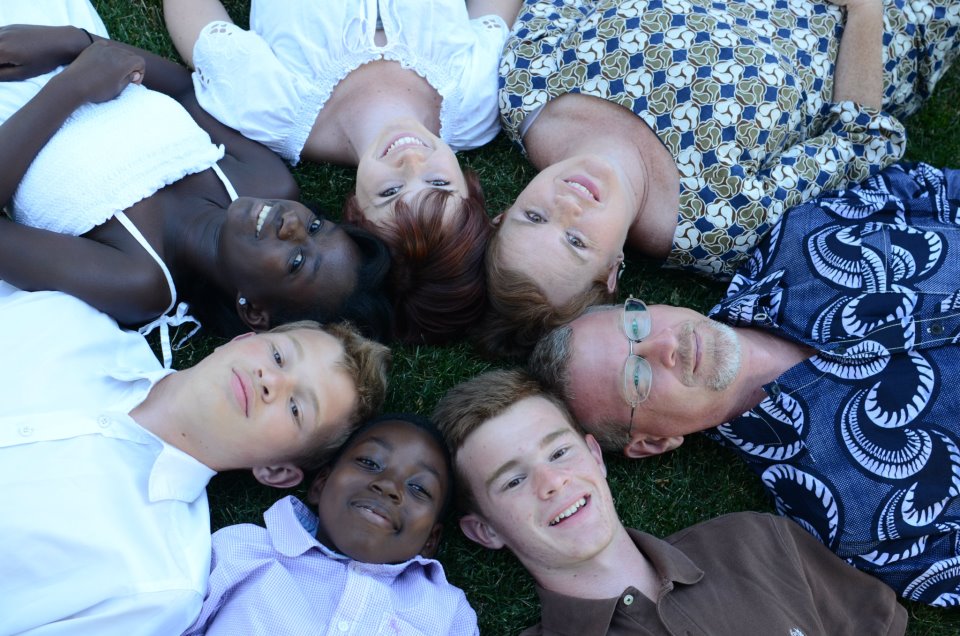
2.      Our people, the Diaspora (a people dispersed from their original homeland who form community http://www.thefreedictionary.com/Diaspora.) from Africa’s Great Lakes (Burundi, Democratic Republic of Congo, Kenya, Rwanda, South Sudan, Tanzania, and Uganda) are clustered in many major cities in North America.     They are doing very well professionally and academically yet some have spiritual struggles in their adaptation.   Their children are Third Culture Kids (TCK’s) just like our own children. 

    3.      We have a solemn pastoral responsibility to shepherd the Diaspora from Africa’s Great Lakes.    We have spent a year praying and listening.    Our intent is to begin a monthly fellowship in Chicago land to shepherd the Diaspora in the fall of 2013 called Great Lakes Fellowship.


   4.      Christianity’s influence in North America has experienced a rapid decline in the last 20 years.

   5.      The greatest growth of Christianity in the 20th Century was in China, Korea, Latin America, and Sub-Saharan Africa.

6.      The children and grandchildren of some of the previous century’s most effective
church planters are Diaspora now in North America.


7.      The United States ethnic composition is rapidly shifting.   Caucasians will soon be a minority.

8.      Diaspora esteem deep held American ideals such as faith, knowledge, freedom, ingenuity, and perseverance.

9.      We believe one of the most crucial tasks for Christian influence in North America is to church plant among and with the children of Diaspora peoples.

10. Thus we conclude we have a sacred responsibility to shepherd Africa’s Great Lakes Diaspora through their transitions to become missionaries who plant multi-cultural churches in North America (James 4:12-17.)   We intend to begin a new multi-cultural church in Chicago called Nations Chapel.

Monday, December 10, 2012

CHRISTMAS IN CHICAGO

Our family has "gone native" in Chicago
Dear Family and Friends,

Thank you for your prayers, support, and encouragement as our family returned to the United States for a season.    We look forward to this holiday season to be with family.    Jana’s dad, Gaston Tarbet is recovering well from triple bypass surgery in November.   We are thankful that God brought us to America to be with family during this time.  
A little over a year ago we sensed deep within our spirits it was time to relinquish our sense of home in Africa, and for a season start anew in the United States.    We believe missionaries are specifically called by God to make disciples and develop churches.    We also believe the missionary calling is one of initiation.    It requires us to go to new places and new people who are in a crisis which can only be properly addressed by faith in Jesus.    We thank God that our time in Africa gave us a great wealth of experience and friendships.    We believe these gifts are to be stewarded with a great sense of awe.    Thus it is our conviction that God is asking for our family to continue to be missionaries to the Diaspora of Africa’s Great Lakes in North America.
Wisemen visting Baby Jesus in Bethlehem
As we enter this Christmas season many memories come to mind.    However, one in particular is the beginning of our sense of call to return to America.  In 2009 both Jana and Dave were recovering from surgery.   Over Christmas we were with Dave’s family in Minnesota.   While there we reconnected with old friends from Uganda, Godfrey Lutalo and Tabitha Mugabi.    We knew them as university students in the early 1990’s.   They had immigrated to the United States, and we had lost contact.    Several times we had tried to look them up, but never were able to find them.   Then the wonder of Facebook permitted us to reconnect.     We had dinner.   In the process God opened our eyes.   Lutalo and Mugabi had done well.    They had married.  She had completed a master’s degree and was an executive for an insurance company.   He owned a small business.   They owned a home.   They had three delightful children.  They had helped their extended family immigrate.   Lutalo’s brother joined the USA military and had served in Afghanistan.   They were ideal immigrants.    They were deeply spiritual people.    Yet for their family adapting to American church life and socialization was a struggle.   We left our dinner with a sense of God whispering in our ear, “Your people are in the USA.   They need the skills, network, experience, and gifting I gave you in Uganda and Rwanda.”   
Rose Apolinary, Marguerite Nyagahura, and Jana at Christ's Church Rwanda
Our people, the Diaspora cluster in major cities of North America and Europe.   Some came as refugees.   Yet, as stability came to their home nation some chose to stay dispersed.    Some came as students.    Some came seeking employment.    Many are skilled professionals.    You find them in places such as banks, small businesses, insurance, real estate, information technology, and universities.     They are the largest source of foreign income for their home nations.    They invest back in their home nation to build homes, businesses, and schools.    Some explain their unique place in history as “transnational.”   With easier means of travel than a few generations ago plus the internet and mobile phones transnational Diaspora remain deeply connected with their home nation.     They present an extremely unique missions opportunity.    They are one of the primary informal thought leaders of their home nations.   
An example of Diaspora we have been fortunate to know is Marguerite Nyagahura.  Her childhood was spent in Uganda as a refugee.   She immigrated to Sweden, furthered education, and developed professional skill.    Jana met Marguerite in a small business in which she was a partial owner.    Marguerite was one of the first to attend Christ’s Church in Rwanda (CCR) as we launched on March 4, 2007.    She began operating a Day Care in the CCR property, and was a key advisor in our community.    Recently, she was appointed one of Rwanda’s newest Senators.     In this role she has the opportunity to shepherd national policy and infrastructure to bless future generations.    Thus both theory and experience show that an investment into missionary work among the Diaspora of Africa’s Great Lakes produces enduring fruit.
Jesus calls first disciples
Currently, we are in the early stages of beginning a ministry we call Great Lake’s Fellowship (GLF) in Chicago.     We find ourselves much like Paul in Acts 18 as he entered Corinth with a drop in support and without colleagues.  Yet he was clearly in a city filled with many people God was calling .    We are making as many friends as possible.    We are praying.   We are looking for strategic needs, clusters, and locations.    We are in the process of gathering a core leadership team.
Our plan after the gathering of a leadership team will be to begin a monthly fellowship in Chicago.    It is our hope this fellowship will strengthen the relationship between local churches and the Diaspora in Chicago.    We plan to rotate in different church locations in Chicago so that GLF is accessible to all scattered throughout the Chicago area.    During the fellowship we will have vernacular worship to maintain continuity with home nations, a good speaker, communion, and a common meal.   It is our hope that Great Lakes Fellowship will lead to several results which we believe are key for disciple making in Africa’s Great Lakes.   First, we hope it will promote unity that crosses national, ethnic, and denominational lines.   Second, we hope it will facilitate more Christian investment in thought systems and the institutions of church, school, and business in East Africa.   Lastly, we hope it will shepherd well the second and third generation Diaspora children.    Most are like our own children who are Third Culture Kids (TC’s.)    They live and function in several different countries.    With this cross-cultural socialization comes a certain measure of disorientation.   Yet as TCK’s mature they have remarkable ability to bridge cultures, and with this bridge building capacity tremendous influence for the cause of Christ.

Some have also pointed out that GLF has great potential not only for effective mission work, but to promote high levels of local church involvement.    For instance, GLF has the potential to nurture local church understanding and involvement in the rapidly evolving opportunities for transnational ministry.     Africans bring a sense of worship and hospitality to local churches that stir new found vitality.     As with all of these new endeavors we know our foresight is limited.   Yet we trust that God in His providence will give us many new insights and open new doors of service.

Our family in Wheaton, Chicago, USA
Over $3,000 in total was given in response to our October newsletter and prayer card.   Thank you.   We still could use some help in the expenses of transitioning to America.     Also, as we have transitioned to the United States a few of our supporters have informed us that they will not be continuing their support into 2013.   We anticipate this will involve the loss of approximately $3,000 per month.     We request that you make a financial gift to our ministry this Christmas season, by sending a check to ROC Partners (with Jenkins in the memo) to:
 3007 NW 63rd Suite 205,
Oklahoma City, OK 73116-3605

Thank you for remembering us this season.   If we can visit you or others please feel free to contact us.
Because He Lives,
Dave and Jana

Monday, November 5, 2012

PRAY FOR THE DIASPORA OF AFRICA'S GREAT LAKES

Dear Family and Friends,


We’ve heard a few questions.   One is, “What does it mean to be a missionary to the USA?”   Another is, “What people group can we pray for?”


It all goes back to the oldest parts of our missionary calling.    Jesus told us to go to “all nations, (KJV, NASB, NIV, NLT),” “people (NCV, GNT),” or “folks (WYC)” (Matthew 28:18-20.)  The Greek word in Jesus’ commissioning is “ethnos” from which English gives us the term ethnic group.   Jesus’ missionary instructions are more thorough than just ticking off nation-states on a world map.   Jesus’ instructions command for there to be a missionary presence among every cluster of humanity that uses the pronoun “we” to describe their “people group.”


Thus the missionary task will always be on going until the Lord returns.   Humanity is always in a state of change.   Missionaries are those called and sent by the Holy Spirit to make disciples and develop churches among each segment of humanity.   (For more reflection on the distinctive character of missionary calling see: http://jenkinsinrwanda.blogspot.com/2012/06/necessity-of-outside-in-voices.html and http://jenkinsinrwanda.blogspot.com/2010/07/are-missionaries-most-controversial.html.) These unique clusters of humanity are more complex than just racial, national, or ethnic understandings.    Migration, education, and economic standing continually create new social clusters.

The first steps in a specific missionary calling are the choices of compassion and prayer (Matthew 9:35-38).   Therefore, this month we ask for your prayers for our family’s “people group,” the Diaspora of Africa’s Great Lakes.


How do we define Diaspora?
  • Dictionaries are really interesting on this matter.   Most start with describing the experience of the Jews going into Babylonian exile.   Then they discuss modern phenomena of people being scattered away from their ancestral homeland (http://www.merriam-webster.com/dictionary/diaspora.) 
  •    Dave frequently preached out of Post-Exilic History and Prophets in Uganda and Rwanda, and those portions of the Bible are very relevant to the Diaspora experience.  
Where are Diaspora of Africa’s Great Lakes from?
  • There is a little ambiguity in the definitions of Africa’s Great Lakes.  It is not a political configuration, but an awareness of similarities of geography, language, history, and culture.
  •  We define it as the portion of East and Central Africa where the Rift Valley created lakes, fertile highlands, and expansive plains.   Thus it is a region blessed by the creative power of God.   We consider this region to be Kenya, Uganda, Rwanda, Burundi, Eastern Congo, and Tanzania.

What is the History of Africa’s Great Lakes’ Diaspora?


  • In Pre-Colonial times the Great Lakes were ruled by powerful Kingdoms.
  • The Colonial Rulers (1880-1962) were Germany (Pre-WWII), Britain, and Belgium.
  • The East African Revival (1930’s to 1940’s) deeply transformed the region with unique pietism and unity movements.
  • Independence from colonial powers was initially faced with optimism.   However, many nations experienced turmoil such as:
    • Rwanda Turmoil: 1959 – 1994.
    • Uganda Turmoil: Amin, Obote II, and Kony Terrorism.
    • Burundi: Series of Civil Wars.
    • Congo: Ungovernable East.
    • Kenya Election Violence.
  • Thus the Great Lakes have experienced many leaving as refugees.   However, while living as refugees many excelled as students and became skilled professionals.  
  • In present days many are dispersing for education and economic opportunities as their home nation is at peace.
  • Diaspora develop a unique language pattern that some call Sheng where they blend African vernacular languages with English.   Typically, Sheng will be used in situations such as music, humor, and social media communication.

Chrystelle Lwiza with her dad, Joseph at her university graduation
How influential are Diaspora?   Are they also, “thought leaders?”

  •  The Diaspora are extremely influential.   Many have returned to their home nations during season of peace

o   The Returning Diaspora are the generation of Institution Builders (similar to the WW2 Generation in the USA.)

o   They are initiators of new churches, schools, business, hospitals, and transportation systems.   


o   Also they are the crafters of government policy and the builders of national infra-structure.
Kigali International School 2011 Graduates
  • A New Generation of Diaspora is arising. 

o   Many carry 2 or 3 passports.

o   They are educated in both Africa and North America.

o   The remittances they send home is the largest source of foreign income to their home nations.
  •  Yes, they are “Thought Leaders.”  (A term we borrowed from media leaders we knew in Uganda.)  

o   They are frequently on Skype, email, twitter, Facebook, and blogs.  

o   They stand as bridges between many varied nations.  


o   They are great social influencers.   You see their presence in some ways most clearly at weddings and funerals in which the parking lot is filled with cars with a variety of nations’ bumper stickers and license plates.

What are the struggles of Africa’s Great Lakes’ Diaspora?

  • The Diaspora in North America are diverse in matters such as ethnicity, national origin, education, and professional skill.   They include recent refugees, students, and upwardly mobile professionals.
  •   The second and third generation Diaspora are properly TCK’s (Third Culture Kids), but they have little pastoral care to help them process their complex cultural makeup.
  •   African vernacular based churches typically do not work well for second and third generation Diaspora.
  • Yet, typical Anglo Evangelical churches also are difficult for Diaspora assimilation and pastoral care.
Thank you for keeping our people, the Diaspora of Africa’s Great Lakes in your prayers this month,


Mungu akubariki (God bless you),

Dave and Jana

Jana's dad and missionary mentor, Gaston Tarbet
P.S.  Please keep Jana’s dad, Gaston Tarbet in your prayers.   This Wednesday he will have a triple bypass heart surgery.   Jana is in Roscoe, Texas to support her parents.   Dave is in Chicago with the kids.