Contemporary
Christian jargon is always in a perpetual state of change. Have you noticed Christian book stores every
few months have new leading titles?
Have you noticed the books compete for the most contemporary looking
covers?
Have you noticed the coining
of new words?
Missional
is one of those words. My computer
spell check says “missional” is not a word.
When I Google “missional definition” I get abundant hits from hip
looking bloggers, but not a single hit from a dictionary web site. I know
language is always changing.
However,
I propose the best books to read are the old classics. Read your bible first. Pick up a history book second. Seek old memoirs and biographies. For a little more refining call a friend.
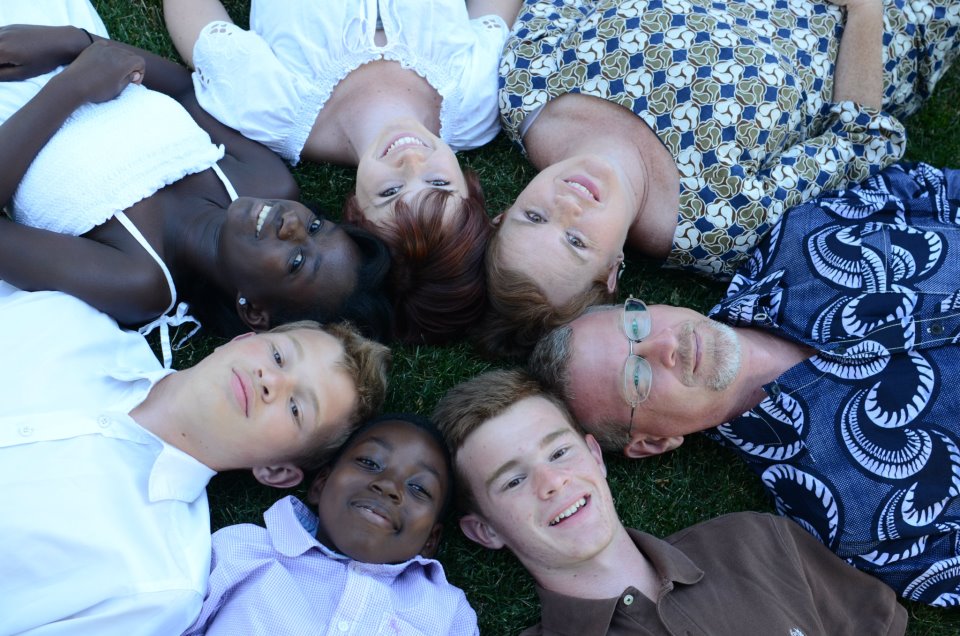
My
family is new to Chicago. We’re still
missionaries. Our calling is unique (as
are all calls.). Adjustment is
overwhelming. Yet, old paths call us
home. After all, everything we needed
to know about Chicago I learned from old Africans (and missionaries.) I bet
you also know these old truths.
VISION QUEST
 |
| Dr. Glenn Pemberton, friend and colleague |
Being
called is not complicated. If we are
believer in the Resurrection of Jesus we will be specifically called. It is not about finding the place in life
where our skill set meets our desires.
It is not about us as individuals.
It is just a repeat of old stories.
My friend, Glen Pemberton
taught us this. (For further reading
see Glen’s book, When God Calls: Will You Trust Me Now?)
God
prepares us through trials. The trials
shape our character. God gives us
spiritual gifts. Those gifts empower
us to do what our skill sets would never attempt.
Then
history happens. A community is in
crisis. God taps us on the
shoulder. We see the crisis. We’d rather not respond. We’re confident God can find another more
prepared to answer the call. Instead,
He keeps putting the community crisis before us. Finally, we relinquish. We give up all that is comfortable. We go.
We serve. We bless. We are blessed.
God did
that as He called us to Uganda. The
Churches of Christ and Christian Church missionaries had not had a long term
presence in Uganda for 21 years.
Someone needed to make a beach landing.
He used us.
God did
that as He called us to Rwanda. There
was a need for an English speaking church with good youth and children’s
program. There were others needs
beyond that for an International School and building educational systems. He used us.
God is
now doing that in Chicago. There is a
need to serve the Diaspora from Africa’s Great Lakes. We would have rather stayed in Rwanda. Yet, we answered. The journey is beginning. Without assurance of that call we would
wallow in self-pity. Instead, we rise
early each morning to begin. This is
God’s call.
FAMILY FIRST
 |
| Founders (including Peter Scott) Africa Inland Mission |
In 1895, Peter Cameron Scott
with a few friends established the Africa Inland Mission (AIM). Their vision was a non-denominational
missionary sending organization that would build mission stations from the
Indian Ocean to Lake Chad. It was a
brilliant vision.
Scott tragically
died from black water fever about one year into the labor.
His
successor, Charles Hurlburt refined the vision. The mission stations would be at high land
elevations. Thus in high elevation
malaria could be partially avoided. The
missionaries would stay healthy. From
points of health the missionaries would preach and serve. The gospel would go forth. The vision succeeded.
 |
| Charles Hurlburt and Teddy Roosevelt |
Next,
Hurlburt knew missionary families were not sustainable without a good schooling
option for their kids. He led AIM to
establish the Rift Valley Academy so that missionary children would have the
best possible options for their education.
His two choices of establishing stations that prioritized health and of
building a missionary children school gave AIM 100 years of fruitful service.
We made
a similar choice in Rwanda. We based in
Kigali where security was fabulous. We
established Kigali International Community School so our kids could thrive. Only a few years have passed, but the fruit
of following past wisdom is abundant.
Now we
are doing the same in Chicago. We live in a 4 bed room furnished home at a
low cost rent that was established for missionaries on extended furloughs. We are very thankful for the wisdom of the
Missionary Furlough Home Foundation that many years ago created this option.
Our
kids are enrolled at 5 different schools (Wheaton College, College of DuPage,
Wheaton North High School, Franklin Middle School, and Lowell Elementary
School.) They are all great
schools. Our kids are all
thriving. Yet, to get established in 5
new schools with us having no local roots was a full time job for months. (For more reading about settling our kids check
out
MAKE MANY FRIENDS
 |
| Dr. Silas Lwakabamba |
When we
first reached Rwanda I owed Kigali Institute of Science and Technology (KIST)
an apology.
I had first met their
leadership and vision in 1999.
They
were in an old military barracks dreaming about building one of Africa’s
leading technology universities.
I
smiled, but thought, “No way.”
By 2005
KIST had turned dilapidated barracks into a functioning university.
It was amazing.
My apologies led to teaching Ethics and a
conversation with KIST’s Rector,
Dr. Silas Lwakabamba. He spoke one enduring piece of advice, “Make
many friends.”
We
followed the advice. We made many
friends. With many counselors success in
Rwanda was assured (Proverbs 11:14; 15:22; 24:6).
After
all of our office bouncing what are we doing in Chicago?
We are
making as many friends as possible.
What is your name? Where are you from? Tell me a little about yourself. If the conversation goes a little deeper, we
ask, “What can we pray about?” We must
listen to men to discern the voice of God.
It is not complicated, but it seems in a world where neighbors don’t
know one another it is out of the ordinary.
It also seems Chicago is hungry for this old African virtue.
SETTLE IN A LOCAL CHURCH
 |
| 26 Year Missionary to Uganda, Harry Garvin |
Contemporary
American evangelical banter states that “everyone is a missionary.” Nonsense. I hear my old seminary professors tie
missionary work to church planting. As
I reached Uganda, I met a wise elder missionary statesman named
Harry
Garvin.
He could be a colorful
character.
His wisdom was rough, but it
was dead on.
Harry added to my definition
of missionary the phrase,
“church development.” I observed it in action.
Harry left over 200 local congregations when
his tenure in Uganda ended.
He was a master
at the whole process of moving past a missionary leading a single church plant
to nurturing a movement of multiplying churches.
Missionaries are about church development.
New
missionaries fresh from seminary sometimes are not skilled at developing
churches. Instead, they are skilled at
criticizing churches and their laborers.
The answer to repenting of a
critical church spirit is in old paths.
First, no one with manners has the gall to criticize a bride at a
wedding. Neither should anyone with
manners speak of a local church in a way that strips her beauty. The path of discovering her beauty is
old. Engage.
One of
my first Uganda mistakes was not being a part of a local church when our family
was in our early prep years (1993-1996).
It had horrible consequences.
Old missionaries call unengaged church critics, “unchurched
missionaries,” and then with an open bible point out the abundant holes in any
believer who is unchurched. (Our ROC
board chairman, John Osborne also has well pointed out the fallacy of
unchurched missionaries.)
 |
| Historic Quail Springs Elder, Tom Gooch; and ROC Chair John Osborne |
We did
not make that mistake again.
When we
were
Oklahoma Christian University’s Visiting Missionary in 2004-2005 we could
have church hopped for months.
Instead,
we settled at the first church where Ruth could dance, the Quail Springs Church
of Christ. When we
first moved to Rwanda
we could have taken the role of church critic as we waited for our
documentation.
Instead,
we put down
roots at New Life Bible Church. In both
situations God abundantly blessed our church roots.
We made enduring friends who wisely nurtured
our lives and dreams.
We’ve
done the same in Chicago. After a
little visiting we put down roots at Willow Creek Community Church’s DuPage
campus. After all, it was our son,
Timothy’s favorite. At Willow DuPage
Timothy can run in Bible class. With
such blessings everything else is gravy.
The worship lifts our spirits.
After I’ve preached almost every Sunday for 15 years it is good to sit
still and listen to great teaching.
I’m volunteering to help with the Sunday kids program. We’re in a small group. Old African missionaries taught us that by
engaging local churches we will be nurtured.
In the process He’ll use us missionary types to find new
possibilities.
As we
get a little more settled we are meeting as many leaders from various churches
as possible. Dave’s having breakfast
with ministers from Churches of Christ once per month. This month he’s their speaker. We’ve met church planters in Chicago from
the Christian Church and look forward to their growing friendships. We’re going to dinners and meetings with
pastors of immigrant and ethnic churches.
On occasion, Dave offers a hand and preaches in some of these various
congregations.
BE A GOOD NEIGHBOR
 |
| Dave receiving departure gifts from our Gaculiro Umuganda |
Old
missionaries insisted on “bonding” to learn culture. It was pretty simple. Make a friend. Visit him in his family’s village home.
Then stay a few days.
Get up when the family gets up.
Labor in community.
Sit and visit with your peers.
In
the process you learn.
Also, you “bond”
with the culture.
I’ve
been amazed at how much I was shaped by a visit to my Abilene Christian
University fellow student, Charles Guma’s home village when we first moved to
Uganda.
The
first morning began with taking brooms and sweeping the family compound. Even in what seemed like a poor home one
could sweep the dust and pick up the trash.
I saw firsthand how devastating and
undiscriminating is AIDS as a killer of Uganda’s children and youth. I learned a little of the culture of
western Uganda. Maybe, the most
enduring part of that village visit was meeting my first rural Banyarwanda
refugees, and seeing their hopes nurtured.
(For more reading on those early days in Uganda shaping our future
Rwanda journey see
http://jenkinsinrwanda.blogspot.com/2010/04/memories-of-april-7-1994.html.)
One of
Guma’s most enduring pieces of advice was to meet our Resistance Committee (RC)
Chairman. The early years of Uganda’s
National Resistance Movement (NRM) nurtured effective grassroots
leadership. We were very fortunate to
have David Muwonge as our RC Chairman.
He was like a father to us. We
always made it a point to go to community meetings, contribute financially, and
when needed labor in community. The
wisdom and relationship bank gained from engaging our RC was astounding.
 |
| Rose Apolinary, Marguerite Nyagahura, and Jana |
We grew
up in Uganda. In Rwanda the wisdom
Uganda taught us bloomed. Again, o
ld
African wisdom told us to be a good neighbor.
Jana met Marguerite Nyagahura in
the hair salon. Marguerite was a recent
Diaspora returnee. She had grown up in
Uganda before a journey to Sweden.
As
we shared stories we had almost met many times.
Now was the season for God to
nurture our friendship.
Marguerite
came from a family deeply influenced by the East African Revival. Her journey in Diaspora living had been one
of bumping against glass ceilings. This
nurtured character that caused others to rally with her in community. She became the Chairman of our Umudugudu
(Cell / Rwanda’s equivalent of Uganda’s RC 1 or maybe a USA Community
Association.) The last Saturday of
each month we all met for Umuganda (Community Work.) We cut grass, trimmed trees, cleaned out
ditches, and picked up trash. When the
labor was done we sat and discussed how to bless our community. Recently, Marguerite was appointed one of
Rwanda’s newest Senators.
We’re thankful for the advice of Charles Guma and David Muwonge. They reminded us of old words spoken in
God’s word, “Love your neighbor as you love yourself (Leviticus 19:18; Matthew
5:43; 19:19; 23:39; Mark 12:31-33; Luke 10:27; Romans 13:9; Galatians 5:14; James
2:8.)”
In
Chicago we practice old African virtues of being good neighbors. When in July 2012 a wind storm knocked down
trees we picked up the limbs. When we
had no power we spent the night around a fire with our neighbors. We cut our grass. We rake our leaves. We pick up our trash. We don’t visit as much with our Chicago neighbors
as in Africa, but if they have a problem we will help.
MAPS, MAPS, AND MORE MAPS
 |
| Missionary mentor, Wendell Broom |
At
Abilene Christian University I met Wendell Broom. He wore colorful African shirts and a
beard. His stories and dreams made the
hair stand up on the back of my neck with inspiration.
He always seemed to be gazing at a map in a
prayerful vision.
He once said,
“Don’t see the world through the eyes of a duck looking just for a pond to
land.
See the world through the eyes of
an eagle.
Ride the upper currents.
See the master plan.”
I saw
Wendell a few months ago. Age is
catching him. Yet, old habits become
character. Maps are hanging on the
wall. He’s praying. He is seeing new visions. I want to be like Wendell when I grow up.
I’ve
got about 6 inches of Chicago maps I’m repeatedly looking over. God is moving in Chicago. I’ve got big orderly maps. I’ve got all the Google maps I’ve printed as
I’ve driven or ridden trains to new places.
I’ve
started making notes. I’m looking for
clusters. Where can I find
Diaspora? What neighborhoods are they
in? What universities do they attend or
lecture at? Are there churches nearby
the Diaspora clusters to connect? What
are the easiest means of transportation?
How does communication naturally flow through street gossip?
I’m
seeing patterns. I’m saying
prayers. In a short time we’ll
act. God moves in strategic ways. His people need to discern His
movements. Old African missionaries
taught me maps, maps, and more maps. (Maybe, even the maps in the back of our Bibles are in a certain way "revelation"?)
LAUGH OFTEN
 |
| Amagezi ga Bazungu (Kiganda - Wisdom of Confused People) |
A few don’t know this
African missionary truth – Those of us that endure laugh a lot. We laugh at ourselves.
We laugh with our family.
We laugh with our friends.
We laugh at our adaptation.
Some think we missionary types are far too
serious.
That’s not true.
We welcome you into our homes.
We love it when you listen.
We love it when you share our journey.
Jana
grew up with a missionary community who laughed continually – the Kenya Church
of Christ missionaries of the 1960’s – 1980’s. Dave first met this wonderful community in
1989 in Eldora and Kitale, Kenya.
Their
humor nurtured and healed our at times overwhelming adaptation in Uganda. When we moved to Rwanda we found the
evangelical missionary community to be the most delightful one we had ever
experienced. We took a yearly retreat
at Kumbya together (For more reading on the Kumbya retreat see
http://jenkinsinrwanda.blogspot.com/2011/08/retreat-reflections.html.)
Some of
our shared jokes are TIA – This is Africa, or AWA – Africa Wins Again. The wonderful thing about humor is it can
adapt to new and at times overwhelming circumstances. TIA – This is America. AWA – America Wins Again.
For
instance, we’ve spent most of our lives avoiding riots in markets. Why would we consider shopping on Black
Friday? TIA – This is America.
Or to
quickly start a charcoal fire one blows air upon the coals. Leave blowers in America make the process
much more efficient. AWA – America Wins
Again.
COMPASSION AND PRAYER ARE FIRST STEPS
 |
| Jesus raises Jairus' daughter from the dead |
Old
Africans and missionaries did this so frequently it became second nature.
When confronted by what we could never
understand we felt another’s pain (compassion), and we quickly prayed. Compassion and prayer are the first
steps.
It is simple.
It is immediate.
It is the path our Lord.
His story tells us,
“Then Jesus made a circuit of all the towns and villages. He taught in their
meeting places, reported kingdom news, and healed their diseased bodies, healed
their bruised and hurt lives. When he looked out over the crowds, his heart
broke. So confused and aimless they were, like sheep with no shepherd. “What a
huge harvest!” (Matthew 9:35-38, The Message.)”
I’ve
done lots of long runs on the Illinois Prairie Paths. On those runs I’ve prayed.
Now
the season is beginning of gathering the core small group of leaders whom the
Lord has placed compassion for in our hearts.
DIGNITY IS NOT NEGOTIABLE
In
Rwanda we learned an important lesson.
Compassion can easily be substituted for the fake. International Non-Government Organizations
are masters at this substitution.
Their marketing scheme thrives with photos of pathetic African
children. Compassion is feeling the
pain of another and doing all one can to alleviate that pain. Compassion is loving one’s neighbor as one
loves one’s self. Arrogant pity is not
compassion. An old missionary, Inell
Slater called this false substitution, “vicarious grief.” Seeing a photo on the television or
internet, Facebook liking it, and retweeting is not compassion. Compassion requires both human to human
contact and thoughtful action.
 |
| Rwanda President, Paul Kagame; and KICS Chairman, Bryan Hixson |
I twice
have met Rwanda’s President Kagame.
On
the second meeting I asked what a church planting missionary like me could to
do for Rwanda.
He quickly responded,
“
Teach people about dignity.” I hope
the years God gave us in Rwanda were ones where we taught and lived the dignity
of humanity.
After
all, we are made in the image of God (Genesis 1:27). Our human dignity is not negotiable.
When we
meet new friends in Chicago we meet their full human dignity. When we discover their struggle we do all
we can to restore the dignity of God’s intent in their lives. We never market their struggle to make
ourselves look like heroes. God is our
hero.
After
all, He gave us 19 years in Africa’s Great Lakes. In that time He gave us abundant friends and advisers. Everything we needed to know
about Chicago we learned from old Africans (and missionaries.)