Showing posts with label Empathy. Show all posts

Thursday, March 31, 2011

AUDACIOUS FORGIVENESS MUST BE INSTITUTIONAL


African history is known for two unforgettable virtues. Audacity and Forgiveness. Only on the rarest of moments are they combined. However, those moments are unforgettable. This past Sunday, I asked two questions of our CCR audience.

First, “How many can recognize the name, Hannibal, General of Carthage?

Second, “How many can recognize the name, Joseph, son of Jacob, Prime Minister of Egypt?”

Both CCR services found that three times as many people recognized the name of Joseph as compared to Hannibal. Both were audacious men. They were extremely bold and daring. They were not restricted to prior ideas and conventions. They faced the unknown with great initiative and resourcefulness.

Hannibal faced the might of Ancient Rome’s military and took his army and their elephants over the mountains of the Alps. Military historians have marveled at his audacity. He used the strength of his institution, the Carthage Army to make one of history’s most spectacular raids.

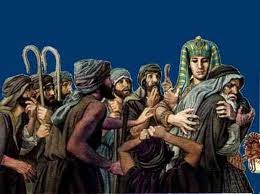
Yet, another in Africa did something even more audacious. Joseph, son of Jacob was sold as a slave by his brothers. For 13 years he lived as either a prisoner or slave. Then in a surprise turn of events he became Egypt’s Prime Minister. He had 22 years to plan and plot his revenge. However, instead of exacting revenge he used the strength of his institution, the Egyptian government to forgive. His forgiveness reconciled, restored, and rescued. His audacious forgiveness is remembered as one of the humanity’s stories that must be repeated time after time, generation after generation.

Approximately 400 years after Joseph’s audacious forgiveness God led Israel out of slavery in Egypt. In this wilderness journey God gave them a new law. This law was to transform them from a large dysfunctional extended family into a nation who taught all other nations to honor God. They were commanded to practice the beauty of a Sabbath rhythm. This rhythm reached its final triumph every 50 years in the Jubilee. On this sacred year, God commanded Israel they must forgive institutionally (Leviticus 25:8-555). It is an audacious command.

Meg Guillebaud taught us well about the Sabbath Year and the environment. For six years Israel planted and harvested. Then on the seventh year (Sabbath Year) the land was to rest (Exodus 23:10-11. Leviticus 25:1-7).


After seven of these cycles (49 years), on the fiftieth (50th) year a Jubilee Year was proclaimed. The community had met to grief over sin and resolve to change their behavior. They fasted and rested on this Day of Atonement (Leviticus 16:1-34). Then the loud music and party began. The trumpet was blown. Freedom was proclaimed.

Israel’s economic system had similarities to the surrounding nations. When someone was in debt they first sold their clan’s land. Then when their property was all gone they sold themselves. On the Jubilee the debt prisoners were freed. The land was returned to the clan. Extended families gathered and celebrated.

For two years the land and people rested. They lived on the bounty of stored food and the produce of the land.

Three thousand five hundred years later though we can never repeat this ritual I believe we all hunger for such a time where we rest, celebrate with our closest family and friends, and get a chance to start life a fresh.

We cannot replicate this command, but we can practice enduring Jubilee principles. I see five enduring principles.

First, our business dealings must be noted for truth, equity, and justice (25:14). Some will look at Jubilee and see it as a way to get an unfair advantage. That completely goes against the commands to tell the truth in all our documentation (Exodus 20:16). Also, the Sabbath command means we must be equitable to all despite gender, ethnic, or economic differences (Exodus 20:10). At our best we are motivated by principles such as hope, joy, and love. However, at our worst we are motivated by the fear of God. We must never lose this fear (Leviticus 25:17).

Second, the Jubilee reminds us we must care for our extended family. When they are in trouble those of us who have means must come to their rescue (25:25). For some of us today, our extended families are still our social network. Others of us have lived through seasons of history where our extended family is no longer our security net. For our faith community, the church is our extended family. I believe the implication of this command is that the church must care for the most vulnerable of society.

Third, Jubilee reminds us that nothing on this earth is really “mine.” We are all refugees (25:23). We began to use the “mine” pronoun as soon as we can speak. Whatever our mother tongue we proclaim, “wange.” God instructs Israel to remember. They were refugees for 400 years. They know what it is like to have no possessions; especially one’s freedom. They must never lose their ability to empathize. The Jubilee reminds us that our possessions are only an entrusted stewardship from God.

Fourth, work is honorable and no one should be treated as a slave (25:40). The wealthy were never to abuse those who were poor. In our context I find this very relevant. Many of us as children were refugees. We saw our parents deprived of legal status and economic opportunities that would have allowed them to succeed. Practically, they were treated as slaves. Now, many of us have landed in a place where though we have a good income we still need those to labor for us; and the wages in which we pay them are still less than ideal. We may desire to change the economic reality, but the means to do so is not in our circle of influence. What is in our influence is that we can treat our working class laborers with honor. We can give them time to rest. We can treat them with dignity. We can practice Jubilee.

Last, Jubilee reminds us that at least once per lifetime the only way to make things right is to forgive institutionally. We must use the strength of our institutions to do what is truly audacious. Particularly, when our institutions are young and maturing we find that sometimes we have to say, “This is a mess that cannot be made right by anything other than forgiveness.”

Let me confess one of my many sins. I have been sinned against in great ways by my historical denomination. When I wrestled with this with an open Bible I found some comforting texts. For instance, the Old Testament required restitution (Exodus 22-23). In the New Testament, when Zacchaeus was transformed by Jesus’ forgiveness his repentance included making restitution by four fold. Paul seems to allude to this principle of restitution in restoring the fallen (2 Corinthians 7:10-12). Even the 12 Steps Program requires for one to recover from addiction he must make amends to all who ones behavior has harmed. As I wrestled with the consequence of others sins in my life I became an accountant. I tabulated what they would need to do to restore what they had taken.

Then something startling happened. It was much like Joseph’s experience. I realized without all of the painful actions of others I never would have developed the character, skills, or network that allows me to bless others. How could I resent the capacity God had given me to bless through others poor choices? It was time for me to practice Jubilee. I had to use my institutional strength to forgive.

As we move past the command and come to history we discover just how audacious the Jubilee command is. There is no historical record of Israel taking a Jubilee year. There is one historical record of Israel taking a Sabbath Year (1 Maccabees 6:49). Most conclude the Jubilee command required more audacious courage, faith, and humility than Israel could muster. Jesus likely referred to the Jubilee when He proclaimed His mission to liberate humanity from sin and its consequences (Isaiah 61:1-2; Luke 4:17-19).

I’ve found this Jubilee command especially applicable to Rwanda. My understanding from reading is that in pre-colonial Rwanda during periods of famine those who were poor would take a position similar to Old Testament Israel. They would become the possession of another family to survive. Maybe, an English translation of the practice could be “indentured servant.” Some might consider this slavery. However, the situation does not seem to be permanent for generations. Frequently the one indebted would arise and be incorporated into the extended family where they landed. It also still seems clear that though Rwanda sought like many to find economic solutions to poverty and chaos Rwanda did not like her neighbors trade her poor to others as slaves. (Slavery in the Great Lakes Region of East Africa, Henri Medard and, Shane Doyle.)

About 20 years ago a movement started called the Jubilee movement. It was started by those who saw this command and believed the modern application was that the poor indebted nations could only arise from poverty by Jubilee. The institution must be used to forgive debt. It was promoted by both believers and non-believers. It was discussed in meetings from the N.G.O. to donor to embassy communities.


Rwanda was a particularly troubling case. During the war, the government who plotted genocide borrowed money that was later used to perpetrate genocide. Rwanda’s Minister of Finance following liberation, Dr. Donald Kaberuka with great dignity voiced that since the debt was a debt of a sovereign government it must be paid. However, many of us felt that justice could not stomach paying the debt of genocide. As time and discussions passed much of Rwanda’s institutional debt was forgiven. The Jubilee command was practiced. Justice was restored. (For further reading see: http://www.cgdev.org/content/article/detail/1424565/


Now the question arises of “moral hazard.” If the risk is taken away from borrowing some may misuse their loans. They assume that their debt will be forgiven. Thus they manipulate forgiveness. They turn a beautiful gift into an ugly weapon. It seems the Jubilee speaks directly to this. Our business dealings must be noted for truth, equity, and justice (25:14). We cannot devalue forgiveness by assuming it is a tool to manipulate.

It is the same for grace. Paul writes that some will attempt to take advantage of grace (Romans 6). Forgiveness is risky. Yet, forgiveness is transformational. Without an understanding of both our individual and communal sin we have no capacity to practice audacious forgiveness. Without audacious forgiveness our community cannot be healed. Without this healing of grace our institutions cannot grow to be just. Without these two paradoxical values of justice and grace we are condemned to cycles of frustration and destruction. Thus audacious forgiveness must be institutional.

May history remember us for practicing this old African virtue of audacious forgiveness in our generation.

Tuesday, January 11, 2011

ALL I NEEDED TO KNOW ABOUT RWANDA I LEARNED AT A KIGALI YARD SALE


Yes, this is a completely ludicrous title for a blog on Rwanda living and ministry, but I’m convinced it is true. All I needed to know about Rwanda I learned (or re-learned) at a Kigali Yard Sale. Our family last week completed a yard sale. It was de-cluttering. It was finding the resources to pay our bills. However, it was also a profound experience of listening, discovering, and processing.


PACE


Rwanda’s President Kagame says, “Others can walk. We must run.” It stirs my runner’s ambition. Yet, it also describes the pace of life for all who gather in Rwanda with both vision and work ethics. Our days start before the sun rises. Some of us are doing office work at 5:00 a.m. Some of us don’t call the work day over until 11:00 p.m. Our To Do list is never finished. Our phone rings. Our inbox is full. The community we serve has many needs and expectations. In the midst of our business sometimes the mundane and ordinary becomes trivial. It falls to the category of “I will take care of that after the important matters are done.” Somehow the important is never done and our community’s needs increase.

Our family packed all our earthly belongings in storage in Uganda in June, 2004. In November, 2004 we decided to move to Rwanda. We arrived in June, 2005. In November, 2005 our container arrived. At the time we were struggling to live, exploring the idea of KICS and CCR, and Dave was teaching Ethics at KIST. We never had a quiet week or two to unpack. We simply pulled what we needed for the day from our container. Yes, we lived in a country for 5 ½ years without ever completely unpacking. We managed our house so that many guests were served. Our home appeared orderly. However, we knew our container was full of years of clutter and it troubled our inner sense of order.

Last week, we finally had our chance to unpack and organize 6 ½ years after our first packing.

GOD’S TIMING


We knew we needed to do a yard sale. We never had a quiet week. However, we also never had several required earthly possessions in our hands until last week. Rwanda is blessed with abundant rains for almost 8 months per year. We use every room in our home (including the garage) for our kids and guests. We have no spare garage to host a sale. If we place sale items in our yard the rains will leave it all drenched each day. We needed several large tents and many tables to be able to organize a sale.

A by- product of CCR are 2 tents and many tables. Though frequently used on weekends during weekdays they are available. Thus it was in God’s timing when CCR had the maturity to have tents and tables that we finally had the capacity to host a yard sale.

We spent several days sorting the contents of our container and organizing the sale items on CCR tables underneath CCR tents.

We needed 6 ½ years of settling to be able to unpack. We left Uganda during a season of turmoil. Our call was painful relinquishment. Now it all makes sense. I don’t think we would have had the emotional reserves to unpack 5 ½ years ago. God knew what timing was the best for our spirits.

As we unpacked we found our memories. Some we sold. Some we threw away. Some we gave. Some we kept. One memory now sits in my office in the same emotional place as my deer horns. In my teens and twenties I was fortunate to hunt and fish with my dad, brothers, and friends in Minnesota and Arkansas. Those men are still the best friends in my life. My office deer horns speak of those old friendships. The memory I discovered that I would not sell, throw, or give away is the baby back pack that I carried all 5 of my children in up Uganda’s hills. The frame was broke and held together with duct tape. With Rwanda’s limited supply of childhood goods I still could have sold the backpack. However, I would not sell its memory. It is now on my office wall. The 5 kids in Uganda were a treasure. They represent the best years of my life.

COLA

For those who have never lived in a developing nation I am not writing about the debate between Pepsi, Coke, or even RC. COLA stands for Cost of Living Adjustment. For many in the US COLA is more foreign and confusing than a vernacular language. How can a poor country where the average person lives on a little over a dollar per day be expensive?

Yet financial realities hit all who try to labor with a family and professional skill in Rwanda. Diesel fuel costs $6 / gallon. Some homes go through $300 per month in electricity while never even owning an air conditioner. Others spend $150 per month on cooking gas, but never heat a home. Cereal sells for $11 per box. Public school is not an option so we send our children to private schools and pay their tuition.

Rwanda is simply expensive. Many COLA indexes list Kigali as 40% more expensive than Washington D.C. January is my month of both school fees and quarterly rent. COLA speaks to me in January with all her force.

Those of us who labor here learn to live without movies, Dr. Pepper, and delivery pizza. We enjoy the few costs that are cheaper than our home economy. However, there are some purchases that are difficult to avoid. They stir the deepest parts of our hope and ambition. We desire for our children to enjoy life and see a good future. With such hopes sometimes we must go extra-ordinary miles.

EMPATHY

As we unpacked and organized we found the items that marked the seasons of life when our children were babies and toddlers – cribs, car seats, strollers, bikes, and toys. We remembered COLA and placed these items on the tables under our tents. Though the items were years old we sought to sell them for just a slightly lower price than we had purchased them years earlier. We advertised the sale. Our phone began to ring.

Kigali is filled with many whose parents and grandparents left Rwanda in the late 1950’s and early 1960’s as refugees. For the fortunate ones, refugee living became an experience similar to the Jews of the Babylonian Exile. In the Dispersion they gained an education and professional skill. As Rwanda settled they returned to a land that they had never seen. They came with vision and work ethics. They returned with young children. They did not have the resources to return with all the childhood paraphernalia of their place of exile.

Births of new children create scrambles for cribs, strollers, and car seats. No Baby Gap or Babies R Us exists in Kigali. Birthdays and Christmases create scrambles for bikes and toys. No Toys R Us, Target, or Wal-mart exists in Kigali. A yard sale of an older family creates the frenzy of a Tickle Me Elmo Stampede. The only difference is that Rwandans are well known as restrained, dignified, and polite.

To survive 18 years in this region of the world one learns to put certain emotions of compassion aside. I cannot survive if I weep over every tragedy. However, I also cannot survive if cynicism destroys my ability to feel other’s hope and disappointment.


A surprising moment happened in my de-cluttering of the memories of our children as babies and toddlers. My emotions stirred. I watched 5 childhood bikes sell in a few hours. The last family to purchase a bike arrived a few moments before another eager family. I could not express my regrets enough to the disappointed family. In January some were buying their children gifts for a Christmas 11 months in the future. Our cribs were gone before the sale even opened. Friends called and pleaded for a crib. I remembered what it was like to have babies and toddlers. I admired these families courage to return and build. I grieved for the sacrifices they made with their children for the sake of their grandchildren’s future.

At the end of our sale I sat with a friend. We discussed the struggle of being a returning Diaspora. We remarked that though our incomes were good and “reasonable” we were unable to provide all we hoped for our children. In fact, we knew the cost of sacrifice was immense. Yet, in the midst of self-pity we remembered that only a few miles from the struggle of middle class Rwanda exist the poorest of the poor. We would sleep with full stomachs. We would find ways to send our children to Rwanda’s best schools. Others would struggle to feed their children and even buy them a pair of shoes to wear to school. Empathy reigned. It is the substance of vision and work ethics in a community. May we never lose our ability to feel for others.

OUTRAGE, AUTHORITY, AND RECONCILIATION

In 18 years in Africa I have learned that anger is an emotion best kept hidden. In my early years my anger was displayed far too frequently. Now some remark on my ability to withstand continual chaos with presence and grace. A fleeting thought went through my mind as we prepared our yard sale. I had done two yard sales in our Uganda years. With each one I had a moment in which I completely lost my composure. Would I do it again?

When our family moved into our Kigali home across the street was the Papyrus restaurant. It gave us charm, friendship, and meals when life was too busy to cook. Our neighborhood is full of trees. With these trees come a wide variety of birds and monkeys. Within our Kimihurura neighborhood is a park. We found our Kigali neighborhood to be delightful.

Upon our return to Kigali five months ago a new phenomena has happened. Our neighborhood restaurants seem to have become discos and bars. The noise level makes sleep difficult. I sometimes arise early and am in my office at 4:00 a.m. On those early mornings my quiet neighborhood street is filled with cars and people dancing in the streets. Some of the young women are dressed in a way that I am sure their fathers and brothers would never approve. A few months ago on my morning run I saw a woman and man with too much to drink physically fighting with stones. I have had pleasant discussions with bar and disco owners, but my patience is growing limited.

Our sale opened at 10:00 a.m. each morning. Thus we spent the first hours of the day organizing the chaos of the previous day. On Saturday morning three men who spent the night drinking at a bar across from my home entered our yard at 8:30 a.m. I had yet to have breakfast or coffee. I asked for them to return at 10:00 a.m. They explained that they could not return in a few hours, but were eager to make a purchase. I reluctantly agreed to allow them to look through our yard sale. They picked up many items and vigorously shook each item. I tried to persuade them to be gentle. They argued vehemently with every stated price. Finally, one began rifling through a trunk containing my family’s memories that were not for sale. At that moment reason left my mind and outrage entered my complete being. I yelled. I screamed. I commanded their departure. When they slowed down I looked for a stick to beat them. Thankfully, they left before I found a stick. I had not been so angry since the last time I had a yard sale 9 years previously.

Jana overheard my rant and remarked, “Dave – right decision to have them leave. Wrong temperament.”

My conscience was troubled. A few hours later there came a knock at the gate. Two of the three had returned. They had bathed and changed clothes. I no longer smelled alcohol. They apologized. I offered my forgiveness. They gently looked at items. They graciously paid the price. We reconciled. Again, the biblical formula of repentance (changed action) met forgiveness and reconciliation happened.

Some matters in life demand outrage. Rage reflects offended morals. Hopefully, we are offended at the matters that offend God. Our region of the world has many areas that demand outrage – war, genocide, poverty, and non-literacy lead the list. These tragedies are not the sum of bad fortune, but the sum of bad leadership and broken or non-existent institutions. In order to make matters right an outraged authority figure may be required to bring order. Outrage is unpleasant. When it is over the outraged one may have regret. Rage touches the darkest places of our soul. Yet without an authority demanding accountability and change hope and love in community are impossible. Humanity in community is messy.

INSTITUTION BUILDING


As we de-cluttered, sold, and visited with our Kigali community we were reminded the task of our generation is to build the sustainable institutions. Our children may not have all we hope, but they learn character from observing our labor. We labor in hope for what life for our grandchildren will become. Rwanda has too few churches, schools, and businesses. Her institutions that lead in education, justice, and preservation are young. When the sale is over and we return to our offices we find even more resolve.

INVEST IN CHILDREN

Lastly, our Kigali yard sale taught us that old lesson that has been spoken by generation upon generation. Invest in children. They are the future. Today is fleeting.

As we de-cluttered I found construction toys my father gave my children. Our kids no longer played with them. Soon our children will leave us for university. With some regret we decided to sell some of the toys of childhood even though they contained treasured memories. With COLA in mind we chose to make the sale worth our while.

The toys high prices kept them sitting. Finally, on the last day a father with a new born son made an offer on one of the road construction toys. I asked him what he did for a living. He was an accountant at a local road construction company. I told him a story. When I was a child my dad was a road construction worker. He gave me road construction toys. He showed me how to build roads as we played in a sandbox. It was all about drainage. If there was not a proper ditch and the road doubled as a ditch the road would wash away. I shared my experience in Uganda of watching roads poorly constructed double as ditches and become our region’s running joke. The issue was more than drainage. I believe Uganda’s disaster roads reflect a deeper sickness – fathers do not teach their sons character. I asked the father of the new born son to promise me that he would use the toys to teach his son to build good roads. Roads that last are built by men of character. He agreed and I parted with my memories trusting they would bless another family.


As our sale closed we had a toys and clothes that still remained. We considered boxing them for a future sale. COLA would be a reality of our family as long as we live in this region. We considered boxing them for a future ministry. CCR is praying and pondering about beginning a ministry for Orphans and Vulnerable Children. Then God spoke in the present. We have good friends who in the midst of building a new business also have taken 20 vulnerable children into their home. We boxed our remaining toys and clothes, made a phone call, delivered our remaining items; and called our yard sale finished.

All I needed to know about Rwanda I learned in a Kigali yard sale.