Showing posts with label Justice. Show all posts

Tuesday, January 1, 2013

THERE ARE NO FORGOTTEN BIRTHDAYS


The humble one’s stories are too easily forgotten.    This morning as I checked my Facebook I had 37 friends whose birthday is January 1.     On an average day I should have 8 or 9 friends to wish a birthday.   (3,051 Facebook friends divided by 365 days in a year equals 8.35 friend’s birthdays per day.)    Today, there is a 411% increase in birthday averages.   What is up?

A couple of my Bazungu (white, or those who wander in circles) friends truly know that January 1 is their birthday.    A couple of my friends from Africa who were fortunate to have their mother deliver in a hospital during a day of relative peace truly know that January 1 is their birthday.

Yet, for the majority of my 37 Facebook friends today they were born during a season of absolute chaos.    They were born in places like remote villages, refugee camps, and urban slums.   Their mom was one of the world’s poorest of poor.    She was likely on the run.  Their mom was thankful to have lived through delivery, and today is exceptionally thankful the child born on that day is alive.
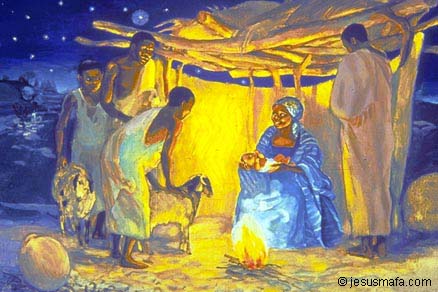
These friends of mine share a common past with my boss, Jesus of Nazareth.   He too was born in poverty (Luke 2:1-21).     Stables and mangers in church nativity scenes frequently miss this point.    If you can’t smell the manure your church has understated the chaos of Jesus’ birth.    Jesus was born in forced circumstance as his nation, Judah was under Roman occupation.    His parents were forced to travel near the end of his mom, Mary’s pregnancy just to register for a census and pay tax.    Forcing a pregnant woman to travel is the height of oppressive government policy.    

These friends of mine share another common past with my boss, Jesus of Nazareth.   His family too was forced to flee for their safety as refugees (Matthew 2:13-18.)    An evil despot intended to kill all rivals, and that included infant boys in a remote village.     Despots do the same things today.

Where is God in such circumstances?

Paul in describing the riches of knowing Christ tells an unfathomable truth (Ephesians 1.)    Before creation God in His infinite knowledge knew His creation would rebel.     God’s holiness could not dwell with rebellion.    Our rebellion would cause eternal separation from the God of infinite love.     The consequence was as horrific as an infant child abandoned and left to die in a field (Ezekiel 16:4-6.)    God chose to rescue us by sacrificing the life of His own Son.    In the process He took us rebels, and adopted us into His family.    Can you imagine?    He knew every sin we would commit.   He knew the horrific costs.   Yet, He chose to create what He would redeem though sacrifice.    Amazing.  Jesus is Emmanuel, God near and with us.

In the chaos that humanity lives God watches every movement of life.   In God’s eyes there are no forgotten birthdays.  His word states,

“Yet you brought me out of the womb; you made me trust in you, even at my mother’s breast (Psalm 22:9.)”

“For you created my inmost being; you knit me together in my mother’s womb (Psalm 139:13.)”

“This is what the LORD says— he who made you, who formed you in the womb, and who will help you: Do not be afraid… whom I have chosen (Isaiah 44:2.)”

“This is what the LORD says— your Redeemer, who formed you in the womb: I am the LORD, the Maker of all things, who stretches out the heavens, who spreads out the earth by myself… (Isaiah 44:24.)”

“Before I was born the LORD called me; from my mother’s womb he has spoken my name. (Isaiah 49:1.)”

“And now the LORD says— he who formed me in the womb to be his servant (Isaiah 49:4.)”

Before I formed you in the womb I knew you, before you were born I set you apart; (Jeremiah 1:5.)”

In eternity, God will redeem each one of these chaotic births.   In God’s eyes there are no forgotten birthdays.   Yet, we do live in the here and now.   Is there hope in this life for God to bring good out of chaos?

Absolutely.    God is sovereign.   He is good.    He is full of love.  His ways are mysterious.   Yet, His ways are just.    History is full of stories of God bringing good from chaos.

One of the privileges God gave me during my season in Rwanda was to be a facilitator in the Presidential Scholars program.   Facilitator sounds important.   All I did was pragmatically pastor.  I made friends.    I helped friends communicate to one another.    Sometimes it was rather mundane.   One of the mundane moments was filling out visa applications.    The applications required filling out a date of birth.    Many times we wrote in the application January 1, _______.

Most of those bright young Banyarwanda who wrote January 1, ______ were not born on January 1, ______.    Instead they were born during absolute chaos.     All their family can remember is a year filled with turmoil.    In some ways, God has helped them forgive the sources of the chaos, and in the process forget a few details that would even include the month of the birth.   

Rwanda Presidential Scholars at Hendrix College
Yet, something wonderful happened in the years following the traumatic birth.    Enough peace came that a family could survive.    They could put down a root somewhere.    The kids could go to school.    Many times the schools were barely functioning.    Yet, somehow learning happened.    The brightest students found a place of marginal stability and success.    They kept at it for years.    Then they sat their final secondary exam.   They scored near the top of all the students in the nation.     Then they received an opportunity to interview with the different universities offering scholarships.    For some of these bright Banyarwanda, this was the first time they had even been in the capital of Kigali.   If there was no God they would have had no chance.    Yet, there is a God.  He is good.   He enjoys showing His grace upon the most humble.   These kids whose families don’t remember their birthday were offered scholarships to attend prestigious universities in the United States.   God is good.

So today I ask that if you definitely know the day of your birth thank God.    Much of the world does not have that luxury.   If you’re one of those who wrote January 1, _____, but really don’t know; also thank God.   If you meet someone with a January 1, ____ birthday, listen to their story.   Thank God.   He is good.  There are no forgotten birthdays.

Wednesday, December 28, 2011

MEMORIAL FOR MAJOR EUSTACHE NSINGA

The word of God in James 4:14 proclaims, “What is your life? You are a mist that appears a little while and then vanishes.” Eustache Nsinga has passed from this life to another far too quickly. Most of us are still in shock. This seems unbelievable.

Eustache Nsinga was born on 4 August 1973 to Emmanuel Basomingera and Marianne Mukasarambuye in Bujumbura, Burundi. He passed from this life to another on Christmas Eve, 24 December 2011 in Kigali. That day will remain unforgettable in all of our lives.
On Christmas Eve 2011 I was performing the Christmas Eve Service at Christ’s Church in Rwanda (CCR) when I was asked to step outside of the assembly for an urgent matter. Gatete, Eustache’s housekeeper came with the news that Eustache Nsinga had passed from this life to another. I thought, “Surely not. This must be an ugly rumor or a big misunderstanding.” I returned to the assembly and sat with my wife, Jana; and told her, “There is an awful rumor going around that Eustache Nsinga has died.”

Then my phone rang. I rarely pick up a phone call during church, but as I looked down I saw it was from Eustache. I stepped out and answered the phone expecting to hear Eustache’s voice. Instead it was his brother, Innocent confirming the news. Eustache has passed from this life to another.

I imagine I am not the only one who has felt shock over this Christmas season.

This morning as I checked emails I received one from a relative of Eustache in Canada. She had seen the dialogue on Facebook and thought this was just a really bad joke. She wrote asking, “Pastor, tell me what is true.”

It is true. Eustache Nsinga has passed from this life to another.

Another word besides unforgettable fills our discussion of Eustache’s passing. That word is irreplaceable. How can we face life without Eustache? A man’s days on this earth are fleeting. We are all just a mist. Yet, the principles of a man’s life endure. There are principles those of us a bit older teach to younger generations.

Many of you are fortunate to have known Eustache longer than the 5 years I knew Eustache. In my interactions with Eustache there were 4 principles in his life that are enduring characteristics. These 4 principles are the substance which makes the memories of Eustache irreplaceable.

The first principle I remember from Eustache’s life is justice and equality.
Eustache befriended me in the early days as we started CCR a little over 4 years ago. From the beginning he never treated me different from others due to the color of my skin. He made me feel as at home in Rwanda as I would feel in the village in the United States where my parents live.

God’s word proclaims in Leviticus 19:33-35, "When a foreigner lives with you in your land, don't take advantage of him. Treat the foreigner the same as a native. Love him like one of your own. Remember that you were once foreigners in Egypt. I am God, your God”. Eustache lived this principle.

When I asked him why he was so kind and treated people with equality he told stories. One was of his early years as a refugee in Burundi. Another was his early days as a student at La Roche University in America. I remember him telling me of traveling to the United States when French and Kinyarwanda were his preferred languages and his English skills were just beginning. He told me of going to the university cafeteria, looking at food, and struggling to explain what he wanted to eat. Those memories stayed with Eustache and empowered him to treat others with kindness and equality.

The second enduring principle of Eustache Nsinga’s life was his faithfulness to his covenants. God’s word proclaims, “Understand, therefore, that the Lord your God is indeed God. He is the faithful God who keeps his covenant for a thousand generations and lavishes his unfailing love on those who love him and obey his commands. (Deuteronomy 7:9.) …. If you listen to these regulations and faithfully obey them, the Lord your God will keep his covenant of unfailing love with you, as he promised with an oath to your ancestors. (Deuteronomy 7:12.)”

In my early years in Rwanda I was fortunate to be part of a small project called the Presidential Scholars that helped some of Rwanda’s best young academic minds study in the USA. The program has grown to over 300 students and Eustache was one of our key early advisors. He shared with me his story of attending La Roche College and upon graduation being one of the few to return to Rwanda while others just disappeared in America. Eustache was faithful to his covenants. He loved Rwanda and could not imagine breaking faith with his covenant to return. As years passed he pointed out that those who thought they had found a better path through broken covenants had become irrelevant while his faithfulness was rewarded.

What gave Eustache the ability to persevere and keep his covenants?

Two more enduring principles of Eustache’s life stand out. The third enduring principle of Eustache’s life is joy. God’s word proclaims, “So you have sorrow now, but I will see you again; then you will rejoice, and no one can rob you of that joy. (John 16:22.)” This is the joy we speak of today. Loss of life on this earth does not endure. Another day is coming. On that day we will rejoice. Our joy cannot be contained by the circumstances of today.

That joy is given by the fourth enduring principle of Eustache’s life, hope. “And endurance develops strength of character, and character strengthens our confident hope of salvation. (Romans 5:4.)” Eustache’s character was one that could endure great difficulties confident in eternal hope.

As we say goodbye to Eustache from this earth some questions come to mind. His death was far too early. He had given much and still had much to give. He was young. He was talented. His dreams for Rwanda had not yet come to pass.

Why this tragic and sudden loss? Death is not God’s intention. His intent is to bring us full and abundant life (John 1:4; 3:15-17; 6:40; 10:10). In the beginning as God created the earth everything He created was good (Genesis 1:4, 10, 12, 18, 21, 25, 31). Sickness, death, and suffering were not God’s intent. Death entered into the world as a consequence of sin (Romans 5:12-20). With the entrance of sin into our world everything changed. Yet, God knew this would be the story. He knew that the world and people He created would betray Him. The only way to restore creation to God’s intent was for Him to offer His son to die in our place. God made this choose before the beginning of time. He was a Redeemer before He was a Creator (Ephesians 1:4, 5). The illustration of God’s love is one of an Adoptive Father rescuing an abandoned child (Ezekiel 16:4-6). This is what God has done for all of us.

Where is this going? We will go to Eustache (2 Samuel 12:23). He will not return to us. King David as he grieved for his sick son stopped his grief when the son died. He recognized in the passing of life that now the season had come in which he would go to his passed son. We are now in that season. We will go to Eustache.

Some may ask, “Where is God when we suffer? He is not distant. He sees our grief and is filled with compassion (John 11:33-35). The stories of Jesus in the New Testament use an English word that is translated compassion. Those of us that speak several languages know that sometimes there is a word in one language that cannot be adequately translated to another. Splaxna is the Greek word usually translated “compassion” in English bibles. It literally means that when Jesus sees another suffering it made him hurt inside. Jesus literally felt “shaky guts.” This is part of being human created in the image of God. We feel one another’s pain. Then as we go to them and physically touch them we are physically healed.

We experienced that the last few days. The news of Eustache’s death was shocking. It left us confused and disorientated. It made us physically in pain. Then as we met and embraced we were comforted and healed.

I have a small genetic misfortune. My dad, brothers, and uncles all have portions of the cartilage in our spines that will deteriorate. As the cartilage collapses it causes severe pain that radiates down our legs and arms. I have had 4 seasons in which this pain came to my life. During the first season I was very angry with God. Yet, a friend told me is it ok to be angry with God. He is a big enough God to receive the anger. In the midst of the anger God healed my spirit.

The last time I experienced this pain just before I went into surgery I saw a phone call coming into my mobile phone. It was Eustache Nsinga calling to encourage me. He was like Jesus to me. He had lived through pain. He knew what it was like to suffer. He came close to encourage and suffered with me. In the process I found courage and hope.

Ultimately, Jesus answers the question of where is God when we suffer by his death upon the cross. Our sin has caused great suffering. On the cross the consequences of sin are taken away (Hebrews 2:17-18).

What can we expect? The Resurrection is coming. Let me close by reading God’s word.

“Jesus said to her, “I am the resurrection and the life. The one who believes in me will live, even though they die (John 11:25).”

“For we believe that Jesus died and rose again, and so we believe that God will bring with Jesus those who have fallen asleep in him (1 Thessalonians 4:14).”

“And I will pray the Father, and He shall give you another Comforter, that He may abide with you forever (
John 14:16).”

Thursday, March 31, 2011

AUDACIOUS FORGIVENESS MUST BE INSTITUTIONAL


African history is known for two unforgettable virtues. Audacity and Forgiveness. Only on the rarest of moments are they combined. However, those moments are unforgettable. This past Sunday, I asked two questions of our CCR audience.

First, “How many can recognize the name, Hannibal, General of Carthage?

Second, “How many can recognize the name, Joseph, son of Jacob, Prime Minister of Egypt?”

Both CCR services found that three times as many people recognized the name of Joseph as compared to Hannibal. Both were audacious men. They were extremely bold and daring. They were not restricted to prior ideas and conventions. They faced the unknown with great initiative and resourcefulness.

Hannibal faced the might of Ancient Rome’s military and took his army and their elephants over the mountains of the Alps. Military historians have marveled at his audacity. He used the strength of his institution, the Carthage Army to make one of history’s most spectacular raids.

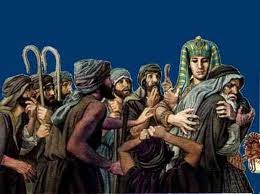
Yet, another in Africa did something even more audacious. Joseph, son of Jacob was sold as a slave by his brothers. For 13 years he lived as either a prisoner or slave. Then in a surprise turn of events he became Egypt’s Prime Minister. He had 22 years to plan and plot his revenge. However, instead of exacting revenge he used the strength of his institution, the Egyptian government to forgive. His forgiveness reconciled, restored, and rescued. His audacious forgiveness is remembered as one of the humanity’s stories that must be repeated time after time, generation after generation.

Approximately 400 years after Joseph’s audacious forgiveness God led Israel out of slavery in Egypt. In this wilderness journey God gave them a new law. This law was to transform them from a large dysfunctional extended family into a nation who taught all other nations to honor God. They were commanded to practice the beauty of a Sabbath rhythm. This rhythm reached its final triumph every 50 years in the Jubilee. On this sacred year, God commanded Israel they must forgive institutionally (Leviticus 25:8-555). It is an audacious command.

Meg Guillebaud taught us well about the Sabbath Year and the environment. For six years Israel planted and harvested. Then on the seventh year (Sabbath Year) the land was to rest (Exodus 23:10-11. Leviticus 25:1-7).


After seven of these cycles (49 years), on the fiftieth (50th) year a Jubilee Year was proclaimed. The community had met to grief over sin and resolve to change their behavior. They fasted and rested on this Day of Atonement (Leviticus 16:1-34). Then the loud music and party began. The trumpet was blown. Freedom was proclaimed.

Israel’s economic system had similarities to the surrounding nations. When someone was in debt they first sold their clan’s land. Then when their property was all gone they sold themselves. On the Jubilee the debt prisoners were freed. The land was returned to the clan. Extended families gathered and celebrated.

For two years the land and people rested. They lived on the bounty of stored food and the produce of the land.

Three thousand five hundred years later though we can never repeat this ritual I believe we all hunger for such a time where we rest, celebrate with our closest family and friends, and get a chance to start life a fresh.

We cannot replicate this command, but we can practice enduring Jubilee principles. I see five enduring principles.

First, our business dealings must be noted for truth, equity, and justice (25:14). Some will look at Jubilee and see it as a way to get an unfair advantage. That completely goes against the commands to tell the truth in all our documentation (Exodus 20:16). Also, the Sabbath command means we must be equitable to all despite gender, ethnic, or economic differences (Exodus 20:10). At our best we are motivated by principles such as hope, joy, and love. However, at our worst we are motivated by the fear of God. We must never lose this fear (Leviticus 25:17).

Second, the Jubilee reminds us we must care for our extended family. When they are in trouble those of us who have means must come to their rescue (25:25). For some of us today, our extended families are still our social network. Others of us have lived through seasons of history where our extended family is no longer our security net. For our faith community, the church is our extended family. I believe the implication of this command is that the church must care for the most vulnerable of society.

Third, Jubilee reminds us that nothing on this earth is really “mine.” We are all refugees (25:23). We began to use the “mine” pronoun as soon as we can speak. Whatever our mother tongue we proclaim, “wange.” God instructs Israel to remember. They were refugees for 400 years. They know what it is like to have no possessions; especially one’s freedom. They must never lose their ability to empathize. The Jubilee reminds us that our possessions are only an entrusted stewardship from God.

Fourth, work is honorable and no one should be treated as a slave (25:40). The wealthy were never to abuse those who were poor. In our context I find this very relevant. Many of us as children were refugees. We saw our parents deprived of legal status and economic opportunities that would have allowed them to succeed. Practically, they were treated as slaves. Now, many of us have landed in a place where though we have a good income we still need those to labor for us; and the wages in which we pay them are still less than ideal. We may desire to change the economic reality, but the means to do so is not in our circle of influence. What is in our influence is that we can treat our working class laborers with honor. We can give them time to rest. We can treat them with dignity. We can practice Jubilee.

Last, Jubilee reminds us that at least once per lifetime the only way to make things right is to forgive institutionally. We must use the strength of our institutions to do what is truly audacious. Particularly, when our institutions are young and maturing we find that sometimes we have to say, “This is a mess that cannot be made right by anything other than forgiveness.”

Let me confess one of my many sins. I have been sinned against in great ways by my historical denomination. When I wrestled with this with an open Bible I found some comforting texts. For instance, the Old Testament required restitution (Exodus 22-23). In the New Testament, when Zacchaeus was transformed by Jesus’ forgiveness his repentance included making restitution by four fold. Paul seems to allude to this principle of restitution in restoring the fallen (2 Corinthians 7:10-12). Even the 12 Steps Program requires for one to recover from addiction he must make amends to all who ones behavior has harmed. As I wrestled with the consequence of others sins in my life I became an accountant. I tabulated what they would need to do to restore what they had taken.

Then something startling happened. It was much like Joseph’s experience. I realized without all of the painful actions of others I never would have developed the character, skills, or network that allows me to bless others. How could I resent the capacity God had given me to bless through others poor choices? It was time for me to practice Jubilee. I had to use my institutional strength to forgive.

As we move past the command and come to history we discover just how audacious the Jubilee command is. There is no historical record of Israel taking a Jubilee year. There is one historical record of Israel taking a Sabbath Year (1 Maccabees 6:49). Most conclude the Jubilee command required more audacious courage, faith, and humility than Israel could muster. Jesus likely referred to the Jubilee when He proclaimed His mission to liberate humanity from sin and its consequences (Isaiah 61:1-2; Luke 4:17-19).

I’ve found this Jubilee command especially applicable to Rwanda. My understanding from reading is that in pre-colonial Rwanda during periods of famine those who were poor would take a position similar to Old Testament Israel. They would become the possession of another family to survive. Maybe, an English translation of the practice could be “indentured servant.” Some might consider this slavery. However, the situation does not seem to be permanent for generations. Frequently the one indebted would arise and be incorporated into the extended family where they landed. It also still seems clear that though Rwanda sought like many to find economic solutions to poverty and chaos Rwanda did not like her neighbors trade her poor to others as slaves. (Slavery in the Great Lakes Region of East Africa, Henri Medard and, Shane Doyle.)

About 20 years ago a movement started called the Jubilee movement. It was started by those who saw this command and believed the modern application was that the poor indebted nations could only arise from poverty by Jubilee. The institution must be used to forgive debt. It was promoted by both believers and non-believers. It was discussed in meetings from the N.G.O. to donor to embassy communities.


Rwanda was a particularly troubling case. During the war, the government who plotted genocide borrowed money that was later used to perpetrate genocide. Rwanda’s Minister of Finance following liberation, Dr. Donald Kaberuka with great dignity voiced that since the debt was a debt of a sovereign government it must be paid. However, many of us felt that justice could not stomach paying the debt of genocide. As time and discussions passed much of Rwanda’s institutional debt was forgiven. The Jubilee command was practiced. Justice was restored. (For further reading see: http://www.cgdev.org/content/article/detail/1424565/


Now the question arises of “moral hazard.” If the risk is taken away from borrowing some may misuse their loans. They assume that their debt will be forgiven. Thus they manipulate forgiveness. They turn a beautiful gift into an ugly weapon. It seems the Jubilee speaks directly to this. Our business dealings must be noted for truth, equity, and justice (25:14). We cannot devalue forgiveness by assuming it is a tool to manipulate.

It is the same for grace. Paul writes that some will attempt to take advantage of grace (Romans 6). Forgiveness is risky. Yet, forgiveness is transformational. Without an understanding of both our individual and communal sin we have no capacity to practice audacious forgiveness. Without audacious forgiveness our community cannot be healed. Without this healing of grace our institutions cannot grow to be just. Without these two paradoxical values of justice and grace we are condemned to cycles of frustration and destruction. Thus audacious forgiveness must be institutional.

May history remember us for practicing this old African virtue of audacious forgiveness in our generation.