Showing posts with label Jubilee. Show all posts

Tuesday, December 25, 2012

MISSIONARY KIDS MATTER


Sophia, Caleb, Ethan, Ruth, and Timothy Jenkins
All parents dream of their children doing better than themselves.   Can they run faster than me?   Get better grades than me?    Provide more leadership than me?   Make more friends than me?   Have more influence me?   Be more Christ like than me?

For missionary families these concerns are very prevalent.   Will taking our children overseas for years have lasting negative effects?   (However, much research shows just the opposite.)


Yet, another fear is what if my children suffer in a way I can only imagine?  And what if they suffer due to misunderstanding and prejudice?   Yet in their suffering can they find a way to preserve their dignity?


I have five different children with two basic skin colors - what the world calls black and white.

One of the most enraging moments for a parent is when I discover my children with black skin are unfairly judged.  A few times it has happened in such an ambiguous way that I can’t find a clear and reasonable way to address the offense so I just walk away.

A few times my children with black skin have been the subjects of prejudice when I was not near them.   They would keep the offense inside them for years, and only much later share the pain.   I would be enraged, but time and physical distance made addressing the offense impossible.

Yet there are even more subtle forms of prejudice that all my children face.    God in His infinite wisdom spoke against this more subtle but just as destructive form of prejudice.   This is the prejudice of group think against those who seem to have more economic resources (Exodus 23:2, 3; Leviticus 19:14.)

The marketing photos of poor African children by nonprofit organizations strip many of their dignity.    They strip the poor of their dignity because it subtly communicates perpetual victimhood.   They also strip the middle class of their dignity because these photos subtly label Africa’s middle class as exploiters of the poor.   Lastly, I’ve seen these marketing tools strip missionary kids of their dignity by subtly telling missionary kids they don’t matter.


I disagree with these prejudices.

Allow me to tell several stories.   My family are “faith missionaries” which means we have no guaranteed salary.   We live on the free will donations of churches, friends, and family.   We trust God for our daily bread.    We’ve seen God do the miraculous.   Yet, we’ve also seen why in the Old Testament law the Year of Jubilee was instituted (Leviticus 25.)   Sometimes God’s people don’t display the mercy and justice of God.   The community suffers until the out of the ordinary happens.  

We ministered for 19 years in nations that some would define as the economically poorest countries of the world.    While at times we’ve been struggling to pay our bills we’ve ran scholarship programs for vulnerable children.    

A multiple of times when my children were too young to understand what was happening I would be on furlough speaking in a local church.    Someone would ask about our kid’s education.   I’d explain the choices we were making and the costs of educating missionary children.   Another would ask a question about our sponsorship programs.   I would hope that donations would be given to both.   Instead, people would say, “We want our donation designated for the sponsorship program.   You will have to look somewhere else for your needs.”  Then they would write a designated check.   I would drive away from the meeting with checks, but not enough flexibility in the donations to pay for my travel expenses.    

Sophia and Doreen Rwigamba at Rugezi Wetland, Rwanda
Three years ago our family was in a situation much like the needs of Israel for a Jubilee.    We were in a hole due to medical expenses and a drop in funding.    We were doing a ROC reception to hopefully discover the financial resources to start afresh.     We were discussing Kigali International Community School (KICS).   In the discussion the conversation moved to the need for missionary children education.   My oldest daughter, Sophia was in the reception.


A wealthy donor began to ask critical questions.   We attempted to answer.   His tone moved from critical to a recycling of the issues God addressed in Exodus 23:2, 3; and Leviticus 19:14.   He used sophisticated language, but he was encouraging group think against Africa’s middle class and missionary kids.    His arguments focused on what percentage of the gifts went to the poorest of the poor, and that he did not want to see his gifts go to “administrative fees, nor expatriate life styles.”   My blood boiled.   I doubt his children ever suffered with malaria.   I doubt his children were ever bit by dogs or monkeys.   I doubt he ever carried his children on his shoulders and ran away from gunfire.    Sophia cried.   Then Sophia spoke.

Joseph, Mary, and Jesus going in refuge in Egypt
She offered no defense of our family.   Instead, she did what second generation missionaries do best.   She told the story of Rwanda’s returning Diaspora and their children.    She told the stories of her people.

She said, “Yes, I go to school with missionary kids and Rwandan middle class kids.   The Rwandan kids sleep in homes with running water and electricity.   Their parents drive cars.   They look wealthy.   What you don’t know is their parents grew up in refugee camps.   Then they in their own words, “Got lucky.”   They received an education.   They developed professional skill.   Rwanda became peaceful.   They came home.    Their parents work very long hours.   An entire nation’s future rides on their shoulders.    They did not have to come home.   In fact, many complain about brain drain.   If you want to stop brain drain don’t argue with the middle class.   Their kids need a good school.   Should that school not be one where the class sizes are small?    Should that school not be one where God is honored?  Why do we want schools like this in America, but argue against them in Africa?”

She hit the nail on the head.   The donor was conditioned by photos of the poor to be prejudiced.   The prejudice was more subtle than simply race.   It was the prejudice against professional skill and an economic class.

Alexis and Grace Hixson, Ruth, Imfra Mwunvaneza, and Kassidy and Natalie Shreck
The donor realized his offense and thankfully apologized.  He realized missionary kids matter.     They deserve good schools.   They’ve missed out on many things.     Yet, God has done remarkable things in their lives.    In fact, their parents and their host nation know this well – Missionary kids will do far more good than their parents.   God is preparing them.

So this Christmas season as you prepare to make a year end gift I request that you look at the options, and simply say, “Missionary kids matter.”

Tuesday, August 9, 2011

HARAMBEE ECONOMICS


The Harambee is over. We are still receiving pledges and donations. As we write our Rwanda community has given over $4,900 and friends in the United States have given over $2,300. Of the $22,000 we anticipate we need to get Sophia through her first year at Wheaton we now have in hand $7,200. To honor God, our heritage, and our community we must tell the story of this Harambee. Enjoy.

Our most read blog post is a sermon Dave preached on 27 March 2011 from Leviticus 25 on the Jubilee entitled “Audacious Forgiveness Must Be Institutional” (To read it check out our blog at http://jenkinsinrwanda.blogspot.com/2011/03/audacious-forgiveness-must-be.html.)

In this sermon Dave argues that at least once per lifetime our community has been so traumatized that the only way that our community can become what God intends is for the community to use the strength of her network and institutions to practice audacious forgiveness. Jubilee calls us to the paradox of justice and mercy. Rwanda’s history of carrying the debt of a genocide regime calls for forgiveness from the world’s creditors while it also calls for contemporary Rwanda to be a leader in generosity. This is a great theory, but the details of living get tricky.

How do we practice Jubilee Economics? Practice Harambee Economics. What is a Harambee? Allow us to tell our story.

During previous furloughs our family has looked at many different universities as possible places for Sophia to attend college. Of the many possibilities Wheaton College rose to the top. (To read about Sophia’s thought process check out http://thoughtsofthewanderingchild.blogspot.com/2011/07/my-wheaton-decision.html?spref=fb.)

Dave’s morning runs this last year focused on prayer for Sophia to be admitted to Wheaton. He begged God for this opportunity. Sophia’s admission was delayed, but when it came we were ecstatic, told all our friends, and celebrated.

Then the process began of seeking scholarships and applying for financial aid. By mid June we had gone as far as we could go and were still lacking $22,000 per year. In 2008 as our missionary support was good and Jana was employed by Gladney Center for Adoption our family could have afforded Wheaton. Then the global financial crisis cost Jana her job, Dave and Jana both became sick, and our support took some dips. We spent our life savings on a year of medical leave with the belief that God had called us to Rwanda and we must do all within our ability to pay our bills and serve in Rwanda until God called us to another place or season. We returned to Rwanda in 2010 and it has been a journey full of spiritual harvest.

In prayer Dave told God the message of patriarchs and prophets, “God I have helped over 300 Rwandan students attend university in the USA. Can you help my daughter go to Wheaton? Remember, your servant.”

The next morning, Dave felt compelled to host a Harambee.

For those new to our region, allow us to tell about our heritage. God’s word teaches that when we go through seasons of uncertainty and struggle God remembers us (Exodus 2:4). Our response should be that we remembers all that God has done for us and give Him honor (Deuteronomy 7:18). In June 2005 we came to Kigali with the God led dream of starting a non-denominational English language church with a good children’s program. We had a few friends in the USA who made this possible by their support, and a few Rwandan friends who made this possible by opening doors. God has done amazing things through a simple network of praying friends. We should never doubt what God will do when friends gather, pray, and celebrate.

God’s word also teaches our enduring presence in a location is the result of honoring our heritage. “Honor your father and your mother, so that you may live long in the land the LORD your God is giving you (Exodus 20:12),” has resonated repeatedly in our minds. Our heritage of faith comes from the American Restoration Movement. We must always seek unity and revival to honor this heritage.


Our family’s ministry heritage comes from Gaston and Jan Tarbet (Jana’s parents) who served in Nigeria, Kenya, and Uganda. Their longest tenure was in Kenya (1968-1976; 1979-1980; 1988-1989). Kenya’s tradition of Harambee called us.


As Kenya gained independence from the United Kingdom in 1963, her first President Mzee Jomo Kenyatta began the Harambee tradition. The country must pull together and organize. The past must be forgiven. A fresh start was possible, but only when the individual resources were pooled in a community of good will. Kenyatta said, "There is no society of angels, black, brown or white. We are human beings and as such we are bound to make mistakes. If I have done a mistake to you, it is for you to forgive me. If you have done a mistake to me, it is for me to forgive you. (For more reading on Kenyatta’s Harambee from 1963 check out http://www.time.com/time/magazine/article/0,9171,875094,00.html.)

From Kenyatta’s vision Harambee developed so when a community faced a struggle a celebration was called to gather resources to overcome. The Jubilee of the Old Testament lived in Kenya’s Harambee.

Our family journeyed west from Kenya to Uganda, and now to Rwanda. Many in our Rwanda community share our region’s history and Harambee tradition. $22,000 divided by 300 contributions is $73.33. Four years of this is $293.33. Could friends be gathered who could make enough contributions that in our season of uncertainty our daughter could study at the university we had prayed for?

On Saturday, 6 August the Harambee in Kigali was celebrated. We invited every friend in the world. One Kigali friend sent us a sms on Saturday morning to inform us that due to some unforeseen family financial difficulties he could not attend. We responded that our Harambee required no donation. Our earthly wealth is our family and friends. All we requested was their prayers and celebration as we sought to discover resources for Sophia to attend Wheaton.

Our guests ranged from university students to fellow missionaries to CCR members to Rwandan leaders in government, business, and academics. From the beginning the Harambee was a community endeavor. For days we passed out invitations and our friends gathered ideas and resources to make the Harambee a success. We knew we would need more chairs than our family possessed. Our old friend, Paul Jabo volunteered to organize renting chairs and then paid for the chair rental fees. We were cooking assuming that we would have 150 to 200 people in attendance. Our old friend, Shakira who has cooked for KICS and the Day Care at CCR (First Impressions) volunteered to cook.

We decorated our home, put up CCR tents, gathered refreshments, started a bonfire, and had the CCR band plus violinists scheduled to play.

Then the crowd began coming. It was more people and diversity than we could have expected. Some of our African friends had not grown up like us in Kenya. Others from the USA, Canada, or UK were unfamiliar with the Harambee tradition. Thus Dave explained that a season had come to celebrate and organize together. We are thrilled at Sophia’s academic success. We are thrilled at her opportunity at Wheaton. As this was a matter of prayer we must pursue it to the end assuming that God will open up each door at the appropriate time.

We explained that a basket was on the side in which people could place their contributions and pledges. As the night finished we began counting. Some came with not a coin, but graced us with their joy. Others gave only a few coins. However, many gave more. Most contributions were in the range of $40 to $200. The Rwandan community gave as much as the expatriates. In fact, the night’s largest contributor was a Rwandan family that gave $500. Our total now stands at $7,194.33 that family and friends have now given to Sophia’s education at Wheaton. Of this $2,200 has been contributed by family and friends in the United States while family and friends in Rwanda have contributed $4994.33. We are very blessed by our generous community in Kigali.

Dave and Sophia are scheduled to fly out of Kigali for the U.S. on Thursday, 11 August. The Lord has used our community to gather enough money to make Sophia’s initial payments this year at Wheaton. We still have about $14,905 to go to get Sophia through her first year at Wheaton.

We remember. In June 2005 we came to Kigali with the hope of starting a church. We later found out that registering one would be difficult. In May 2006 CCR was registered. In October 2005 we realized we could not survive as a family in Kigali without an international school. We gathered with friends and in September 2006 Kigali International Community School (KICS) began. As these opportunities began we realized the need for property and were shown an ideal facility that cost $1,356,000. By February 2007 we negotiated a deal to make payments and the building is now completely purchased. With each major decision we’ve bathed our dreams in prayer and then moved forward believing this was the Lord’s leading of our community. We feel exactly the same about Sophia’s choice to attend Wheaton. God is the hero of this story. He has been faithful.

Thank you for joining us on this journey.

If you would like to make a graduation gift to help Sophia attend Wheaton please write a check to Sophia Jenkins and mail your check to:

Bluestone Federal Credit Union,
1252 Yankee Doodle Road,
Eagan, MN 55121.
Bluestone Phone Number: 651-452-3131

Imana ikurinde (May the Lord Stay with All of You),

Dave and Jana


Thursday, March 31, 2011

AUDACIOUS FORGIVENESS MUST BE INSTITUTIONAL


African history is known for two unforgettable virtues. Audacity and Forgiveness. Only on the rarest of moments are they combined. However, those moments are unforgettable. This past Sunday, I asked two questions of our CCR audience.

First, “How many can recognize the name, Hannibal, General of Carthage?

Second, “How many can recognize the name, Joseph, son of Jacob, Prime Minister of Egypt?”

Both CCR services found that three times as many people recognized the name of Joseph as compared to Hannibal. Both were audacious men. They were extremely bold and daring. They were not restricted to prior ideas and conventions. They faced the unknown with great initiative and resourcefulness.

Hannibal faced the might of Ancient Rome’s military and took his army and their elephants over the mountains of the Alps. Military historians have marveled at his audacity. He used the strength of his institution, the Carthage Army to make one of history’s most spectacular raids.

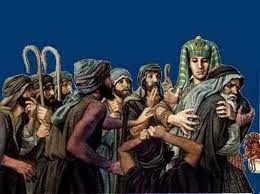
Yet, another in Africa did something even more audacious. Joseph, son of Jacob was sold as a slave by his brothers. For 13 years he lived as either a prisoner or slave. Then in a surprise turn of events he became Egypt’s Prime Minister. He had 22 years to plan and plot his revenge. However, instead of exacting revenge he used the strength of his institution, the Egyptian government to forgive. His forgiveness reconciled, restored, and rescued. His audacious forgiveness is remembered as one of the humanity’s stories that must be repeated time after time, generation after generation.

Approximately 400 years after Joseph’s audacious forgiveness God led Israel out of slavery in Egypt. In this wilderness journey God gave them a new law. This law was to transform them from a large dysfunctional extended family into a nation who taught all other nations to honor God. They were commanded to practice the beauty of a Sabbath rhythm. This rhythm reached its final triumph every 50 years in the Jubilee. On this sacred year, God commanded Israel they must forgive institutionally (Leviticus 25:8-555). It is an audacious command.

Meg Guillebaud taught us well about the Sabbath Year and the environment. For six years Israel planted and harvested. Then on the seventh year (Sabbath Year) the land was to rest (Exodus 23:10-11. Leviticus 25:1-7).


After seven of these cycles (49 years), on the fiftieth (50th) year a Jubilee Year was proclaimed. The community had met to grief over sin and resolve to change their behavior. They fasted and rested on this Day of Atonement (Leviticus 16:1-34). Then the loud music and party began. The trumpet was blown. Freedom was proclaimed.

Israel’s economic system had similarities to the surrounding nations. When someone was in debt they first sold their clan’s land. Then when their property was all gone they sold themselves. On the Jubilee the debt prisoners were freed. The land was returned to the clan. Extended families gathered and celebrated.

For two years the land and people rested. They lived on the bounty of stored food and the produce of the land.

Three thousand five hundred years later though we can never repeat this ritual I believe we all hunger for such a time where we rest, celebrate with our closest family and friends, and get a chance to start life a fresh.

We cannot replicate this command, but we can practice enduring Jubilee principles. I see five enduring principles.

First, our business dealings must be noted for truth, equity, and justice (25:14). Some will look at Jubilee and see it as a way to get an unfair advantage. That completely goes against the commands to tell the truth in all our documentation (Exodus 20:16). Also, the Sabbath command means we must be equitable to all despite gender, ethnic, or economic differences (Exodus 20:10). At our best we are motivated by principles such as hope, joy, and love. However, at our worst we are motivated by the fear of God. We must never lose this fear (Leviticus 25:17).

Second, the Jubilee reminds us we must care for our extended family. When they are in trouble those of us who have means must come to their rescue (25:25). For some of us today, our extended families are still our social network. Others of us have lived through seasons of history where our extended family is no longer our security net. For our faith community, the church is our extended family. I believe the implication of this command is that the church must care for the most vulnerable of society.

Third, Jubilee reminds us that nothing on this earth is really “mine.” We are all refugees (25:23). We began to use the “mine” pronoun as soon as we can speak. Whatever our mother tongue we proclaim, “wange.” God instructs Israel to remember. They were refugees for 400 years. They know what it is like to have no possessions; especially one’s freedom. They must never lose their ability to empathize. The Jubilee reminds us that our possessions are only an entrusted stewardship from God.

Fourth, work is honorable and no one should be treated as a slave (25:40). The wealthy were never to abuse those who were poor. In our context I find this very relevant. Many of us as children were refugees. We saw our parents deprived of legal status and economic opportunities that would have allowed them to succeed. Practically, they were treated as slaves. Now, many of us have landed in a place where though we have a good income we still need those to labor for us; and the wages in which we pay them are still less than ideal. We may desire to change the economic reality, but the means to do so is not in our circle of influence. What is in our influence is that we can treat our working class laborers with honor. We can give them time to rest. We can treat them with dignity. We can practice Jubilee.

Last, Jubilee reminds us that at least once per lifetime the only way to make things right is to forgive institutionally. We must use the strength of our institutions to do what is truly audacious. Particularly, when our institutions are young and maturing we find that sometimes we have to say, “This is a mess that cannot be made right by anything other than forgiveness.”

Let me confess one of my many sins. I have been sinned against in great ways by my historical denomination. When I wrestled with this with an open Bible I found some comforting texts. For instance, the Old Testament required restitution (Exodus 22-23). In the New Testament, when Zacchaeus was transformed by Jesus’ forgiveness his repentance included making restitution by four fold. Paul seems to allude to this principle of restitution in restoring the fallen (2 Corinthians 7:10-12). Even the 12 Steps Program requires for one to recover from addiction he must make amends to all who ones behavior has harmed. As I wrestled with the consequence of others sins in my life I became an accountant. I tabulated what they would need to do to restore what they had taken.

Then something startling happened. It was much like Joseph’s experience. I realized without all of the painful actions of others I never would have developed the character, skills, or network that allows me to bless others. How could I resent the capacity God had given me to bless through others poor choices? It was time for me to practice Jubilee. I had to use my institutional strength to forgive.

As we move past the command and come to history we discover just how audacious the Jubilee command is. There is no historical record of Israel taking a Jubilee year. There is one historical record of Israel taking a Sabbath Year (1 Maccabees 6:49). Most conclude the Jubilee command required more audacious courage, faith, and humility than Israel could muster. Jesus likely referred to the Jubilee when He proclaimed His mission to liberate humanity from sin and its consequences (Isaiah 61:1-2; Luke 4:17-19).

I’ve found this Jubilee command especially applicable to Rwanda. My understanding from reading is that in pre-colonial Rwanda during periods of famine those who were poor would take a position similar to Old Testament Israel. They would become the possession of another family to survive. Maybe, an English translation of the practice could be “indentured servant.” Some might consider this slavery. However, the situation does not seem to be permanent for generations. Frequently the one indebted would arise and be incorporated into the extended family where they landed. It also still seems clear that though Rwanda sought like many to find economic solutions to poverty and chaos Rwanda did not like her neighbors trade her poor to others as slaves. (Slavery in the Great Lakes Region of East Africa, Henri Medard and, Shane Doyle.)

About 20 years ago a movement started called the Jubilee movement. It was started by those who saw this command and believed the modern application was that the poor indebted nations could only arise from poverty by Jubilee. The institution must be used to forgive debt. It was promoted by both believers and non-believers. It was discussed in meetings from the N.G.O. to donor to embassy communities.


Rwanda was a particularly troubling case. During the war, the government who plotted genocide borrowed money that was later used to perpetrate genocide. Rwanda’s Minister of Finance following liberation, Dr. Donald Kaberuka with great dignity voiced that since the debt was a debt of a sovereign government it must be paid. However, many of us felt that justice could not stomach paying the debt of genocide. As time and discussions passed much of Rwanda’s institutional debt was forgiven. The Jubilee command was practiced. Justice was restored. (For further reading see: http://www.cgdev.org/content/article/detail/1424565/


Now the question arises of “moral hazard.” If the risk is taken away from borrowing some may misuse their loans. They assume that their debt will be forgiven. Thus they manipulate forgiveness. They turn a beautiful gift into an ugly weapon. It seems the Jubilee speaks directly to this. Our business dealings must be noted for truth, equity, and justice (25:14). We cannot devalue forgiveness by assuming it is a tool to manipulate.

It is the same for grace. Paul writes that some will attempt to take advantage of grace (Romans 6). Forgiveness is risky. Yet, forgiveness is transformational. Without an understanding of both our individual and communal sin we have no capacity to practice audacious forgiveness. Without audacious forgiveness our community cannot be healed. Without this healing of grace our institutions cannot grow to be just. Without these two paradoxical values of justice and grace we are condemned to cycles of frustration and destruction. Thus audacious forgiveness must be institutional.

May history remember us for practicing this old African virtue of audacious forgiveness in our generation.